Languages
Sunday, November 29, 2026



News and Views from the Global South
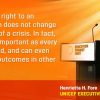
Education Cannot Wait Interviews Henrietta H. Fore, Unicef Executive Director
Henrietta H. Fore became UNICEF’s seventh Executive Director on 1 January 2018. She has worked to champion economic development, education, health, humanitarian assistance and disaster relief in a public service, private sector and non-profit leadership career that spans more than four decades.
COVID-19 and Education in Emergencies
Armed conflicts, forced displacement, climate change induced disasters and protracted crises have disrupted the education of 75 million children and youth globally. And that number is growing in an unprecedented way with the spread of COVID-19. Education has been hit particularly hard by the COVID-19 pandemic with 1.53 billion learners out of school and 184 country-wide school closures, impacting 87.6% of the world’s total enrolled learners. Drop-out rates across the globe are likely to rise as a result of this massive disruption to education access.
TB, HIV and COVID-19: Urgent Questions as Three Epidemics Collide
Tuberculosis (TB) and HIV pose a significant burden on South Africa’s health system. There’s a close relationship between the two. About 60% of TB patients are also HIV-positive. The novel coronavirus (Sars-CoV-2) is likely to be of particular concern for communities with high rates of TB and HIV.
In Light of the Global Pandemic, Focus Attention on the People
SARS-CoV-2 or COVID19, now declared a global pandemic by the World Health Organisation, has begun to wreak havoc in large parts of the world, with other parts waiting in anticipation. We are in a real struggle, which needs total mobilisation; a struggle that needs to put life before profit. We will only win this struggle – as China has already done – if our people are united and disciplined, if governments earn our respect by their actions, and if we act in solidarity across the globe.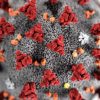
COVID-19 in Africa: Fewer Cases So Far, and More Preparation Needed
The novel coronavirus disease (COVID-19) outbreak, recently declared a pandemic by the World Health Organisation, has taken the world by surprise. The good news is that tremendous scientific and technological advances have permitted scientists to understand a lot about this virus in a short amount of time.
Gender “Could be Coronavirus Key”
Analysing how coronavirus impacts genders differently could be key in fighting the disease, say public health experts.
VIDEO: I am Generation Equality: Realizing Women’s Rights
 The narrative surrounding women’s rights in 2020 carries much hope and possibility. This year’s International Women’s Day, bearing the theme “I am Generation Equality: Realizing Women’s Rights,” falls on the celebration’s 110th anniversary.
Joint statement on attacks on civilians in the North-West and South-West regions of Cameroon
The International Rescue Committee (IRC) and the Norwegian Refugee Council (NRC) call upon all parties to the conflict in the North-West and South-West regions of Cameroon to uphold international human rights and international humanitarian law and cease all attacks on civilians without delay.
UN Report: World remains a ‘violent, highly discriminatory place’ for girls
Twenty-five years after the historic Beijing women’s conference in China – a milestone in advancing equal rights – violence against women and girls is not only common, but widely accepted, a new UN report revealed.
The Pacific Community launches the Pacific Healthy Recipe Contest
The Pacific Community (SPC) is calling for contestants to join the Pacific Healthy Recipe Contest and showcase their cooking skills and creativity to promote healthy eating and prevention of non-communicable diseases (NCDs).

Helping Advance Women’s Political Rights in Ecuador
Inclusion of women in political processes is one of the key ingredients of sustainable peace. Although the number of women in political office has increased worldwide over the past 25 years, progress has been slow.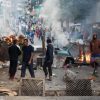
A Glut of Arms: Curbing the Threat to Venezuela from Violent Groups
Power in Venezuela is slipping away from state institutions and concentrating in the hands of criminals, guerrillas and other non-state actors. Any new negotiations between government and opposition must consider how to defang these armed irregulars, who might otherwise scuttle an eventual settlement.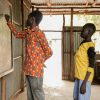
Education Cannot Wait and Porticus announce new partnership focused on measuring holistic learning outcomes for children and youth caught in protracted crises and emergencies
To improve learning outcomes for girls and boys caught in emergencies and protracted crises, Education Cannot Wait (ECW) is now partnering with the global philanthropic organization Porticus to develop, test and document fit-for-purpose solutions towards measuring the learning of children in crises-affected countries.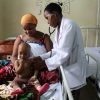
Child Death Grief a Public Health Threat
Grief over the loss of a child poses a threat to public health in Sub-Saharan Africa, as nearly two-thirds of mothers in some countries suffer the death of at least one child, a study has found.
Three Financial Firms Could Change the Direction of the Climate Crisis – and Few People Have Any Idea
A silent revolution is happening in investing. It is a paradigm shift that will have a profound impact on corporations, countries and pressing issues like climate change. Yet most people are not even aware of it.
The Pacific Community launches the Pacific Healthy Recipe Contest
The Pacific Community (SPC) is calling for contestants to join the Pacific Healthy Recipe Contest and showcase their cooking skills and creativity to promote healthy eating and prevention of non-communicable diseases (NCDs).
UN Health Agency Predicts 80 Percent Rise in Cancer Burden Among Poorest Countries
Low- and middle-income countries could see an 80 per cent rise in cancer over the next 20 years if treatment and prevention services are not stepped up, according to the latest World Cancer Report.
Female Genital Mutilation Costs $1.4 Billion Annually: UN Health Agency
Female Genital Mutilation (FGM) poses serious risks to the health and well-being of women and girls, but it also exacts a crippling economic toll, according to the World Health Organization (WHO).
Venezuela: Violent Abuses in Illegal Gold Mines
Residents of Venezuela’s southern Bolívar state are suffering amputations and other horrific abuses at the hands of armed groups, including Venezuelan groups called “syndicates” in the area and Colombian armed groups operating in the region, both of which exercise control over gold mines, Human Rights Watch said Tuesday, February 4.
Do Not Confuse Food Charity with “Right to Food”, UN Expert Tells Italians, Labelling Food System Exploitative
A sophisticated Italian food system is placing a heavy burden on Italy’s workers and farmers, an independent UN human rights expert said on Friday, following an 11-day visit to the country that many regard as the world’s food capital.
Coronavirus Spread Now a Global Emergency Declares World Health Organization
The rise in new coronavirus cases outside China, now constitutes a global health emergency, the World Health Organization’s Emergency Committee declared on Thursday, calling on all countries to take urgent measures to contain the respiratory disease.« Previous Page — Next Page »


The Week with IPS

NEXT STOP - SDGs
Tracking global progress towards a sustainable world
