Languages
Tuesday, October 27, 2026



News and Views from the Global South
ENVIRONMENT-BRAZIL: Protecting the Jungle Has a Price
Government officials, business leaders and non-governmental organisations agreed in Brazil on the need for rich countries and companies to "pay" the people of the Amazon jungle as "providers of environmental services" for contributing to the fight against climate change by not deforesting.LATIN AMERICA: “Crisis as Opportunity” – WEF Meeting
Economic and political leaders from Latin America and the Caribbean are trying to help come up with responses to a problem for which they do not feel responsible – the global economic crisis – although they do want to be part of the solution.BRAZIL: New Offensive for Faster Land Reform
Brazil’s landless movement (MST) has launched its annual April demonstrations to demand an acceleration of land reform efforts and commemorate the Eldorado de Carajás massacre, in which 19 rural protesters were killed by the police and hundreds injured.
BRAZIL: Walling Off the Slums…or ‘Eco-Barrier’?
While the government of the state of Rio de Janeiro insists that a wall being built around a poor neighbourhood is designed to protect what remains of Brazil’s Atlantic rainforest from further encroachment by the slum, human rights groups say it is designed to further separate the rich and poor.RIGHTS: Engaging Men in Gender Equality Efforts
How many men work in day care centres, looking after children? How much paternity leave are men entitled to? How many government programmes to combat domestic violence include violent men themselves as part of the treatment?BRAZIL: Landmark Ruling Confirms Indian Reservation
Chanting "Anna Pata, Ana Yan" (Our Land, Our Mother), members of indigenous organisations and activists celebrated a Brazilian Supreme Court ruling Thursday that confirmed the borders of a huge indigenous reservation in the Amazon jungle and set an important precedent for future land disputes.
BRAZIL: Child Rape Case Revives Debate on Abortion
The case of a nine-year-old girl who was raped and impregnated by her stepfather has revived the debate in Brazil on sexual violence, the need to reform the abortion law, and the shortcomings of the health system when it comes to dealing with the few cases in which abortion is legal.
ENVIRONMENT: Brazil's Concrete Jungle
For the residents of Recreio, an upscale district on the west side of Rio de Janeiro, it is hardly a surprise these days to find alligators holding up traffic along their streets or slipping in for a dip in their swimming pools.
Brazil's Concrete Jungle
Rio de Janeiro is being populated with yacaré caimans, capybaras, boa constrictors, monkeys, and other wild animals. Could the jungle be sprouting back up again through the concrete?BRAZIL: War Against Child Pornography on the Internet
The Brazilian government has announced the creation of a web site to centralise the reception of complaints about child pornography on the Internet, as a further step towards fighting the phenomenon which is growing globally, alongside child trafficking and sex tourism.
SOUTH AMERICA: Young People Want to Give Farming a Chance
Unlike so many in their grandparents’ generation, today’s young farmers in South America’s Mercosur trade bloc say they want to live off the land where they were born, and not move to cities where there is no longer a place for them.ECONOMY-BRAZIL: Car Industry in Reverse Gear
Although the global financial crisis has not yet triggered a rise in unemployment in Brazil, car industry and related workers are starting to forge strategies for facing severe recession in the sector.
BRAZIL: 'Social Circus' Turns Young Lives Right Side Up
Standing on your head, walking on stilts, juggling and doing balancing acts - life often seems like a circus metaphor. And for one Brazilian social organisation that is exactly what it is.BRAZIL: African Rhythms Open Prospects for High-Risk Youngsters
"Axé" is a word that means "positive energy or life force" in the Yoruba language of West Africa, an important concept in the Afro-Brazilian "candomblé" religion. For hundreds of children and young people involved in the Axé Project, it is indeed a force for life.BRAZIL: Full Frontal Attack on AIDS Among Gays
The poster, reminiscent of the film "American Beauty," features a nude young man in a sensual pose lying on (and partly covered by) masses of pink condoms, with the legend "Do whatever you want but do it with a condom." It is part of a new Brazilian campaign against HIV/AIDS aimed at gays.HEALTH-BRAZIL: Education, the Only Weapon Against Dengue
After taking a number of emergency measures to combat the current dengue epidemic in Rio de Janeiro, health officials in Brazil have committed themselves to investing in education and awareness-raising in the future, as the only effective means of preventing further outbreaks of the disease.
ENVIRONMENT-BRAZIL: Fisherfolk to the Rescue – of Turtles
It's 5am and the fisherfolk of the Brazilian village of Barra da Lagoa embark to see what the sea has left for them in their nets. Among the scant fish catch of the night, they fortunately don't find any sea turtles injured or agonising in their traps.ENVIRONMENT-BRAZIL: Development Vs. Preservation in Florianopolis
With marvellous exceptions like the south and other historic and natural nooks and crannies, the island of Florianopolis in southeastern Brazil is not the same place visitors found 20 years ago.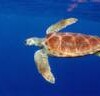
Fisherfolk to the Turtle Rescue!
A conservation campaign is motivating fisherfolk in southern Brazil to fight accidental capture of sea turtles.
BRAZIL: Small Fishermen Trade in Nets for Oyster Farms
In a modest restaurant on a beach at the southern tip of the Brazilian island of Florianópolis, a couple celebrates, with champagne and oysters, "one more year of vacations and love."BRAZIL: GM Maize ‘Worst Tragedy’ of Lula Administration – NGOs
Non-governmental organisations actively involved in the Campaign for a GM-Free Brazil are protesting against what they call "the worst tragedy" to befall the country during the government of President Luiz Inácio Lula da Silva: the release for cultivation and sale of two transgenic varieties of maize.« Previous Page — Next Page »





The Week with IPS

NEXT STOP - SDGs
Tracking global progress towards a sustainable world
Tracking global progress towards a sustainable world
