Languages
Friday, October 9, 2026



News and Views from the Global South
BOLIVIA: Future Uncertain After Pitched Battle
Things began to settle down in Sucre in Bolivia Monday after four died in clashes between conservative anti-government protesters and the police over the weekend.ENVIRONMENT-BOLIVIA: Slash and Burn – a Smoking Gun
Every year, when the (southern hemisphere) spring arrives in Bolivia, the skies are covered with smoke, while anti-pollution campaigns to dissuade farmers from using their traditional slash-and-burn farming technique fall on deaf ears.RIGHTS: Indigenous Congress Demands Teeth for UN Declaration
Indigenous leaders are holding a regional congress in Bolivia to discuss strategies to oblige governments to take on board as state policy the Declaration on the Rights of Indigenous People, adopted by the United Nations General Assembly on Sept. 13.BOLIVIA: Visit by Iranian President Kicks Up Dust Storm
Bolivia’s President Evo Morales is beginning to forge his foreign policy in the conflict-torn Middle East as he announced the establishment of diplomatic relations with Iran, under the worried gaze of the United States and against stiff opposition from the local business community.BOLIVIA: Morales Gets Boost from UN Declaration on Indigenous Rights
President Evo Morales’ dream of creating a "plurinational" state in Bolivia, with territorial and administrative autonomy for indigenous peoples, has just received an international boost that is as welcome as it is unexpected, arising as it did from what seemed like a never-ending debate.BOLIVIA: Women Councillors Fight Harassment
Women town councillors in Bolivia are pressing for a law to protect them from discrimination and political harassment on the part of their male colleagues, whom they accuse of intimidation and even death threats, especially in rural areas.BOLIVIA: Unequal Battle Against Hunger
In the crowded Bolivian barrio of Achachicala, Salvation Army pastors and volunteers are fighting malnutrition by feeding 500 children on less than 50 cents of a dollar per meal.BOLIVIA: Polarisation Reaches Boiling Point
A 24-hour business strike called by opponents of leftist President Evo Morales in six of Bolivia’s nine departments or states was the latest demonstration of the polarisation dividing the country.BOLIVIA: Requiem for Land in the Hands of the Few
Bolivian President Evo Morales announced new regulations and financing for a land reform law aimed at expropriating idle or ill-gotten land in the hands of large estate owners in eastern and northeastern Bolivia and redistributing it to indigenous farmers.BOLIVIA: Indigenous and Mestizo Power Flexes Muscles
An immense tide of people demonstrating to keep the Bolivian seat of government in this city took to the streets last week to show support for the indigenous Aymara and mestizo leadership, in the greatest expression of popular power in the history of the country.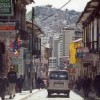
BOLIVIA: La Paz Struggles Against Suffocation
The noise of traffic, dissonant car horns, people marching and shouting slogans, and firework and dynamite explosions is beginning to suffocate the urban centre of La Paz, Bolivia's seat of government, and is forcing consideration of medium term solutions.RIGHTS-BOLIVIA: Indigenous People March On Constituent Assembly
Indigenous people are marching for their right to autonomy, heading from the lowland city of Santa Cruz de la Sierra in central Bolivia to the constitutional and judicial capital, Sucre, where the country's Constituent Assembly is meeting.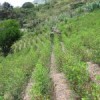
DRUGS-BOLIVIA: More Cocaine, More Political Tension?
An eight percent rise in Bolivian coca cultivation documented by the United Nations, equaling an annual supply of 94 tonnes of cocaine, could cause tensions with Brazil and European Union (EU) countries where the illegal product is marketed, political observers say.
BOLIVIA: Not Another 500 Years of Marginalisation, Say Indigenous Leaders
"We prefer to defend our rights with bloodshed and die rather than wait another 500 years," says Esperanza Huanca, a Quechua Indian who is one of the 84 women in the constituent assembly that is rewriting Bolivia's constitution.BOLIVIA: Will Nationalisation Scare Off Foreign Investment?
Foreign investment in Bolivia fell to 237 million dollars in 2006 as part of a continued tendency that is jeopardising economic growth, warn some analysts, who blame the phenomenon on the government's strategy of placing firms that were privatised in the 1990s back in state hands.BOLIVIA: One Dead, Police Held Hostage in Provincial Gas Dispute
Protesters stormed natural gas plants in the Bolivian border town of Yacuiba and took 47 police officers hostage after a demonstrator was killed, in the midst of a provincial dispute for control over a gas field that could generate some 100 million dollars a year in taxes.BOLIVIA: Errors in Contracts Complicate Gas Nationalisation
In the face of gas shortages, Bolivians are criticising the way the nationalisation of the country's energy reserves is being carried out, and social activists have once again begun to demand the outright confiscation of the assets of the 12 foreign oil companies operating here.BOLIVIA: The Complex Process of Designing a New State
A unified but decentralised state that recognises Bolivia's cultural and ethnic diversity is the vision that is gradually gaining broad support in the constituent assembly currently rewriting the country's constitution.BOLIVIA: Living Outside of the Dike
"If you haven't seen what has happened to our houses, get in the canoe; it's safe, you won't fall in. Go and visit the barrio," says a woman in this north-central Bolivian city, and four teenagers invite this IPS reporter to climb on board for a tour.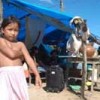
BOLIVIA: Floodwaters Besiege Amazonian Town
Seen from the air, the capital of the Bolivian department of Beni is surrounded by an enormous stretch of water. Local residents are hoping that the polluted floodwaters, only 40 centimetres below the level of the ring road which is acting as a dike, do not overwhelm it.BOLIVIA: Miners Renew Support for Morales
Bolivia's small-scale miners have once again thrown their support behind President Evo Morales after a conflict in which they virtually buried - even using dynamite blasts - a new tax on the mining industry that the government had planned on adopting.« Previous Page — Next Page »





The Week with IPS

NEXT STOP - SDGs
Tracking global progress towards a sustainable world
Tracking global progress towards a sustainable world
