Languages
Thursday, October 8, 2026



News and Views from the Global South

Killer Robots: The Terrifying Rise of Algorithmic Warfare
Machines with no conscience are making split-second decisions about who lives and who dies. This isn’t dystopian fiction; it’s today’s reality. In Gaza, algorithms have generated kill lists of up to 37,000 targets.
Burkina Faso: Three Years of Broken Promises
Three years ago, Captain Ibrahim Traoré seized power in Burkina Faso with two promises that have proved hollow: to address the country’s deepening security crisis and restore civilian rule. Now he has postponed elections until 2029, dissolved the independent electoral commission and pulled the country out of the Economic Community of West African States (ECOWAS) and the International Criminal Court (ICC). Burkina Faso has become a military dictatorship.
Foreign Agent Laws: The Latest Authoritarian Weapon Against Civil Society
When thousands of Georgians filled the streets of Tbilisi in 2023 to protest against their government’s proposed ‘foreign agents’ law, they understood what their leaders were trying to do: this wasn’t about transparency or accountability; it was about silencing dissent. Though the government was forced to withdraw the legislation, it returned with renewed determination in 2024, passing a renamed version despite even bigger protests. The law has effectively frozen Georgia’s hopes of joining the European Union.
Mali’s Blocked Transition: Five Years of Deepening Authoritarianism
When Mali’s former Prime Minister Moussa Mara stood trial in Bamako’s cybercrime court on 29 September, charged with undermining state authority for expressing solidarity with political prisoners on social media, his prosecution represented far more than one person’s fate. It epitomised how thoroughly the military junta has dismantled Mali’s democratic foundations, five years after seizing power with promises of swift reform.
Outsourcing Cruelty: Trump’s Mass Deportation Machine
Thousands of Afghans who fled to the USA when the Taliban took over in August 2021 now face the prospect of deportation to countries they’ve never been to. People who risked everything to escape persecution, often because they helped US forces, now find themselves treated as unwanted cargo under the Trump administration’s anti-migration policy.
Togo’s Young Generation Challenges Six Decades of Dynastic Rule
In late June, thousands flooded the streets of Lomé, Togo’s capital, presenting the ruling dynasty with its biggest challenge in decades. The catalyst was constitutional manoeuvring by President Faure Gnassingbé to maintain his grip on power. In March 2024, his government pushed through constitutional amendments that transformed Togo from a presidential to a parliamentary system. This created a new position, the President of the Council of Ministers – effectively Togo’s chief executive – elected by parliament rather than by popular vote, and with no term limits. Gnassingbé assumed this new role in May, making it abundantly clear the changes were only about keeping him in power indefinitely.
The Right to Care: A Feminist Legal Victory That Could Change the Americas
On 7 August, the Inter-American Court of Human Rights delivered a groundbreaking decision that could transform women’s lives across the Americas. For the first time in international law, an international tribunal recognised care as an autonomous human right. Advisory Opinion 31/25, issued in response to a request from Argentina, elevates care – long invisible and relegated to the private sphere – to the level of a universal enforceable entitlement.
From the Margins to the Courts: St Lucia Joins Caribbean Fight to Dismantle Anti-LGBTQI+ Colonial Laws
When Kenita Placide co-founded United and Strong, St Lucia’s first LGBTQI+ organisation in 2001, death threats were routine. Over the years, several friends were murdered for being gay. But 24 years on, Kenita’s Caribbean island nation has become the latest to overturn a colonial legacy that criminalised LGBTQI+ people.
NATO’s Trillion-dollar Gamble: The Dangers of Defence Without Accountability
Donald Trump’s bullying tactics ahead of NATO’s annual summit, held in The Hague in June, worked spectacularly. By threatening to redefine NATO’s article 5 – the collective defence provision that has anchored western security since 1949 – Trump won commitments from NATO allies to almost triple their defence spending to five per cent of GDP by 2035. European defence budgets will balloon from around US$500 billion to over US$1 trillion annually, essentially matching US spending levels.
Bangladesh’s Democratic Promise Hangs in the Balance
When Bangladesh’s streets erupted in protest in mid-2024, few could have predicted how swiftly Sheikh Hasina’s regime would crumble. The ousting of the prime minister last August, after years of mounting authoritarianism and growing discontent, was heralded as a historic opportunity for democratic renewal. Almost a year on, the question remains whether Bangladesh is genuinely evolving towards democracy, or if one form of repression is replacing another.
Democracy under Attack: Why the World Needs a New UN Special Rapporteur
When tanks rolled through Myanmar’s streets in 2021, civil society groups worldwide sounded the alarm. When Viktor Orbán systematically dismantled Hungary’s free press, democracy activists demanded international action. And as authoritarianism returns to Tanzania ahead of elections, it’s once again civil society calling for democratic freedoms to be respected.
Mexico’s Judicial Elections: A Democratic Mirage
On 1 June, Mexico made history by becoming the only country in the world to elect all its judges by popular vote, from local magistrates to Supreme Court justices. This unprecedented process saw Mexican voters choose candidates for 881 federal judicial positions, including all nine Supreme Court justices, plus thousands at local levels across 19 states. Yet what the government heralded as a transformation that made Mexico the ‘the most democratic country in the world’ may turn out to be a dangerous deception.
Poland’s Democratic Deadlock
Poland’s embattled Prime Minister Donald Tusk emerged bruised but still standing after his government survived a parliamentary vote of confidence on 11 June. He’d called the vote, which he won by 243 to 210, just days after the presidential candidate of his Civic Platform (PO) party suffered an unexpected defeat.
El Salvador: Bukele’s Authoritarianism Goes Global
At a White House meeting, presidents Nayib Bukele and Donald Trump exchanged praises and joked about mass incarceration while discussing an unprecedented agreement: the USA would pay El Salvador US$6 million a year to house deportees – of any nationality, potentially including US citizens – in its Centre for Terrorism Confinement (CECOT), a notorious mega-prison. This agreement marked the evolution of Bukele’s authoritarian model from a domestic experiment to an exportable commodity for strongmen worldwide.
Portugal: No Longer an Exception to Europe’s Far-right Rise
For decades, Portugal stood as a beacon of democratic stability in an increasingly unsettled Europe. While neighbours grappled with political fragmentation and the rise of far-right movements, Portugal maintained its two-party system, a testament to the enduring legacy of the 1974 Carnation Revolution that peacefully transitioned the country from dictatorship to democracy. It was long believed that Portugal’s extensive pre-revolution experience of repressive right-wing rule had effectively inoculated it against far-right politics, but that assumption is now demonstrable outdated. An era of exceptionalism ended on 18 May, when the far-right Chega party secured 22.8 per cent of the vote and 60 parliamentary seats, becoming the country’s main opposition force.
Romania’s Electoral Crisis: A Warning Shot for Democracy in the Digital Age
On 6 December 2024, Romania’s Constitutional Court made an unprecedented decision: with just two days to go before a presidential runoff expected to bring a far-right, Russia-sympathising candidate to power, the court took the extraordinary step of annulling the election due to evidence of massive Russian interference. It was the first time an EU member state has cancelled an election over social media disinformation. It may not be the last.
From Grief to Action: Demands for Democratic Renewal in the Balkans
Three catastrophic events in the Balkans have sparked powerful movements for systemic change. A train collision that killed 57 people in Greece, a nightclub fire that claimed 59 young lives in North Macedonia and a collapsed railway station roof that left 15 dead in Serbia have ignited sustained anti-corruption protests in all three countries. These weren’t random tragedies but the culmination of systemic failure – neglected safety regulations, illegally issued permits and compromised oversight – with corruption the common denominator.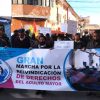
Rights with No Age Limit: Hopes for a Convention on the Rights of Older People
The world’s population is ageing. Global life expectancy has leapt to 73.3 years, up from under 65 in 1995. Around the world, there are now 1.1 billion people aged 60-plus, expected to rise to 1.4 billion by 2030 and 2.1 billion by 2050. This demographic shift is a triumph, reflecting public health successes, medical advances and better nutrition. But it brings human rights challenges.
The Disappeared: Mexico’s Industrial-Scale Human Rights Crisis
They found shoes, hundreds of them, scattered across the dirt floor of an extermination camp in Jalisco state. These abandoned shoes, once belonging to someone’s child, parent or spouse, stand as silent witnesses to Mexico’s deepest national trauma. Alongside charred human remains and makeshift crematoria meant to erase all evidence of humanity, they tell the story of a crisis that has reached industrial-scale proportions.
Turkey’s Democratic Uprising: A Generation Takes a Stand
In the heart of Istanbul, a remarkable transformation is underway. What began as student protests following the politically motivated arrest of Mayor Ekrem İmamoğlu has evolved into Turkey’s most significant pro-democracy mobilisation in years. The streets that once pulsed with the routine of daily life now throb with the energy of millions demanding a return to democratic governance.
How to Turn the Tide: Resisting the Global Assault on Gender Rights
This year’s session of the United Nations Commission on the Status of Women (CSW69), the world’s leading forum for advancing gender equality, confronted unprecedented challenges. With Saudi Arabia in the chair and anti-rights voices growing increasingly influential in the forum, the struggle to hold onto international commitments on gender equality intensified dramatically. On 8 March, International Women’s Day mobilisations also took on added urgency, with demonstrations from Istanbul to Buenos Aires focusing on resisting the multiple manifestations of gender rights regression being felt in communities worldwide.« Previous Page — Next Page »





The Week with IPS

NEXT STOP - SDGs
Tracking global progress towards a sustainable world
Tracking global progress towards a sustainable world
