Languages
Wednesday, November 11, 2026



News and Views from the Global South
DEVELOPMENT: Not Another Missed Opportunity, Civil Society Urges
A coalition of civil society organisations called the Global Social Economy Group (GSEG) is pressing for the immediate and long-term financing needs of developing countries to take centre-stage at the U.N. Conference on the World Financial and Economic Crisis.MIDEAST: Iran Crisis Ripples Outward
As the political crisis that erupted after Iran's Jun. 12 elections enters its third week, it is becoming evident that this crisis will have repercussions in many parts of the Middle East - and far beyond.US-IRAN: Misreading the Protests in Tehran
After 30 years of enmity that closed off most lines of communication, the recent crisis in Iran has suddenly engendered a boom of U.S. interest in the Islamic Republic.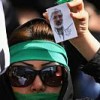
IRAN: Women at Forefront of Popular Defiance
When tens of thousands of protesters braved the ongoing government crackdown to gather in Tehran's Baharestan Square in front of the Parliament building Wednesday in response to a call by supporters of Mir Hossein Moussavi and Mehdi Karroubi, they were met with some of the harshest violence seen since Iran's post-election turmoil erupted nearly two weeks ago.
TRADE-MAURITIUS: Paradise Island, Pirates’ Den
Pirated goods - from music and vehicle parts to clothes, perfumes and software - are sold at ridiculously low prices on the streets or in local shops. This is big business in the paradise-like island state of Mauritius.
ECONOMY: More Democracy the Cure for Broken System, U.N. Says
The United Nations General Assembly kicked off a three-day conference on the world financial crisis Wednesday with calls for a substantial overhaul of the decades-long model under which the world's richest countries set the terms of global fiscal and trade policy.
POVERTY-MAURITIUS: Labouring Through a Class Four Cyclone
Thousands of workers in the textile and manufacturing industry in Mauritius have been forced into unemployment and poverty within the last few months, as factories announced multiple rounds of job cuts due to the global financial crisis.POLITICS: Some Drug Trades Easing Up, U.N. Says
While worldwide production of heroin and cocaine appears to be slowing, there has been an increase in the use of synthetic drugs, especially in the Middle East, according to the latest report by the U.N. Office on Drugs and Crime (UNODC) released Wednesday.DEVELOPMENT: China Lends Support to U.N. Finance Summit
China has lent its support to a U.N. finance summit where developing countries are pressing to air their grievances over how the global economic crisis has affected the world’s poorest. Yet, for the largest developing country the crisis remains a debacle with a silver lining - a matchless opportunity to accomplish its dream of regaining the regional and global clout it once held, and fast forward its ambitions.MIDEAST: The Writing Is On the Settlement Walls
A paralysing equation has long bedevilled would-be Middle East peacemakers: either, go directly to negotiating the kernel issues of the Israel-Palestine conflict - borders, security, refugees, Jerusalem - and leave, in the context of a full peace, the thorny question of Israeli settlements in the West Bank to fall naturally into place. Or, tackle the settlements head-on, thereby opening the way for a peace drive.DEVELOPMENT: UN Meet May Short-Change the Poor
As United Nations members gather for talks on how best to end the global financial crisis, anti-poverty campaigners fear that instead of addressing poverty in the developing world, governments will work to prop up financial structures.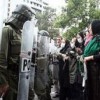
IRAN: Harsh Crackdown Extends to Leading Opposition Figures
Eleven days after Iran’s disputed Jun. 12 president election, the government of President Mahmoud Ahmadinejad appears determined to round up key members of the opposition, journalists and human rights activists who could play a key role in rallying public support for opposition demands.EAST TIMOR: UN Helps to Mitigate Disaster Risk
Disasters happen regularly in East Timor, but until now, the institutions called on to deal with them have struggled to effectively react to seasonal events that impact thousands of Timorese lives every year.FIJI: Swine Flu Spreads to Vulnerable Pacific Island Nations
Fiji has become the second Pacific island nation to confirm cases of the H1N1 flu virus following two positive tests returned over the weekend.
POLITICS: Will Women Be an Afterthought at U.N. Crisis Meet?
A groundbreaking U.N. General Assembly conference on the global economic crisis and its impact on development, set to begin Wednesday, may sideline women's numerous concerns, civil society groups say.

ENVIRONMENT: No Breakthrough Seen in Whaling Stalemate
Environmental groups expressed little hope the participants at the 61st annual International Whaling Commission (IWC) meeting, beginning Monday in Madeira, Portugal, would reach a compromise that would reduce the number of whales killed each year.Ecobreves – HONDURAS: Nearly 4,000 Tons of Garbage Daily
Honduras produces some 3,800 tons of garbage per day, which contributes to the reproduction of flies, mosquitoes and rats, which in turn transmit preventable diseases.Ecobreves – MEXICO: Recession Puts Bike Plan on the Skids
The economic crisis has put the Mexico City government's plan to expand bicycle paths -- which now total 80 kilometers -- on hold. The expansion plan coasted to a halt in late 2007.Ecobreves – ARGENTINA: Polluting Mining Company Finances Public Universities
The Foundation for the Defense of the Environment, in the central Argentine province of Córdoba, reported that a mining company whose vice-president has been indicted for polluting is handing out millions of dollars to public universities.Ecobreves – BRAZIL: World Bank Cancels Loan to Meat Processing Plant
The International Finance Corporation, the private sector arm of the World Bank, rescinded 45 million dollars of financing granted in 2007 to the Grupo Bertin, Brazil's largest beef processing plant.« Previous Page — Next Page »





The Week with IPS

NEXT STOP - SDGs
Tracking global progress towards a sustainable world
Tracking global progress towards a sustainable world
