Languages
Wednesday, November 11, 2026



News and Views from the Global South
ANGOLA: Military Raids Target Restive Oil-Rich Enclave
A new report issued by Human Rights Watch (HRW) Monday calls for the Angolan government to end the arrest and torture of suspected rebels in the oil-rich enclave of Cabinda.IRAN: “The Streets Were Overtaken by Tear Gas”
The streets of Tehran were a veritable war zone Saturday night, as angry voters took to the streets for the sixth day of protests this week against the Jun. 12 elections that re-instated Mahmoud Ahmadinejad as president.URUGUAY: Rural Schools Threatened by Emptying Countryside
Cono Perdigón rides a bus that bounces its way down a dusty, pitted road to reach the rural schoolhouse where he teaches.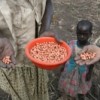
AGRICULTURE-AFRICA: Seeking Diversity, Resilience and Farmer Control
The Alliance for a Green Revolution in Africa (AGRA) claims that its "stress breeding", high-yield seed program and its emphasis on grassroots farmer input will boost agricultural production among poor, small scale farmers. But NGOs and environmentalists say AGRA’s Programme for Africa’s Seed System (PASS) is essentially a top-down, corporate driven approach that further threatens food security on the continent.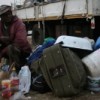
RIGHTS-SOUTH AFRICA: Xenophobia Still Smouldering
"My worry is that my children are going to be slaves because they won't have anything. These foreign people come to South Africa with nothing, but tomorrow he has cash, third day he owns a shop and fourth day he has a car. Where do these foreign people get this money?"POLITICS: Mexican Cartels Armed by U.S.
Many of the firearms fuelling Mexican drug violence originated in the United States, says a new report by the Government Accountability Office (GAO) released Thursday.HEALTH-KENYA: Family Planning Not Only For Women
In a makeshift room inside an unfinished building in the Manyatta slums in the Western Kenyan city of Kisumu, the neighbourhood’s men regularly congregate to discuss community matters, usually in the presence of the area chief.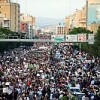
POLITICS: Will “Changed” Iran Complicate U.S. Engagement?
As uncertainty persists about the results of the Iranian election last Friday, the administration of U.S. President Barack Obama remains quiet on just exactly what the next tack will be on engaging the Islamic Republic, which experts say is entering a new and unknown period in its history.POPULATION: The Worst Places to Be a Refugee
Gaza, South Africa and Thailand are among the world's worst places to be a refugee, according to the latest annual World Refugee Survey released here Wednesday by the U.S. Committee for Refugees and Immigrants (USCRI).RIGHTS: Sri Lankan Journalists Face Severe Persecution
At least 11 Sri Lankan journalists were driven into exile in the past 12 months amid an intensive government crackdown on critical reporters and editors, said a new survey from the Committee to Protect Journalists (CPJ) released Wednesday.US-MIDEAST: Parsing Netanyahu’s Palestinian State
Israeli Prime Minister Benjamin Netanyahu has laid out his terms for peace in the Middle East. In a highly anticipated speech at Israel’s Bar-Ilan University last Sunday, Netanyahu said – for the first time – that he was willing to consider a "demilitarised" Palestinian state, existing side by side with Israel.U.S.: Govt Report Calls for Swift Action to Avoid Climate Chaos
Fiercer heat waves and wildfires in the U.S. western states, bigger storm surges along the country’s coasts, and disruptions to energy, water and transportation systems are just some of the expected impacts of climate change, according to a new White House report that marks the first scientific statement from the Barack Obama administration acknowledging that the problem is already directly impacting U.S. citizens.DEVELOPMENT: China Reins in Dam Builders
Beijing has reined in China’s unbridled dam-building spree, issuing warnings to power-hungry developers that stimulating the economy in a time of crisis should not be used as an excuse to forego environmental reviews of big hydroelectric projects.TRINIDAD: Environmentalists Win Round in Smelter Plant Battle
Wayne Kublalsingh could hardly contain himself. Minutes after Trinidad's High Court issued a ruling Tuesday temporarily halting construction of a controversial smelter plant, Kublalsingh ripped open his shirt, revealing a jersey emblazoned with the words: "No Smelter".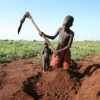
AGRICULTURE-AFRICA: Questioning Old Traditions
Inefficient production, bad infrastructure, poor access to markets, a lack of capital investment: the challenges facing smallholder farmers across Africa are many. A 'green revolution' which appears to be gaining ground in Africa seeks to change all this.U.S.: Report Blasts Terror Financing Laws and Investigations
Muslim charities in the United States are subject to unfair treatment by the government under terrorism financing laws, according to a new report which says the effect has been a chill on charitable giving that violates Muslims’ right to freely practice an important requirement of their religion.
MADAGASCAR: Hunger Stalks Drought-Stricken South
The southern part of the island of Madagascar is suffering severe drought and famine. Lack of rainfall during the summer season has destroyed the country’s main harvest in March and April. Half a million Malagasy have little or no access to clean water and food.
SCIENCE: Hybrid Chestnut Trees Hold Promise as Carbon Sponges
Reducing carbon levels in the atmosphere may be as simple as planting a new breed of hybridised chestnut trees, according to a new study by Purdue University Associate Professor Douglass Jacobs.MIGRATION: Pakistan Refugee Crisis Worst in a Decade, U.N. Says
Forty-two million people were forcibly uprooted by conflict and persecution worldwide in 2008, said a new report by the United Nations High Commissioner for Refugees (UNHCR) released Tuesday.RIGHTS: Sexual Violence in War Hauled Out of the Shadows
On Jun. 19, 2008, the U.N. Security Council passed Resolution 1820, expressly addressing the problems of sexual violence in conflict situations. One year later, three experts in the field gathered to speak at the United States Institute of Peace to evaluate the implementation of 1820 and consider how it might better prevent this widespread crime.GERMANY: Quietly Arming Conflicts
Pacifists, the political opposition and churches are bashing the German government for rising arms exports that have made the country the world's third largest supplier of weapons. But an industry insider says the German arms exports policy is still among the most restrictive worldwide.« Previous Page — Next Page »





The Week with IPS

NEXT STOP - SDGs
Tracking global progress towards a sustainable world
Tracking global progress towards a sustainable world
