Languages
Friday, November 13, 2026



News and Views from the Global South
Ecobreves – MEXICO: Promising Invention for Spinal Injuries
Mexican researchers have synthesized a polymer that promises to restore the electrical connections in a damaged spinal cord, which could help injured people recover mobility.Ecobreves – ARGENTINA: International Dialogue on Climate Change
"Adaptation, mitigation, technology transfer and financing" were the issues dealt with at the climate change meeting that drew environment ministers from 25 countries to the southern Argentine city of El Calafate.Ecobreves – BRAZIL: Industries that Save Forests
The industrial complex established in the Brazilian Amazon city of Manaos at a cost of heavy subsidies since 1967 has reduced deforestation in the northeastern state of Amazonas by 70 percent between 2000 and 2006.Ecobreves – HONDURAS: From Garbage to Micro-Enterprise
Some 30 families from the community of El Volcán, in the central Honduran valley of Comayagua, launched a project this month to recycle garbage.
Lachuá, a Corner of the Guatemalan Jungle Resists
The Laguna Lachuá National Park aims to be a model of sustainable development in a unique ecosystem, but it is surrounded by threats.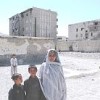
AFGHANISTAN: Severe Hunger Can Help Taliban
If 11-year old Zayainullah doesn't bring home enough money today, he says he will get beaten. "We don't have food and my aunt threatened me, saying I have to bring back enough money to buy bread," he says.JAPAN: Tainted Rice Scam Shakes Consumer Confidence
Consumer confidence in quality-conscious Japan has been badly shaken by a scandal over contaminated rice that was discovered to have been imported and distributed to restaurants, hospitals, schools and stores.POLITICS-US: Anti-Islam Film Targets “Swing State” Voters
Millions of voters in U.S. states crucial to this fall's presidential election received DVD copies of a controversial documentary film as advertising inserts in their morning newspapers over the past week, with more expected to be sent out over the upcoming weekend.
MEXICO: Time Running Out for Capital’s Garbage
If the Mexico City government were to keep its promises, laid out in laws and plans in 2003 and 2004, the treatment of the 12,300 tonnes of garbage generated daily by this city of 19 million people would be more environmentally friendly. But instead there is a looming threat of collapse and the contaminated area remains enormous.DEVELOPMENT: Ending Africa's Food Crisis
Africa's food crisis can be alleviated by modernising agriculture and reforming supply chains so that small-scale farmers get cheaper fertiliser and high-yield seeds, experts and officials at a conference in Oslo have argued. But so far, they say, funding is lacking.RIGHTS-ROMA: The Finger Now Points to Italy
White T-shirts with a designer smudge of a dark fingerprint were the most popular item of fashion among the 500 people attending the European Union's first-ever 'Roma summit' in Brussels this week. Carrying the slogan 'No Ethnic Profiling', the garments drew attention to highly controversial moves by the Italian authorities to carry out a census of the dilapidated camps in which members of Europe's largest minority are frequently condemned to live.ECONOMY-US: Only Real Fix Is Regulatory, Analysts Say
The blood flowing this week from Wall Street, spilling over into the homes of most citizens and the economies of other countries, raised urgent calls for stricter regulation of major players in the U.S. economy.ECONOMY-KENYA: Shady Deals and Intrigues Haunt Privatisation
The Kenya Railways Corporation was more than a national utility. It was a repository of Kenya’s history, beginning in the 19th century when indentured Indian labourers were brought to the East African region to build the Kenya-Uganda railway line.RIGHTS-NEPAL: Return to Peace Threatened by Vigilante Groups
Prime Minister Pushpa Kamal Dahal’s defence in parliament of continued vigilante action by the Young Communist League (YCL), the youth wing of his Communist Party of Nepal - Maoist (CPN-M), has disappointed rights activists as detrimental for a quick return to the rule of law.EUROPE: Turkey to be Pushed to Speed Up Reforms
Turkey will be told later this year that it should accelerate the pace of its reforms on freedom of expression in an official assessment of its efforts to join the European Union.EAST ASIA: History Wars
Northeast Asia is a relatively peaceful place. Although the Cold War still divides the Korean peninsula and the Taiwan Straits, there are no hot conflicts in the region. Negotiators in the Six Party Talks are attempting to solve the major security issues of the region through diplomatic means.
RIGHTS: Women Fight to Put Violence on Global Agenda
Joyce and Tanya - two women of different ages, nationalities, cultures and religions - share something: both became victims of a missing goal.CUBA: THE MASS MEDIA INTO QUESTION
The shortcomings of the Cuban media are due not to a lack of professional ability or to technical or financial deficiencies but rather to entrenched ways of thinking. As in other sectors -agriculture, the service industry, and home construction- there is a clear need for a less centralised and less uniform model, writes Rafael Hernandez, a political commentator and editor of the journal Temas in Havana. In this article Hernandez writes: the national debate that developed in September and October 2007 after the July 26 speech by then interim president Raul Castro showed not only that is there unmuzzled criticism of the government by Cuban civil society but also that channelling it through the Cuban media reinforces the general attitude towards the government. This debate revealed that Cubans disagree strongly with the mass media, which they criticise for not reflecting their national reality or giving sufficient space to Cuban public opinion, for its repetition of slogans, and for its \"excessive politicisation\". Democratic debate, with complete clarity and confidence on the part of the state, cannot be limited by the fear that there might be an attempt from outside the country to take advantage of the situation, Raul Castro stated on July 26 - \"because sooner or later the truth will come out\". The implementation of this policy will make it possible for the real Cuba, a vibrant and diverse civil society in contrast to its usual representation as uniform mass, to fully express itself.
Q&A: "The Notion that Water Is Forever Is Wrong"
Venality, greed, corruption - the documentary film "Flow: For Love of Water" could just as easily be subtitled "The Evil That Men Do."DEVELOPMENT: Millions More Children Attending School
Despite the world not being on track to meet the Millennium Development Goals (MDGs), there has been real progress - even in some of the world's poorest countries.POLITICS-JAPAN: ‘Ruling Party Turmoil Shows Democracy Working’
After Yasuo Fukuda abruptly resigned as prime minister on Sep.1, there has been talk of a political vacuum building up in Japan. But a leading analyst points to the hot race for the ruling party’s presidency as proving the contrary.« Previous Page — Next Page »


The Week with IPS

NEXT STOP - SDGs
Tracking global progress towards a sustainable world
Tracking global progress towards a sustainable world
