Languages
Sunday, October 18, 2026



News and Views from the Global South
Ecobreves – BRAZIL: Studying Manatee Reproduction Through Feces
The analysis of feces could be the key to better understanding the reproductive cycle of the Amazonian manatee in its natural habitat, according to the Conservation of Amazonian Aquatic Vertebrates Project at the Mamirauá Institute in Brazil.Ecobreves – CUBA: “Greener” Cement Developed
Cuban scientists have developed a type of cement that is cheaper to produce and less polluting than conventional cement, with the support of the Federal Polytechnic School of Lausanne, Switzerland.
SA to implement plan on HIV this month.
 The South African government’s National Strategic Plan for HIV, TB and sexually transmitted infections (STI), due to be implemented this month, shows how serious the country’s government is about tackling this epidemic.
Kenya needs more information on breastfeeding
Kenya is moving closer to reaching MDG targets on HIV transmission, but age-old practices could hold urban areas back. Mary Itumbi looks at the children being breastfed by women that are not their natural mothers. 
SA hospital defies witchcraft fears and helps cerebral palsy children
A hospital in one of South Africa’s poorest and most isolated areas is defying tradition by providing a have to children with cerebral palsy. Children with these ailments are often hidden in rural areas as local tradition says they are bewitched. Mia Malan voices this insert compiled by Darren Taylor. Ecobreves – HONDURAS: Fires Destroy 5,000 Hectares of Forest
In the last two months, 5,000 hectares of forest have been destroyed by fire in Honduras, particularly in the jungle region of La Mosquitia, on the Atlantic coast.Ecobreves – ARGENTINA: Latin American Forum to Prepare for Rio+20
The city of Rosario in the eastern Argentine province of Santa Fe will host the Latin American Forum on Sustainable Development: Rosario, Towards Rio+20, which will bring together representatives of governments, international agencies and civil society organizations.Ecobreves – BRAZIL: Bees as Indicators of Air Quality
A research study by the School of Higher Agricultural Studies at the University of São Paulo found that bees can act as bioindicators of air pollution and air quality.Ecobreves – MEXICO: Call to Ban Transgenic Soybeans
An alliance of civil society organizations, academics and citizens has called on the Mexican government not to grant authorization for the commercial cultivation of genetically modified soybeans in the southeastern state of Yucatán, because of the potential impact on local honey production.
OP-ED: Where Economic and Environmental Prosperity Meet
One of the lesser-known catalysts of the 2011 Arab Spring uprisings was a global grain crop failure in 2010, caused by drought and flooding that year from Russia to Canada.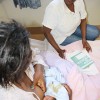
More teenagers are falling pregnant in rural South Africa
A health NGO says increasing numbers of teenagers, some as young as 13, are falling pregnant in an isolated part of South Africa’s Eastern Cape. The Philani organisation says it commonly helps 15-year-old girls in the area who have already had three children. Health workers attribute the situation in the Zidindi district, where most people are unemployed, to a variety of factors, including extreme poverty. This report was compiled by Darren Taylor and voiced by Mia Malan. 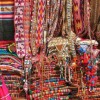
Native Andean Women Weave a Future in Bolivia
Their skill and dexterity in weaving textiles, to be worn on festive occasions or displayed in windows for sale to tourists, have become the mainstay of indigenous women and their families in Cochabamba, Bolivia.
AUDIO – High Oil Costs Drive Jamaica’s Clean Energy Agenda
Jamaica’s spend on oil imports is now topping its export earnings and environmentalists are worried that high electricity rates and petroleum prices are increasing the nation's vulnerability to external shocks and putting pressure on the local environment.
[podcast]http://traffic.libsyn.com/ipsaudio/1_Track_01.mp3[/podcast] 
Women farmers in Kenya have been supplying rare vegetables to market for the past decade, but the changing weather are putting the women under pressure.
Women farmers in Kenya have been supplying rare vegetables to market for the past decade, but the changing weather are putting the women under pressure. Martha Nyambura reports from Kasarani. Ecobreves – BRAZIL: Solar-Powered Lamp Post Designed
A post that uses the sun’s rays to light LED lamps has been developed by a design student at the Federal University of Pernambuco, in northern Brazil.Ecobreves – HONDURAS: Destruction of Coral Reefs Denounced
The construction of docks for cruise ships off the Caribbean coast of Honduras poses a serious threat to coral reefs, warn environmentalists.Ecobreves – VENEZUELA: Oil Spill Halts Fishing in Lake Maracaibo
Hundreds of fishermen in southern Lake Maracaibo, in western Venezuela, stopped casting their nets in the last week of March after observing massive numbers of dead fish and crabs along the lakeshore as a result of an oil spill in one of the lake’s tributaries, the Catatumbo River.Could Mining Threaten Mongolia’s Tourism Potential?
Twenty years ago, when a Dutch cyclist named Rik Idema first passed through Mongolia on a round-the-world biking trip, the country struck him as the most pristine place he'd ever seen.
Rights Group Criticises Afghan ‘Moral Crimes’
A new report from Human Rights Watch says hundreds of women and girls in Afghanistan have been imprisoned for 'moral crimes', including running away from home and sex outside marriage.Palestinian Prisoners Fight Back With Hunger
As 29-year-old Palestinian prisoner Hana Shalabi enters day 43 of her open- ended hunger strike Thursday from a hospital bed in northern Israel, over two dozen other Palestinian prisoners have now followed suit, refusing food as a way to protest their arrest, detention and treatment in Israeli prisons.New Alternative in Senegal After Wade Defeat
Analysts say that Senegal’s outgoing President Abdoulaye Wade was made to pay for his failure to respond to popular demands, particularly arising from the high cost of basic commodities, a lengthy strike by teachers, and high youth unemployment, by losing his bid for a third term of office.« Previous Page — Next Page »





The Week with IPS

NEXT STOP - SDGs
Tracking global progress towards a sustainable world
Tracking global progress towards a sustainable world
