Languages
Saturday, November 14, 2026



News and Views from the Global South

Q&A: 'With the Right Methods, You Can Be Self-Sufficient'
The U.N. High Commission for Refugees says that in the five years since camps were established in Southern Chad for Central African refugees, U.N.-administered agriculture programs have reduced external food assistance to a minimum.CLIMATE CHANGE: Small Islands’ Warning Went Unheeded
When the president of the Maldives, Maumoon Abdul Gayoom, addressed the U.N. General Assembly about 20 years ago, he warned of the possible death of his tiny Indian Ocean island if steps were not taken to curb climate change.
Q&A: "A Silent Housing Crisis Is Unfolding"
With a billion people living in slums, and thousands more joining them every day, the world faces yet another looming challenge - the rise of an impoverished urban underclass, says Anna Tibaijuka of the United Nations Human Settlements Programme (U.N. Habitat).RIGHTS: ‘Gay Acceptance Related to Income’
The past few months have seen victories and setbacks in the international struggle for gay rights. In June, Norway became the latest country to legislate in favour of allowing same-sex marriages. In May, however, Gambian President Yahya Jammeh issued homosexuals with a 24-ultimatum to leave the West African country, threatening to decapitate those who remained.INDIA/US: Deceptions Surface in Nuclear Deal
The Indian government has taken a major step towards completing its controversial nuclear cooperation deal with the United States by moving the Board of Governors of the International Atomic Energy Agency for approving an inspections (safeguards) agreement it signed last year with the IAEA secretariat pertaining to civilian nuclear reactors.IRAQ: Refugees Forsaken Even By Their Own Gov’t
As Iraq's refugee crisis continues to worsen, the government of Iraqi Prime Minister Nouri al-Maliki is failing to help the estimated five million Iraqis who have been displaced by conflict, says a new report by the International Crisis Group (ICG).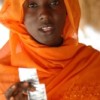
Q&A: Family Planning In Its Infancy in South Sudan
With few roads and almost no health and education infrastructure for the estimated 10 million people of South Sudan - an April census has yet to release any results - health care workers have an enormous task ahead of them.DEVELOPMENT-MOZAMBIQUE: An Overly Civil Society?
Civil society organisations in Mozambique are weak, concludes a report on the state of CSOs in the country earlier this year. It only confirmed an open secret: "The involvement of civil society organisations in the fight absolute poverty is mainly as observers, listeners..."POPULATION-INDIA: One-Child Ideal Catching On
Ponni, 27, lay quiet on a missionary hospital bed in this small town, groggy from the anaesthetic administered to her for a caesarean delivery a couple of hours earlier.
Q&A: ‘Speculation Is Causing An Oil and Food Price Bubble’
The soaring prices of oil and food are the result of a huge new global speculative bubble, created to recoup the financial markets’ losses when the technological and real estate bubbles burst, Syrian Deputy Prime Minister for Economic Affairs Abdullah al-Dardari told IPS.MEXICO: Police in the Dock Over Disco Deaths
Seventeen days after a police raid on a discothèque here that left nine young people and three police officers dead, Mexico City’s leftwing mayor, Marcelo Ebrard, announced sweeping changes in the discredited police force - including the dismissal of his chief of police.
RIGHTS-CAMBODIA: Locals, Lawyers Prepare for Battle Over Land
In thick forest in the north-east Cambodian province of Ratanakiri, a team of lawyers uses a global positioning satellite handset to mark the location of traditional spirit forests and gravesites belonging to local Jarai villagers.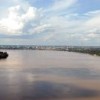
ENVIRONMENT: Indians Close Ranks Against Dams in the Amazon
Indigenous communities in Bolivia and Brazil have declared an emergency in response to the construction of the Madera River Hydroelectric Complex, which Brasilia is pursuing even as independent research efforts try to measure the impacts of what will be one of South America's largest energy projects.POPULATION-MIDEAST: Israel Fears the Womb More Than the Bomb
Israeli Prime Minister Ehud Olmert has laid it out in the starkest possible terms for his fellow Israelis. If they do not relinquish control of the occupied territories, he has warned them, Israel will ultimately cease to exist as a Jewish and democratic state.RIGHTS: EU Cautioned Over Aid to Eritrea
Aid given by the European Union to Eritrea may be helping to prop up a hugely repressive regime, human rights activists have claimed.
Q&A: "There Are No Negotiations Between Syria and Israel"
"There are no negotiations between Syria and Israel in Istanbul - what is happening is an indirect exchange of messages via Turkey, to explore ways towards a possible negotiation," Syrian Information Minister Mohsen Bilal told IPS.GRENADA: New PM Vows to Tackle Growing Poverty
Prime Minister Dr. Keith Mitchell apparently got his numbers all wrong, and the former professor of mathematics at Howard University in the United States is joining a number of his political colleagues who have been brushed aside by the winds of change sweeping the Caribbean over the past 18 months.
AGRICULTURE-CHAD: Farmers, Herders Collide In Southern Refugee Camps
Clarisse Larlombaye was nearly ruined when a herd of cows got into her rice field one night. The tiny 900-square-meter plot, outside the U.N.-run Gondje refugee camp in lush southern Chad is the sole source of income for Larlombaye and the two other Central African refugees she shares it with.DEVELOPMENT: ‘Planet Burns While G8 Fiddles’
While the world's major industrialised nations expressed satisfaction over their three-day summit meetings that concluded Wednesday, non-governmental organisations, after some early and limited approval, were deeply disappointed with the outcome on the whole.
THEATRE-US: Desegregating Schools, Then the Supreme Court
As Sen. Barack Obama prepares to accept the Democratic presidential nomination at a 75,000-seat football stadium in Denver, Colorado next month, a play on New York's Broadway takes audiences back to another iconic and groundbreaking figure in U.S. civil rights history.BOOKS: You’re Not on Their Speed Dial
Amidst the rise of multinational corporations, technology that unites people across borders, and new waves of international migration, globalisation has also ushered in the formation of a powerful network of elites who have access to unprecedented resources and influence - and whose decision-making impacts the lives of millions across the globe.« Previous Page — Next Page »


The Week with IPS

NEXT STOP - SDGs
Tracking global progress towards a sustainable world
Tracking global progress towards a sustainable world
