Languages
Saturday, November 21, 2026



News and Views from the Global South
GUATEMALA: Teaching With Two Voices
In the Xepanil village school in Santa Apolonia, to the west of the Guatemalan capital, 20 children are learning both Spanish and the Mayan indigenous language Kaqchikel. Their teacher, Marta Lidia Rodríguez, one of thousands of bilingual education teachers in this country today, walks an hour a day to get to the school.POLITICS-US: Peace Group Barred From Florida Schools
Public school districts in two Florida counties are refusing to allow members of a peace organisation to counter the presence of military recruiters by talking with high school students about options other than joining the service, according to a spokesperson for the group.ENVIRONMENT-ASIA: ‘Talking Dirty’ on Sanitation Can Save Lives
Although 2.6 billion people in the world - two-thirds of whom are in southern or eastern Asia - are living without access to basic sanitation, the issue has been a poor cousin to water supply in terms of visibility and financing.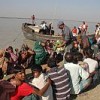
CLIMATE CHANGE: Bangladesh Takes Its Trauma to Bali
Bangladesh sees in the United Nations climate change conference, currently underway on the Indonesian resort island of Bali, an opportunity to remind the world of its special vulnerability.KYRGYZSTAN: Election Hurdles Leave Sparse Field
For the first time in the modern history of Kyrgyzstan, the parliament, called the Jogorku Kenesh, will be formed under a proportional system in which voters select a party rather than cast ballots for individual candidates.TRADE: Subsidies Reform Still a Game of "You First"
Back in 2001, the European Union committed itself to phasing out all forms of subsidies that help its farmers sell food abroad.TRADE-AFRICA: ''Focus Should Be on Domestic Needs, Not Exports''
African states should address the needs of local markets and of their regions before looking at what can be exported globally, and not the other way round as is currently the case.
ENVIRONMENT-SOUTH AFRICA: Radioactive Water, the Price of Gold
Large gold-mining companies operating to the west of South Africa's commercial centre, Johannesburg, stand accused of contaminating a number of water sources with radioactive pollutants.ECONOMY: The Bitter Taste of Cocoa in Cote d'Ivoire
Hacking his way through the lush forest with a machete, his rubber boots sinking into the moist earth, Lambert Kwame surveys the plot of land that his family has worked for over 30 years, harvesting cocoa.MIDEAST: Olmert Walks Razor’s Edge in Peace Talks
Israeli Prime Minister Ehud Olmert has issued a dire warning to his people. Failure to reach a negotiated two-state settlement with the Palestinians, he has declared, will mean the end of the State of Israel.
CLIMATE CHANGE-JAPAN: Looking to Play a Key Role in Bali
Japan expects to play a key role at the 11-day conference which begins Monday on the Indonesian resort island of Bali, under the aegis of the United Nations Framework Convention on Climate Change(UNFCC).IRAQ: Government Fragments Further
As sectarian tensions escalate politically, a new fissure is appearing within the already fragmented Iraqi government.ENVIRONMENT-ZAMBIA: An Unwelcome Guest Has Taken Root
An invasive shrub has colonised a corner of the Lochinvar National Park, upsetting the balance of one of Zambia’s most diverse ecosystems. Mimosa pigra, originally from Mexico, is now threatening wildlife and pastoralists who depend on grazing lands in and around the park.Ecobreves – CHILE: Everyone Against Whale Hunting
Government, Parliament and non-governmental organizations in Chile rejected Japan's announcement of renewed hunting of more than 1,000 whales, for supposedly scientific purposes, in the Southern Ocean Whale Sanctuary, near the costs of Australia and New Zealand.Ecobreves – BRAZIL: Solar Energy for Sao Paulo's Public Buildings
Public buildings to be constructed in Sao Paulo, Brazil's most populous state, with 40 million inhabitants, will have solar energy units to heat at least 30 percent of the hot water consumed.Ecobreves – CUBA: Protecting Pets from Natural Disasters
The Cuban Animal Protection Association and the governmental Cuban Society for Veterinary Medicine will work together to devise ways to protect household pets during natural disasters or war.Ecobreves – VENEZUELA: Fishers Save the Dolphins
Dolphins that are part of the Caribbean seascape of the Venezuelan coastline have won the respect of artisanal and sports fishers, ensuring that these mammals are enjoying good health, biologist María Gabriela Silva, of the environmentalist group Seavida, told Tierramérica.Ecobreves – BRAZIL: National Plan Announced Against Climate Change
The National Plan for Climate Change to be elaborated by the Brazilian government is much welcome, though it should have been done and implemented long ago, say activists.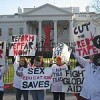
WORLD AIDS DAY: Ideology Trumping Health, U.S. Activists Say
On the eve of World AIDS Day Saturday, the U.S. Park Police arrested 40 demonstrators outside the White House as they chanted for sweeping changes to the George W. Bush administration's domestic and global AIDS policies.WORLD AIDS DAY-KENYA: Many Firms Still Ignoring the Bottom Line on HIV
HIV/AIDS cuts workers down in their prime, taking to the grave a wealth of training and experience that companies can ill afford to lose. Lower productivity, absenteeism from work and increased medical bills exact a further toll on the private sector - all of which begs the question: are employers being sufficiently active in helping to fight AIDS?DEATH PENALTY-MOROCCO: Conformist Media Blamed for Public Apathy
Lack of media interest in reporting on death penalty issues is responsible for widespread public indifference to whether or not Morocco eventually abolishes capital punishment, according to analysts and activists here.« Previous Page — Next Page »


The Week with IPS

NEXT STOP - SDGs
Tracking global progress towards a sustainable world
Tracking global progress towards a sustainable world
