Languages
Saturday, November 21, 2026



News and Views from the Global South

Q&A: ‘A Key Step Towards Abolition’
Amnesty International has been fighting since its foundation for the universal abolition of the death penalty. In the next weeks, the UN General Assembly will be voting on a resolution calling for a global moratorium on executions.
POLITICS-US: Bush Opts for “Confirmable” Attorney-General
The nomination Monday by President George W. Bush of retired federal judge Michael B. Mukasey for the top spot at the U.S. Justice Department is a departure from business as usual for the administration.
ENVIRONMENT: Experts Call for Action on Ocean Preserves
As much as 50 percent of the world's fish stocks are fully exploited and 17 percent are over-exploited, putting marine biodiversity at severe risk, according to a new report released Tuesday by the Worldwatch Institute.DOMINICAN REPUBLIC: Remittances for Development
Civil society organisations suggest that a plan be designed so that the money sent home by Dominicans abroad, known as remittances, will be used to foment development instead of simply going towards daily expenses.MIDEAST: Neocons Tie N. Korea to Israeli Strike on Syria
Nearly two weeks have passed since Israeli warplanes conducted a mysterious raid against an as yet unidentified target in northeast Syria. Details of the incident have been slow to come, as officials from both countries have remained tight-lipped.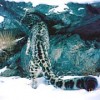
ENVIRONMENT-INDIA: Snow Leopards Earn Their Keep in Tourist Dollars
Tsring Angmo a student from Rumbak village in Ladakh attended a workshop conducted by the Snow Leopard Conservancy (SLC) in India out of sheer curiosity. "I came away feeling responsible for the safety of the endangered animal,’’ she said.CORRUPTION: World Bank, U.N. Target Kleptocrats
The United Nations and World Bank launched a bid Monday to strip crooked leaders of the money they steal from poor countries, and to plough the sums into health and development efforts.
Q&A: “It’s a Brave Politician Who Will Talk About Toilets”
When it comes to discussing the critical health problem of inadequate sanitation, few politicians want to take the lead, despite the mountains of scientific evidence that poor hygiene and lack of proper toilet facilities are the cause of many deadly but preventable diseases.FINANCE: Immigrants Target Money-Transfer Industry
U.S. immigrant groups are ratcheting up a boycott of Western Union Co. in hopes of forcing the global money-transfer industry to do good for its customers' families, not just do well for itself.POLITICS-CHINA: ‘New Anti-graft Body Lacks Teeth’
Corruption in China may be as old and enduring as the country’s legendary bureaucratic system but Chinese leaders are determined to use modern approaches in tackling it.
Q&A: Who Should Europe Aid, And How
The challenge of distributing and managing aid is inevitably controversial. And with the EU the largest aid donor in the world, the decisions it takes are hugely significant.
Q&A: How Brazil Haunts
Fifty years since it was first introduced to Brazil, bossa-nova continues to fuel the imagination of South American musicians, as well as a coterie of U.S. and European artists.TURKEY: Military and Government in Uneasy Marriage
Despite the verdict at the polls, Turkey's staunchly secular military is far from caving in to the Islamic-rooted civilian authority that is now in full control of parliament, the government and the presidency. At best it appears willing to accept, for the time being, an uneasy co-existence.
DEVELOPMENT-INDIA: Women Hold Key to Accepting Indoor Toilets
Like other women in this largely tribal, central Indian state, Draupati Bhosale was averse to the idea of having toilets built within homes, but went along because the government was building them at heavily subsidised costs. ‘’I thought it would give me extra storage space,’’ she said.HEALTH-WEST AFRICA: Rural Areas Said To Be in the Shadow of AIDS Efforts
Certain West African researchers have expressed concern at the disparities between rural and urban areas in their countries as regards HIV/AIDS services and prevention initiatives.
Q&A: 'War on Terror Served Iran's Interests Best'
Eminent writer, historian and filmmaker Tariq Ali was born in Lahore in 1943. While a student at Oxford University, he became involved in the movement against the war in Vietnam. That was the beginning of a long career in the literary arts and in peace activism that has earned him iconic status.Ecobreves – BRAZIL: Sugarcane Doesn't Need the Amazon
The ethanol fuel boom is driving the expansion of sugarcane plantations in Roraima, Brazil's northernmost state, because of its stable climate and flat terrain -- ideal for mechanized harvest.Ecobreves – MEXICO: Dolphins Mistreated and Killed in Captivity
Corruption and complicity of authorities allows some 20 dolphin aquariums to operate in Mexico, with more than half dying prematurely from pneumonia, stress and trauma from beatings.Ecobreves – GLOBAL: Ozone Protocol Also Curbs Climate Change
Twenty years after the Montreal Protocol entered into force, United Nations officials are celebrating the fact that this pact has gone beyond its objective of protecting the atmospheric ozone layer to reducing emissions of gases that cause climate change.FRANCE: Sarkozy Hedges Free Market With Gov’t Control
Following nearly two years of squabbling, this month France’s national gas utility, Gaz de France, finally agreed to team up with the Franco-Belgian utility Suez, to create an energy behemoth with some 72 billion euros in revenue.LATIN AMERICA: Native Leaders Half-Heartedly Embrace ‘Historic’ Declaration
While governments and the representatives of international agencies celebrated the approval of the Universal Declaration on the Rights of Indigenous Peoples after more than two decades of negotiations, some native leaders and experts in Latin America were less enthusiastic.« Previous Page — Next Page »


The Week with IPS

NEXT STOP - SDGs
Tracking global progress towards a sustainable world
Tracking global progress towards a sustainable world
