Monday, August 31, 2026



News and Views from the Global South
Q&A: How Brazil Haunts
Interview with Vinicius Cantuaria, pioneer of bossa-nova music
- Fifty years since it was first introduced to Brazil, bossa-nova continues to fuel the imagination of South American musicians, as well as a coterie of U.S. and European artists.
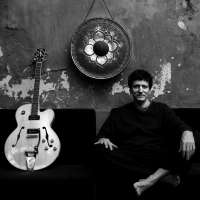
Vinicius Cantuaria Credit:
Considered by some critics as a leading exponent of 21st-century bossa nova', he has long blended the sounds he encountered during his youth with rock and electronic influences.
Born in Manaus, the capital of the Amazonas region, his family moved from the rainforest to Rio de Janeiro when he was seven years old. It was there that he found himself drawn to both the music of African origin he heard on the streets and the effervescent melodies of The Beatles.
Making his first foray into the international music business as a drummer with O Terço – a progressive rock group – he would later collaborate with Caetano Veloso, who spearheaded the Tropicalismo movement by fusing Brazilian pop with elements of rock 'n' roll. In 1981, Cantuaria wrote Lua E Estrella, which became Veloso's most successful hit.
Aged 56, Cantuaria moved to New York in the 1990s. The illustrious cast of musicians he has worked with include David Byrne, formerly of the U.S. group Talking Heads, electronica pioneer Brian Eno, Sean Lennon (son of the murdered Beatle John), Japanese composer Ryuichi Sakamoto, Benin-born singer Angélique Kidjo, inventive guitarists Bill Frisell and Marc Ribot and the jazz pianist Brad Mehldau.
Despite being ensconced in a home studio in Brooklyn, his latest album Cymbals betrays a deep yearning for his native Brazil. On the track O Batuque, he sings of how the anonymity one feels travelling on the New York subway fills him with homesickness.
Cantuaria spoke to IPS correspondent David Cronin during a recent visit to Brussels.
IPS: What are your strongest memories of growing up in Brazil? VC: I was born in Manaus but grew up in Rio. And when my family moved to Rio, it was a total shock. It was the first time I met African people, after coming from the Amazon.
I heard samba for the first time in Rio and that changed my life. My mother would walk me to school and I saw black African people playing tambourines and other musicians. This was totally unbelievable.
Before bossa-nova, the radio in Brazil didn't play samba; they preferred to play American standards. It was weird for me that I could hear beautiful music on the street that I couldn't hear on the radio. I grew up with this conflict and I think this conflict has made its way into my music.
IPS: Tell me about your time in the rock group O Terço.
VC: I joined O Terço when I was 17 years old. The band had a huge success in Brazil. We played strange rock music that was influenced by Crosby, Stills and Nash but we also played Brazilian music.
In 1972, we travelled to France to play with the Brazilian singer Marcus Valle. When we heard that Pink Floyd were playing in Paris one night, we put all our money together to buy tickets on the black market. It was incredible seeing them playing to 15,000 or 20,000 people when we were playing in small clubs, with no PA (public address) system.
Back in Brazil, the band pretended to be a Brazilian Pink Floyd but with no technology. I became a bit tired of this and decided to leave them.
IPS: You played a lot with Caetano Veloso, who had been jailed by the military dictatorship in Brazil in 1968 before exiling himself to London. Did his political views and the friction between him and the authorities affect you?
VC: I had a great time working with Caetano. The first time he sold 100,000 records, it had a song on it that I wrote for him. This was very good for my own career.
But when the military took power in Brazil in 1964, I was 12 years old. Caetano is 10 years older than me, so the situation had a greater impact on his generation. When he first invited me to play with him, I didn't know a lot about him.
IPS: Why did you cease working with Caetano Veloso?
VC: When I finished playing with Caetano in 1983, everybody knew me as the guy who wrote Lua E Estrella, which had been number one in Brazil for almost one year. Everybody always referred to me as 'Vinicius Cantuaria who worked with Caetano Veloso'. I decided that I wanted to do something different.
That said, working with Caetano was fantastic and we are still great friends.
IPS: What effect has moving to New York had on your music?
VC: In a way, I moved to New York to become Brazilian. In New York, I had more time to reflect on being Brazilian, more time to read books by Brazilian writers. Your perspective of Brazil becomes more intense when you are not there.
 Print
|
Print
|