Languages
Saturday, November 21, 2026



News and Views from the Global South
LEBANON: 'Army Torturing Palestinian Refugees'
Palestinians displaced by the fighting at the northern Lebanese refugee camp Nahr al-Bared have accused the Lebanese Army of torturing and abusing civilians.MIDEAST: A Village Makes Its Own Protest
Amidst acres of twisting olive trees in front of the Israeli apartheid fence, eight protesters in a weekly non-violent demonstration were injured and three arrested on Friday when Israeli occupation soldiers fired rounds of tear gas, smoke bombs, sound grenades and rubber bullets at the crowd in the West Bank village of Bili'in.IRAQ: Iran Ties Weaken Government Further
Iraqi Prime Minister Nouri al-Maliki's increasing ties with Iran have triggered a splintering of his government.KOREAS: 'Bilateral Summit – Wrong Place, Wrong Time'
If you try to please your host too much you risk being snubbed. This could be the advice that South Korean President Roh Moo-Hyun gets from his mentor and predecessor in office, Kim Dae-Jung, as he prepares to fly to Pyongyang for a bilateral summit this month.MOROCCO: Not Everyone Has the Right to Cure
Despite an annual health budget of half a billion euros, large numbers of people in this nation of 30 million still have no access to essential medical care.POLITICS-INDIA: Nuke Deal With US Draws Domestic Opposition
The "breakthrough" United States-India nuclear cooperation agreement finalised three weeks ago in Washington has run into serious all-round opposition in India and put Prime Minister Manmohan Singh in a piquant situationENVIRONMENT-COTE D’IVOIRE: Acacias Come to the Service of Mangroves
Mangroves, it could be said, have perfected the art of multi-tasking. Found along tropical coastlines, these trees and shrubs may prevent soil erosion, while their roots create breeding places for various marine species. So, when a particular mangrove forest is shown to have been reduced by two thirds in less than 20 years, there is major cause for concern.DEVELOPMENT: A New Breed of Hero
In September 2000, at the United Nations Millennium Summit, world leaders came together and agreed to a set of time-bound and measurable goals and targets for combating poverty, hunger, disease, illiteracy, environmental degradation and discrimination against women.
Q&A: Global Fight to Protect the Ozone Layer Celebrates 20 Years
The main achievement of the 20-year-old Montreal Protocol was to establish the process for recovering the ozone layer that protects life on Earth, although the enormous hole that opens every year over Antarctica will continue to happen for the next decade, says the head of the Ozone Secretariat, Marco González.RIGHTS: Tutsis in U.S. Reunite in Mourning
An innocent child, no more than four years old, stands alone sobbing in a sunlit field scattered with torn and smouldering tents. Around him lay scores of human bodies; murder victims who were stabbed, shot and burnt. This is the scene that greeted a Human Rights Watch researcher on the morning of Aug. 14, 2004.Ecobreves – BRAZIL: Agro-Toxins Kill Bees
A cocktail of agro-chemicals increasingly used in direct planting of soy is decimating bee colonies in Brazil's far south.Ecobreves – URUGUAY: Climate Change Threatens Coastline
Uruguayan politicians and citizens must be aware of the threats of climate change, especially for the coastal areas, says Pablo Mandeville, the United Nations permanent representative in this small South American country.Ecobreves – VENEZUELA: Producing Natural Fertilizers and Pesticides
In the Venezuelan southwest, near the Colombian border, the government has inaugurated the first of 21 laboratories to produce bio-pesticides and bio-fertilizers.Ecobreves – CHILE: Kids Protect Ozone Layer
Through the end of August, children in the fifth and sixth grades at schools in Chile's Tarapacá (north), Metropolitan (central) and Magallanes (south) regions can participate in a painting contest titled "I protect the ozone layer."Ecobreves – HONDURAS: Peasants Tested for Toxins from Mining
Thirty health experts finished tests of 62 inhabitants from El Pedernal, a village in the central Honduran valley of Siria, to determine if they have high levels of cyanide, lead, arsenic and mercury from mining operations nearby.
Q&A: Elections "Will Indicate Maturity in the Democratic Process"
Just hours remain before polling stations are scheduled to open in Sierra Leone for general elections that will see seven parties vie for the presidency, and control of the West African nation's parliament.
THEATRE-US: Million-Dollar Media Yields Cheap Thrills
Two Broadway plays showing here expose how the media and its stars, at both the high and the low end, manipulate politics to turn news stories into emotional confrontations.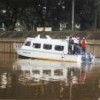
ENVIRONMENT-INDONESIA: Riding Water Taxis to Clean Rivers
On weekends, groups of children and their parents crowd around South Jakarta’s Halimun Pier waiting to take a joy ride on one of two water taxis, recently introduced by the administration.ENVIRONMENT-MALAYSIA: Water a Sacred Gift Affirm Interfaith Leaders
When religious leaders from different faiths sought to jointly affirm the sacredness of water as the source of life but were shooed away by authorities, it was seen as a move to scuttle interfaith harmony as well as support plans to privatise a common resource.
CULTURE: It All Begins With a Webcam and a Smile
Imagine rolling out of bed, sprinting to class in your pyjamas and meeting face-to-face with friends in Egypt, the Netherlands, Belgium and Morocco.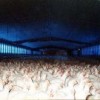
HEALTH-US: “Too Many Animals, Too Much Manure in One Place”
Imagine 600,000 hens confined in seven sheds - with a total of four workers to care for them and cages so dilapidated that birds often became entangled in frayed wires and died horribly.« Previous Page — Next Page »


The Week with IPS

NEXT STOP - SDGs
Tracking global progress towards a sustainable world
Tracking global progress towards a sustainable world
