
Thursday, October 15, 2026



News and Views from the Global South
Q&A: Elections "Will Indicate Maturity in the Democratic Process"
Interview with Christiana Thorpe
- Just hours remain before polling stations are scheduled to open in Sierra Leone for general elections that will see seven parties vie for the presidency, and control of the West African nation's parliament.
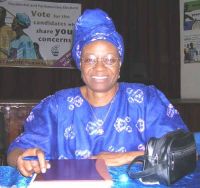
Christiana Thorpe, chairwoman of the National Electoral Commission of Sierra Leone. Credit: Michael J. Carter
Incidents such a series of house burnings aside, Sierra Leone has remained largely peaceful in the run-up to Saturday's ballot. However, fears have been expressed that violence may erupt in certain areas during the polls, notably those constituencies that are hotly contested by the ruling Sierra Leone People's Party and a breakaway faction, the People's Movement for Democratic Change. Saturday's vote is the first to be held since the departure of United Nations peacekeepers, and the ability of Sierra Leonean security forces to contain election violence in the absence of U.N. support is a subject of debate.
With polling being held in the rainy season, there are also concerns that voters may struggle to reach polling stations.
The National Electoral Commission (NEC) of Sierra Leone has the daunting task of ensuring that the ballot is not derailed by such difficulties. IPS's Michael J. Carter spoke to commission chairwoman Christiana Thorpe to find out how the NEC is coping with the challenges it faces.
IPS: Do you have concerns about election violence?
Christiana Thorpe (CT): Well, less so than maybe a month ago. You can say that the state of violence has subsided a lot, so I'm hoping that come election day, we won't have any violence.
IPS: What is your view of incidents of violence that have occurred to date?
CT: My concern is that we need a conducive atmosphere. We need a peaceful atmosphere for the election.
IPS: Will the absence of peacekeepers keep people away from the polls? Will women, in particular, have security concerns, do you think?
CT: We have police and I think they're quite capable of maintaining law and order in the country.
IPS: What other challenges have women voters faced in the past?
CT: Maybe women getting to the polls could have been problematic, especially in the rural areas. But I think now the awareness is there, and I'm sure more of them are going to make it to the polls this time.
IPS: Problematic in what way?
CT: The men have the last say, you know? You can't go to vote. (But) in the last five years the awareness has come in and there's been a lot of public sensitisation to the fact that everybody has their rights. Women are now sensitised that they too have the right to vote. It's not the privilege of the man giving the women the right.
IPS: The last general elections in 2002 were held under a system of proportional representation, seen as more conducive to giving women a voice in parliament than the constituency system. So, why has Sierra Leone since switched to a constituency system?
CT: That was the universal call from the people. In 2005 we went around to find out people's views, and everybody was calling for a constituency-based system so that they could have a say on who they voted in. With the district block, it was the party that put the candidates in (office); people now want to have their candidates accountable to them.
IPS: With only 11 percent of parliamentary candidates women, though, do you have concerns that the new system may be taking a toll on women's representation in politics?
CT: Well, I think that it's something where education needs to come aboard. For now, it's disappointing, the number of women that the political parties have given their acceptance to. But we are in a democratic process and I think things are going to improve as we go along.
IPS: Which system do you personally think is best?
CT: I think that the system that enables individuals to hold their candidates accountable is the best system.
IPS: Overall, what does this election mean to Sierra Leoneans?
CT: I would hope it means a lot to them. It means a lot to me, definitely…
It's the first (election) that will be conducted by the police and NEC with minimal assistance from the outside community, especially in the security sector. So it will indicate maturity in the democratic process and in self-governance.
 Print
|
Print
|




