Languages
Thursday, October 8, 2026



News and Views from the Global South
Mexico’s Homeless Are Targets of “Social Cleansing”
Non-governmental organisations in Mexico are presenting a complaint Friday Nov. 2 before the Inter-American Commission on Human Rights about government mistreatment and “social cleansing” of thousands of people living on the street in several of the country’s cities.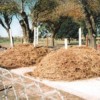
Towns in Argentina Unite to Confront Climate Change
Through everyday practices like avoiding the use of disposable products and sorting garbage for recycling, communities in the Argentine interior are joining forces to implement more effective environmental policies.Ecobreves – CHILE: Campaign Promotes Environmental Education For All
An innovative environmental education campaign in Chile seeks to motivate the public to adopt sustainable practices, through 15 “microprograms” that raise awareness and provide everyday solutions for a range of environmental problems.Ecobreves – HONDURAS: A Dam to Confront Drought
“This is a dam to confront the drought, which will help us to protect our forests and to increase our crop yields,” declared Darío Figueroa from the community of Manzaragua in the southern Honduran department of El Paraíso.Ecobreves – VENEZUELA: Fighting Greenhouse Gas Emissions with Nanotechnology
The Venezuelan Institute of Scientific Research (IVIC), a government agency, is experimenting with the addition of diminutive particles – in this case, mineral salts such as iron, cobalt and nickel nitrate – to decrease the greenhouse gas emissions that are characteristic of the oil industry.Ecobreves – BRAZIL: New Ship Will Expand Knowledge of the Ocean Floor
Thank to a partnership between the government and private companies, Brazil will soon acquire one of the most modern oceanographic research vessels in the world.Poverty Could by Defeated in the South American Countryside
Agriculture is on its way to becoming a top-priority economic activity in the Southern Cone, thanks to the growing world demand for food, say experts from the region.Women Using ICTs to Change the World
New technologies can transform society, and the role of women in using these tools to promote change was clearly seen at the first ICT Congress for Peace in this city in northern Spain.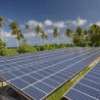
Pacific Island Sets Renewable Energy Record
Tokelau, a small Polynesian territory in the central Pacific, has surpassed the rest of the world in replacing fossil fuels and raised the benchmark of achievement on sustainable development.
Tough Job? Try Reporting on Corruption in Kazakhstan
Lukpan Akhmedyarov, a 36-year-old reporter for an independent weekly in western Kazakhstan who was recently ambushed and nearly killed, was awarded the Peter Mackler Award for Ethical and Courageous Journalism this month – the first journalist from that country to receive international recognition in 10 years.Ex-GA President Al-Nasser Receives UNA-NY “Humanitarian of the Year” Award
The United Nations Association-New York (UNA-NY) honoured former General Assembly President Nassir Abdul Aziz Al-Nasser as the 2012 “Humanitarian of the Year”.Sorting Out Mexico City’s Chaotic Transport System
Greater integration of public passenger transport is a major challenge facing the next government of the Mexican capital, one of the most traffic-congested cities in the world, if it wants to guarantee people the right to mobility.Number of IDP’s On The Rise Due to Climate Change
A staggering 26 million people worldwide currently struggle for survival while being displaced within their own countries, mostly due to armed conflicts. But the number of persons fleeing from natural disasters is on the rise – and the international community has to take measures to handle the increase.
Cooperatives Cushion the Blows of Hunger
“One in eight people goes to sleep hungry every day,” according to the ‘State of Food Insecurity in the World 2012’, a document released annually by the Food and Agriculture Organisation (FAO).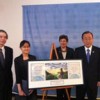
Art in a World Free of Nuclear Weapons
UN Secretary-General Ban Ki-moon promises to fight even harder for a safer world while honouring the winner of the United Nations Art for Peace contest.Humanity is Living Under Growing Nuclear Threat, Experts Say
"It is of great concern that, even after the end of the Cold War, the threat of nuclear annihilation remains part of the 21st century international security environment," according to a joint statement on the Humanitarian Dimension of Nuclear Disarmament released here on behalf of 34 states.
Gang Truce Can Break Down, Prevention Should Be Priority
- El Salvador has managed to bring down one of the world’s highest murder rates thanks to a truce between gangs that was lauded by the United Nations as an example to be followed in other countries of Central America.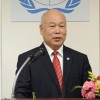
World Ecological Safety Assembly to Meet in Bali
As the world environment continues to be threatened by climate change, pollution, sea level rise and the degradation of cities and high seas, the International Ecological Safety Collaborative Organization (IESCO) is jointly hosting an international conference on “Survival and Development”.Ecobreves – MEXICO: Artificial Photosynthesis Being Explored
The Mexican National Council on Science and Technology (CONACYT) has launched an initiative to imitate natural photosynthesis for the purpose of generating alternative fuels and reducing carbon dioxide (CO2) emissions.Ecobreves – ARGENTINA : Alarm Raised Over Deforestation in Patagonia
Local residents, environmentalists and Mapuche indigenous communities have raised the alarm over two major real estate development projects in Villa La Angostura, in the southern Argentine province of Neuquén, which would involve the destruction of 1,100 hectares of forests.Ecobreves – HONDURAS: Peasant Farmers Adopt Organic Fertilizer
Small farmers in southern Honduras have begun to use organic fertilizer to improve their crops while promoting the creation of family farms in nearby villages.« Previous Page — Next Page »





The Week with IPS

NEXT STOP - SDGs
Tracking global progress towards a sustainable world
Tracking global progress towards a sustainable world
