Languages
Thursday, October 8, 2026



News and Views from the Global South
Ecobreves – BRAZIL: Clones Could Save Endangered Species
The Brazilian government's agricultural research agency, EMBRAPA, has begun to work on cloning animals in danger of extinction.
Companies Study Climate Risks and Opportunities
Initiatives undertaken by companies to reduce their emissions, mainly through greater energy efficiency, pay for themselves within three years, according to Juliana Campos Lopes of the Carbon Disclosure Project.
Cuban Families Grapple with Migration Reform
Her voice is calm. She no longer has any question that her “destiny” is to live outside of Cuba. “My father is getting older every day. It’s time for me to help him,” the 27-year-old woman tells IPS, commenting on her plans to emigrate and become her family’s provider.Argentina – Fighting the Worst Child Obesity Rate in the Region
Pediatricians and nutritionists stress that there is no single factor explaining why Argentina is the country in Latin America with the highest rate of obese and overweight children.U.N. Commemorates “Africa Week”
Despite great progress that Africa has shown with the development of agriculture, communication technology and peace and security, it still faces challenges relating to heavy debt loads, labour market woes and gender inequality which are factors that make African countries less competitive in the global market, the United Nations said at a press conference here.Space Security More Important Than Ever
More intentional cooperation is needed to promote responsible operations and to ensure both outer space and global security.Shale Gas Extraction Brings Local Health Impacts
Shale gas extraction is putting some U.S. communities at risk of health issues, new research released here Thursday warns.
In TB Fight, It’s ‘Pay Now or Pay Later’
The next several years could see either the elimination of tuberculosis in some regions or millions of otherwise preventable deaths, according to new research released in Washington Wednesday by the World health Organisation (WHO) The outcome, experts are warning, rests on a three-billion-dollar gap in funding needed to fully address TB next year as well to ensure the proper introduction of new drugs.
Reforms Spread to Cuba’s Travel Policy
The easing of travel restrictions announced by the Cuban government Tuesday was one of the most eagerly awaited reforms. However, limitations remain in place for professionals and others deemed essential to the country’s development or national security.Former Senior UN Official to Receive Special Jury Prize in France
Radhika Coomaraswamy, former Under Secretary General of the United Nations/Special Representative for Children and Armed Conflict, was chosen for the Special Jury Prize 2012 by the Fondation Chirac (Chirac Foundation).Global Nuclear Disarmament Still an Explosive Question
The Cuban missile crisis brought the world to the brink of a disaster 50 years ago. One may think that humanity learnt a lesson – yet the threat of the bomb persists, although it looks different today.Ecobreves – BRAZIL: Industrial Waste Used to Produce Concrete
Researchers at the Institute of Architecture and Urban Planning at the University of São Paulo have developed a type of concrete made with recycled materials.Ecobreves – CHILE: Government Assesses Construction of “Water Highway”
The government of Chile has commissioned preliminary studies for the proposed construction of a so-called water highway, which would transport water from the mouths of rivers in the south to the arid regions of the north.Ecobreves – HONDURAS: New Center for the Recovery of the Flora and Fauna of Olancho
Honduran and international institutions have joined forces to construct a center aimed at preserving endangered flora and fauna, such as the jaguar, in the northeastern department of Olancho.Ecobreves – VENEZUELA: Lionfish Confirmed as Voracious Predator
The red lionfish (Pterois volitans), a species native to the Pacific Ocean that escaped from aquariums in the Caribbean Sea two decades ago, is advancing on fish stocks and devouring young specimens of dozens of species in the waters off northern Venezuela.A Closer Look at Conflict-Related Sexual Violence
A new 2012 Human Security Report Project (HSRP) by the Simon Fraser University in Canada points out that evidences on wartime sexual violence and the impact of war on education should be reviewed.Ending Palestinian-Israeli Conflict Through South Africa’s History
While Israel and Palestine are still embroiled in a seemingly never-ending dispute, the poignant film “One Day After Peace” wonders if the resolution for one of the world’s longest-running conflicts could follow the path of South Africa’s forgiveness and reconciliation.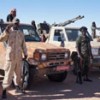
Tribal War Simmers in Libya’s Desert
A group of Tabu fighters with mud-splattered trucks rest on the outskirts of Zweila, a small historic slave-trade stop in Libya’s southwest Sahara.
Where Drugs Abound – and Syringes to Fight AIDS Are Scarce
In northern Mexico, one of the areas in the country hit hardest by drug trafficking, there are not enough syringes to protect intravenous drug users from HIV/AIDS and hepatitis.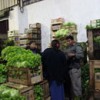
Market Gardening, a Ladder to Progress for Bolivians in Argentina
At the age of 53, Alberto Ramírez has come a long way since he came from Bolivia to Argentina every year during the harvest season since he was 12 years old, to work alongside his father. He now has a prosperous vegetable and fruit wholesale business in this city on the outskirts of Buenos Aires.Guatemala under Pressure to Investigate Shooting of Native Protesters
The deaths of eight indigenous demonstrators taking part in a protest against the Guatemalan government in the southwestern province of Totonicapán have provoked outrage within the country and abroad. The protesters accuse the army of shooting into the crowd.« Previous Page — Next Page »





The Week with IPS

NEXT STOP - SDGs
Tracking global progress towards a sustainable world
Tracking global progress towards a sustainable world
