Languages
Sunday, November 8, 2026



News and Views from the Global South
Ecobreves – ARGENTINA: Campaign to Oppose Nuclear-Generated Electricity
A network of environmental organisations in Argentina has launched a campaign to get electricity users to tell their service providers that they do not want electricity generated by nuclear power.Ecobreves – MEXICO: Ban on Toxic Insecticide Demanded
A network of environmental organisations is calling on the Mexican government to prohibit the sale of the insecticide endosulfan.Ecobreves – BRAZIL: Madeira River Home to World’s Greatest Fish Diversity
The Madeira River, the largest tributary of the Amazon, is the river with the greatest diversity of fish species in the world, according to a recent study by the Federal University of Rondônia.EL SALVADOR: Drivers Risk Extortion, Murder by Gangs
Zigzagging along the streets of the Salvadoran capital in his bus, José Nuila is much more worried about avoiding an attack by youth gang members than about making his way through the complicated tangle of traffic.DEVELOPMENT: IBSA Fund Packs Small But Sustainable Punches
Despite only three million dollars a year coming into the India-Brazil-South Africa (IBSA) Fund for Poverty and Hunger Alleviation, it aims to pack punches above its weight with small but sustainable projects.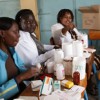
Activists say governments, and big pharmaceutical companies, can get more essential medicines to the poor.
 Isaiah Esipisu reports from Zambia, where campaigners work-shopped ways to make medicines more affordable.
DEVELOPMENT: IBSA’s South-South Funding With No Strings Attached
Development donors typically impose strict conditions on recipient countries. Now a different South-South approach to funding is taking shape through the India-Brazil-South Africa (IBSA) Fund for Poverty and Hunger Alleviation.OP-ED: Solid Present, Bright Future for Latin America’s Film Industry
Since the 1980s, despite chronic social crisis, Latin America has seen significant advances in economic and industrial development, which have given a boost to the region's film industry.
Israel Leads the Electric Charge
A woman takes the driver's seat, turns on the radio, sliding through broadcasts of the tit-for-tat battles between Israel and the Palestinian Islamist movement Hamas till she finds a quiet music station.Dominican Republic Seeks Greater Autonomy for CARIFORUM
The first public hint that something was amiss within the Caribbean Forum (CARIFORUM) bloc came last week from Belize's foreign minister, Wilfred Elrington, when his country hosted the 18th meeting of the Caribbean Community (Caricom) Council of Ministers, the second highest body within the 15-member regional grouping.Ecobreves – BRAZIL: Super Plastic Developed from Fruit Fibres
Researchers at the State University of São Paulo have created a new plastic ideal for use in automobiles from fruit fibres, using nanotechnology.Ecobreves – HONDURAS: More Than 500 Forest Fires
In the first quarter of 2011, over 500 forest fires were recorded in 16,973 hectares of forest, Trinidad Suazo, director of the Forest Conservation Institute of Honduras, told Tierramérica.Ecobreves – VENEZUELA: Sigatoka Disease Spreads Through Banana Plantations
Heavy, sustained rainfall outside the normal rainy season has triggered an upsurge in the spread of Mycosphaerella fijiensis, the fungus that causes Black Sigatoka disease, in banana plantations south of Lake Maracaibo in northwestern Venezuela.Ecobreves – OIL: Cuba Promises Environmental Safeguards in the Gulf of Mexico
Cuba has pledged to adopt all necessary environmental safeguards as it prepares to begin drilling five oil wells in the Gulf of Mexico, which it shares with Mexico and the United States.ZAMBIA: Constitutional Baby Out With the Bathwater
After two commissions and close to a decade of consultations, Zambia's constitutional redrafting process crashed when the new constitution failed to win parliamentary approval. Politicians, civil society and ordinary citizens seem uncertain whether to laugh or cry.KENYA: Feisty Politician Enters Presidential Race
Martha Karua fears nothing and no one, and when her adversaries look back at her long track record in politics, they must get nervous. This previously staunch supporter of Mwai Kibaki resigned as justice minister in 2009, and will challenge all comers for the presidency at the head of her own party next year.DEVELOPMENT: BRICS to Promote More Inclusive Global Partnership
At the upcoming Brazil, Russia, India, China and South Africa (BRICS) summit, to be held on the tropical Chinese island of Hainan Apr. 14, discussion will focus not only on deepening economic ties among members, but will also likely touch on global political events, including the crisis in the Middle East and North Africa. But China insists the club has no political agenda.Nigerian Women Stand Up to be Counted
As Nigeria tries again to begin its staggered general elections on Apr. 9, spare a thought for the women who will be putting themselves forward as candidates in an overwhelmingly male field.World Bank Chief Calls for Economic Reforms in Mideast
World Bank President Robert Zoellick on Wednesday pressed a Middle East and North Africa in the midst of the "Arab Spring" to promote vibrant civil societies and urged international financial and development institutions to hold its client governments in the region more accountable, if sustainable growth rates and more integrated economies are to take hold.U.S. Treads Cautious Line on Yemen Protests
United States officials reaffirmed their support for a peaceful transition of power in Yemen, but stopped short of publicly calling for President Ali Abdullah Saleh's immediate abdication as clashes between protesters and Yemeni security forces, which began in late January, violently escalate.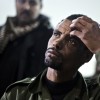
LIBYA: Prisoners on Both Sides at Risk
After a month and a half of conflict in Libya, the situation of political prisoners and prisoners of war on both sides is uncertain, and their fundamental rights are at risk.« Previous Page — Next Page »





The Week with IPS

NEXT STOP - SDGs
Tracking global progress towards a sustainable world
Tracking global progress towards a sustainable world
