Languages
Sunday, November 8, 2026



News and Views from the Global South
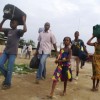
Cote d’Ivoire on the Edge of Chaos
Forces of law and order have abandoned their posts in Abidjan, creating a vacuum which has rapidly filled with violence, looting and fear.THE BOOM IN CAPITAL FLOWS TO DEVELOPING COUNTRIES CAN TURN INTO A CAPITAL PUNISHMENT
An unusual feature of the global financial crisis is that for developing countries (DCs) the financial band seems to have picked up the pace of the music. While many advanced economies (AEs) continue to encounter debt deflation, financial stringency and risks of insolvency, the financial problem for most DCs is asset inflation, credit expansion and currency appreciations. Except for a brief interruption in 2008, DCs have continued to receive large capital inflows as major AEs have responded to the crisis caused by excessive liquidity and debt by creating still larger amounts of liquidity to bail out troubled banks and governments, lift asset prices and lower interest rates. Quantitative easing and close-to-zero interest rates are now generating a surge in speculative capital flows to DCs with higher interest rates and better growth prospects, creating bubbles in foreign exchange, asset, credit and commodity markets.MIDEAST: Goldstone’s Volte-Face Gladdens Israelis, Angers Palestinians
Israelis have breathed a national sigh of relief following the publication of an absolutely unexpected article in last Friday's Washington Post. The column's title and author said it all.Ecobreves – HONDURAS: Illegal Dam Construction Under Investigation
The Office of the Special Prosecutor for Ethnic Groups in Honduras is investigating the construction of small hydroelectric dams without the required environmental licences in the western department of Intibucá, which is home to most of the country’s Lenca indigenous people.Ecobreves – BRAZIL: Guaraní Aquifer Threatened by Pollution
The illegal dumping of garbage and toxic agrochemicals used in sugarcane farming poses a serious threat to Latin America’s largest groundwater reservoir, the Guaraní Aquifer, according to the Institute for Technological Research (IPT) in the southern Brazilian state of São Paulo.Ecobreves – ARGENTINA: Buenos Aires to Contract Cooperatives for Waste Collection
The city of Buenos Aires will contract 13 cooperatives to handle the collection and recycling of all of the capital’s dry wastes as of 2012.
SOUTHERN AFRICA: Assessing the True Value of Water
As water resources in Southern Africa come under pressure from growing population, climate change and increasing industrial and agricultural use, economic accounting for water is among the tools that could aid better management.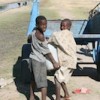
A $45-million infrastructure upgrade could give clean drinking water and provide sanitation to a million people in Namibia and Angola.
 A $45-million infrastructure upgrade could give clean drinking water and provide sanitation to a million people in Namibia and Angola.
MALAWI: Putting Knowledge Into Practice in Childbirth
Post-partum haemorrhage is the leading cause of maternal mortality worldwide, according to the World Health Organisation. A decade of applying research to midwifery practice in one Malawi district demonstrates that PPH is quite easy to prevent.
MIDEAST: Washington’s Patchwork Policy on Democracy
While a NATO-led coalition continues to enforce a no-fly zone in a Libya that seems to be on the brink of catastrophe, the Barack Obama administration has yet to formulate a set of guiding principles in dealing with ongoing protests throughout the region in countries like Bahrain.
AGRICULTURE: Malawian Cotton Farmers Ecstatic Over High Prices
An ardent listener to the radio, small-scale cotton farmer Mercy Kaduya from Chikhwawa in Nsanje in southern Malawi has just heard on the international news segment that cotton prices have hit a record high on the international market.EL SALVADOR-HONDURAS: Forgotten People of the Border Pact
Salvadorans who were transferred to Honduran jurisdiction following an international court decision in 1992, which settled a long-running border dispute between the two countries, are still calling for implementation of social and economic development projects needed to conquer poverty.Women Turn Spotlight on Haiti’s Silent Rape Epidemic
Some 14 months after Haiti's earthquake, activists say there is an ongoing epidemic of rape and gender-based violence (GBV) in the country's more than 1,000 squalid displaced persons camps, where nearly a million people are still awaiting permanent housing.CARIBBEAN: Colonies Seek to Redefine Relationship with EU
The newly elected chair of the Overseas Countries and Territories Association (OCTA), Montserrat's Chief Minister Reuben Meade, wants "trade rather than aid" to form the basis of the future relationship between Europe and its colonies around the world.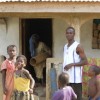
LIBERIA-COTE D’IVOIRE: Border Villages Sharing the Little They Have
This Butuo man only knows one phrase in French: Viens manger. Come eat. That's what they said to him years ago, when he was one of hundreds of thousands who fled to Côte d'Ivoire to escape the brutal 14-year civil war in Liberia.SOUTH AFRICA: Who Says Research Can’t Be Dramatic?
In the early 1990s, a group of researchers set off for a small rural village in the eastern part of South Africa. Their intention was simple: teach the community how to rehydrate sick babies.Ecobreves – HONDURAS: Eco-Friendly Comic Strip Launched
A beaver and a drop of water are the “heroes” in a new comic strip that recounts their adventures in protecting the environment, to be published in Honduran newspapers.Ecobreves – VENEZUELA: Bat Protection Measures Planned
Venezuelan researchers and authorities have created a working group to develop initiatives for the protection of the country’s 165 species of bats, whose populations are threatened by the degradation of their natural habitats.Ecobreves – BRAZIL: Water Shortages Threaten 3,059 Municipalities
According to a report on urban water supply released Mar. 22, 55 percent of Brazil’s municipalities could face water shortages by 2015.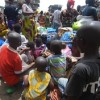
Ghana Border Town Braced for Influx of Ivorian Refugees
As many as a million people have fled Côte d'Ivoire's commercial capital, Abidjan, due to intensified fighting. Many people are fleeing to areas in the north, centre and east of the country as thousands of youth answered a call to join forces loyal to Laurent Gbagbo; others are trying to leave the country.Netanyahu Caught Between Status Quo And Power Vacuum
Disregarding the old adage that politics like nature abhors a vacuum, Benjamin Netanyahu could until now sing his own praise and declare that Israel under his premiership was an anchor of political stability whereas the wider Middle East was fast sinking into a power vacuum.« Previous Page — Next Page »





The Week with IPS

NEXT STOP - SDGs
Tracking global progress towards a sustainable world
Tracking global progress towards a sustainable world
