Languages
Monday, November 9, 2026



News and Views from the Global South
Ecobreves – BRAZIL: Plant Fiber Production Expands
The Brazilian Amazon region is beginning to reinstate itself in production of plant fibers, benefitting from campaigns against plastics.Ecobreves – CHILE: Preparing for Cochabamba Climate Summit
More than 100 people will be part of the Chilean delegation to the World People's Conference on Climate Change and the Rights of Mother Earth, to take place Apr. 19-22 in the central Bolivian city of Cochabamba.Ecobreves – CUBA: Blue Scorpion Against Cancer
Cuban scientists have isolated three proteins from the poison of the Caribbean's blue scorpion (Rhopalurus junceus), which inhibit malignant cancer cells. The scientists say they are willing to work with other laboratories to expand the research.Ecobreves – HONDURAS: Highway Avoids Native Species
The stretch of road intended to facilitate trade between Honduras and El Salvador is not expected to harm the endemic species the Honduran emerald hummingbird (Amazilia luciae) or the spiny-tailed iguana (Ctenosaura melanosterna) as environmentalists had feared it would.
Children on the Frontline
 Sub-Saharan Africa continues to register high levels of HIV prevalence.
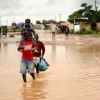
ZAMBIA: Health Fears Follow Floods
As the heavy rains subside, signifying the end of the rainy season, a cholera outbreak is sweeping through the Zambian capital, Lusaka.
Confronting Climate Change
"Abnormal" weather is becoming the norm in many parts of the world. Average temperatures, precipitation and wind patterns are changing, and non-climate factors -primarily the accumulation of greenhouse gases produced from human activities - are driving this change.
DEVELOPMENT: Fragile Nations Speak Up To Donors
An international dialogue meeting in East Timor Saturday saw fragile states make giant steps in showing developed nations how aid can be more effectively channelled to achieve their key development goals.MIDEAST: Belgian Bank Financing Illegal Settlements
Dexia, a major Belgian-French bank, is continuing to finance Israeli authorities in the occupied Palestinian territories almost a year after it indicated that it would cease providing loans to illegal settlements.MALI: Shea Production Vital to Women’s Incomes
Across the semi-arid Sahel region of West Africa, the shea tree prized by women, who produce a butter from its nuts that is a key ingredient in food and cosmetics. However, drought and diseases threaten this source of income.DEVELOPMENT: Listen to Us, Fragile States Tell Donors
"Work with us, not against us" was the message for international donors that came out of the g7+ meeting of fragile states, which met in Dili this week to discuss how they can make better use of the foreign aid they get.RWANDA: Remembering the Unforgettable
Sixteen years after the genocide in Rwanda, U.N. Secretary-General Ban Ki-moon vowed that the international community would never again sit by while mass atrocities are committed against innocent civilians./UPDATE*/POLITICS: Kyrgyz Leaders Say U.S. Can Use Air Base
Kyrgyzstan's new leaders sought to reassure Washington Thursday that it can continue to use the strategic Manas airbase near the capital Bishkek as a supply link for U.S. operations in Afghanistan.TRADE: Caribbean Questions EU Development Pledges
When Caribbean leaders sit across the table from their European counterparts at a May summit in Spain, high on their agenda will be the problems experienced by banana and sugar producers in gaining meaningful access to the European market.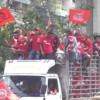
THAILAND: Amid Emergency, Calls for Compromise Rise
"I wish the red-shirt protesters will get tired soon and go home," Nicha, a 28- year-old receptionist, said soon after the Thai government declared a state of emergency as tens of thousands of protesters went into their fourth week of rallies here.RIGHTS-BURMA: Displaced Children Getting Traumatised – Report
"Our village was attacked many times. (The Burmese military) would come and take whatever they wanted from the village. Anything they don't want, they'd burn," said 19-year-old K K, recalling his experiences six years ago in the country’s southern Karen state.
RIGHTS: UNESCO in Disarray Over Controversial Prize
As UNESCO’s executive board meets here in the first of its two sessions per year, behind-the-scenes wrangling could result in a controversial life sciences prize being put on hold indefinitely.
RIGHTS-NEPAL: Laws Have Changed, Mindsets Haven’t
When Ranjit Thapa applied for citizenship by descent through his mother at the Kathmandu District Administration Office, little did he know that the road ahead was fraught with obstacles.UGANDA: Trying to Blow the Whistle on Corruption
The Ugandan Parliament is debating a Bill that will involve citizens in the fight against corruption following an increase in embezzlement of public funds by public servants.YEMEN: Rights Group Alleges War Crimes
The Yemeni government and Houthi rebels should investigate allegations that war crimes took place during recent hostilities between the two groups in the northern region of the country, according to a Human Rights Watch (HRW) report released Wednesday.US-IRAQ: Lucrative KBR Contracts Unaffected by Troop Drawdown
Only one in nine hours billed by a contractor for running the giant military bases that house U.S. soldiers in Iraq in the first half of 2009 was for actual physical labour, according to new testimony by the Pentagon's auditors.« Previous Page — Next Page »





The Week with IPS

NEXT STOP - SDGs
Tracking global progress towards a sustainable world
Tracking global progress towards a sustainable world
