Languages
Sunday, September 20, 2026



News and Views from the Global South

INDIA: Community Radio Saves Lives and Livelihoods
Fisher Wanka Masani, 25, has been inseparable from his two- dollar transistor ever since a community radio (CR) station started up in this coastal town. The square black box blares popular songs while Masani waits for his brothers to land the daily catch.INDIA: Male Activists Enhance Pre and Postnatal Care
The primitive Juang tribe in remote Nola village on Chandragiri hill experienced its first three institutional childbirths only a month ago.
Q&A: “Grabbing of Drylands is a Serious Concern”
Designated Drylands Ambassador, United Nations Convention for Combating Desertification (UNCCD), at its 10th Conference of the Parties (COP10) in South Korea in October, Dennis Garrity is mandated to raise awareness of land degradation.
Q&A: ‘Soil is Key to Global Warming, Food Security’
Luc Gnacadja, in his second three-year term as executive secretary, United Nations Convention to Combat Desertification (UNCCD), is widely seen as delivering on his commitment to manage the world's drylands.
SOUTH KOREA: Drylands Meet Deserts Gender
Delegates to the United Nations Convention to Combat Desertification’s (UNCCD) meeting underway in this South Korean city are convinced that women, though affected most by desertification, hold the key to addressing hunger through land regeneration.
SOUTH KOREA: Preventing Desertification Better Than Cure
"Humanity is the only desert-making species and we’ve been degrading usable land at one percent per year," says Luc Gnacadja, executive secretary of United Nations Convention to Combat Desertification (UNCCD).
INDIA: Microcredit Fights to Regain Credibility
As microcredit institutions - once touted as the vital ‘last mile' in extending credit to poor rural women -fight a government backlash that has encouraged honest borrowers to turn defaulters, hopes for revival hinge on a new bill awaiting passage in India's parliament.
INDIA: Facing Climate Change With Flower Power
Gazalla Amin’s office on the outskirts of this city, capital of Jammu & Kashmir state, is redolent with the fragrance of lavender wafting up from heaps of the dried flowers in a corner bowl.
INDIA: ‘Seed-Mothers’ Confront Climate Insecurity
In eastern Orissa state’s tribal hinterlands about 200 ‘seed-mothers’ are on mission mode - identifying, collecting and conserving traditional seed varieties and motivating farming families to use them.
INDIA: Despite Fears of a Bubble, Microfinance Needed for Growth
Sambari Naik never went to school and is determined to give her daughter Rebati an education. But 13-year-old Rebati seldom did well in her studies, often dozing over her books beside a flickering and smoky kerosene wick lamp in their house, which had no electricity.
INDIA: Tech to the Rescue of School Lunch Model
Surrounded by lush green wheat and yellow flowering mustard fields at Ekdanta primary school, it is noon and the 57 children in two combined classes are fidgety - impatient for the school served midday meal.
INDIA: Fishers in Survival Battle With Turtles
A growing number of endangered olive ridley sea turtles have been getting killed in Eastern India’s coastal state Orissa by mechanized vessels defying a fishing ban on one of the world’s largest turtle sanctuaries, Gahirmatha.
DEVELOPMENT-INDIA:: Less Water, But More Rice
When French Jesuit priest and passionate agriculturist Henri de Laulanie developed the System of Rice Intensification (SRI) method of cultivation for Madagascar’s poor farmers in the 1980s, he probably had no idea that millions of farmers elsewhere in the world would one day benefit from it as well.
INDIA: Wonder Irrigation Pump Goes A Long Way
Just two years ago, Ratha Majhi was at his wits’ end trying to eke out a decent living from his modest vegetable farm.INDIA: Clashes Continue Between Elephant Vs Humans
Returning home from work recently, farmer Baidhar Singh was aghast to find his thatched hut in Balasore district, Orissa trampled to the ground. Just a few hundred metres away stood the culprits, huge and grey against the darkening sky: a herd of 65 wild elephants.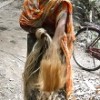
INDIA: Developing Self-sufficiency For Poorest Women
When Anarahim Laskar, a worker at Sealdah rail station, tripped and fell with while carrying a heavy head load in 2007, he could have easily shattered more than his hipbone.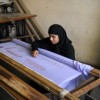
INDIA: Poor Women Stitch Together New Futures
She is now part of a group of artisan entrepreneurs, deals with people confidently, and earns enough for herself and her three children. But 20 years ago, Amir Unisha Begum was an unschooled, shy homemaker who rarely ventured out of her Indian slum neighbourhood.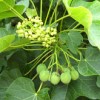
INDIA: Jatropha Boom Yields Tough Lessons
With a gas-guzzler of an economy, India had been spending tens of billions of dollars annually to import petroleum. And so its 2009 policy on biofuels mandated that by 2017, India would have enough biofuel production to cover at least 20 percent of the country’s oil consumption.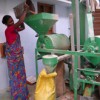
INDIA: Buoyed by Growing Market, More Farmers Go Organic
He had decided to grow watermelons this summer on his one-acre (.405 hectare) plot, and so Veera Narayana went about preparing the arid red earth by first ploughing it and then lighting fires in the furrows.
HEALTH-INDIA: Infant Units Go A Long Way in Saving Babies
Banita’s heart sank when she first saw her prematurely born twin girls. One weighed 500 grammes and the other 700 grammes, both way below the 2.5-kilogramme benchmark for low-birthweight newborns. But their clenched, coin-sized fists seemed to show they were clinging to life. "There is hope," said the local doctor.
INDIA: ‘Green Cremation’ Gets A Second Look
Unmindful of the monsoons lashing the Dehradun area in the Himalayan foothills in northern India, Girdhari Singh returns from work daily with a headload of wood that he finds along the road, and stacks it to dry in the cattleshed.« Previous Page — Next Page »


The Week with IPS

NEXT STOP - SDGs
Tracking global progress towards a sustainable world
Tracking global progress towards a sustainable world
