Languages
Thursday, October 15, 2026



News and Views from the Global South

More Protection, but Not Enough, for Patagonian Sea
Argentina has widely expanded the protected area of the Patagonian Sea, but it is less than two percent of the nation's maritime waters.ARGENTINA: Experts Optimistic, Farmers Cautious on Grain Harvest
Agricultural analysts are predicting a strong grain harvest for Argentina, where soy, maize and wheat are among the engines driving the national economy. But farmers are more circumspect as they plant this year's crops in the southern hemisphere spring season.
ARGENTINA: Kirchner’s Death Raises Questions About President Fernandez
The death of former Argentine President Néstor Kirchner (2003-2007) Wednesday brought to an end the political partnership he formed with his wife, President Cristina Fernández. Now all eyes are on her.Argentine Census to Count Blacks for First Time in a Century
Wednesday is census day in Argentina, and an army of census-takers will be knocking on doors to collect data on, among other things, the number of blacks and indigenous people, and same-sex couples, in the country. But it is happening under a cloud of controversy and distrust.
Organic Gardens Feeding People from Argentina to Haiti
Neither hurricanes nor floods, nor the devastating January earthquake or Haiti's chronic political instability managed to wipe out the organic gardening initiative underway in that country since 2005. The seed was planted in Argentina twenty years ago.
LATIN AMERICA: Competition for Best Land Access Projects
Poor indigenous and peasant farmers who have developed initiatives to gain access to land have been invited to take part in a global competition that will award prizes for innovative, effective approaches to the struggle for property rights.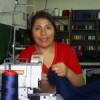
LABOUR: Garment Workers of the South Unite
They left behind months or years of slaving away -- in some cases, literally -- in garment sweatshops, working long hours for little to no pay. But breaking free from modern-day slavery or forced labour wasn't enough for a group of textile workers from Argentina and Thailand, who have gone on to forge a new kind of cooperation reaching halfway across the globe.SOUTH AMERICA: Student Exchanges to Foster Mercosur Identity
An exchange programme was launched this week for university students in Argentina, Brazil, Paraguay and Uruguay, to foster a broader sense of belonging to South America's Mercosur bloc.CLIMATE CHANGE: 7,000 Events Planned in 188 Countries
NGOs and ordinary citizens around the world plan to help raise awareness on the problems caused by climate change and urge governments to adopt policies to combat the phenomenon, with more than 7,000 activities in 188 countries on Sunday.
ARGENTINA: Preterm Infants at Centre of Innovative Campaign
"My name is Maximiliano Muñoz. I'm 23 and I'm studying engineering," says the young man smiling into the camera. The television spot is part of an awareness-raising campaign in Argentina on the rights of people born prematurely.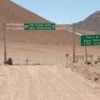
ARGENTINA-CHILE: Citizens Want a Voice in Andean Tunnel Plan
Agua Negra Pass today is an unpaved road that connects Argentina and Chile at 4,800 metres above sea level. But it is only open in the southern hemisphere summer months -- December to March -- and then only to lightweight vehicles.Citizens Want a Voice in Andean Tunnel Plan
The governments of Argentina and Chile are promoting a tunnel through the Andean Mountains, but activists are demanding transparency -- and a voice in the process.SOUTH AMERICA: Lessons from Honduras
With the 2009 coup d'etat in Honduras still a fresh memory, the presidents of the Unasur bloc gathered as quickly as they could to vigorously condemn Thursday's attempted coup in Ecuador and warn that they would not tolerate any such assault on democracy in the region.ARGENTINA: Environmentalists Welcome New Law to Protect Glaciers
Environmental organisations in Argentina are celebrating the passage of a law restricting the extraction of minerals, oil and gas near glaciers, in order to protect these vast freshwater reserves.
ARGENTINA: Activists File Writ of Habeas Corpus – for Legal Abortion
Heartened by the passage of a same-sex marriage law in Argentina, women's organisations in this South American country stepped up their demands for the legalisation of abortion, on the Day for the Decriminalisation of Abortion in Latin America and the Caribbean.
ARGENTINA: Pioneer in Mainstreaming Gender Perspective in Justice System
Judges and other judicial officers in Argentina have begun to receive training on gender equality and women's rights, as part of a broad programme that could serve as a model for similar initiatives in the rest of Latin America.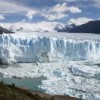
ARGENTINA: Fighting to Save Glaciers as They Retreat
Argentina's glaciers, along with Chile's the most extensive of South America, manifest the damage caused by climate change, while they also face threats from mining and major transportation infrastructure projects. A law to protect them has been postponed yet again.ARGENTINA: "A Casino Is Not Progress"
A small fishing community in the northern Argentine province of Chaco is pressing for a sustainable development programme to preserve their simple way of life and the natural habitat, and fighting a mega-investment project that would draw upscale tourism instead of the people who now come to seek peace and quiet on the weekends.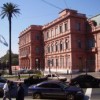
Women Make Their Mark on South American Politics
If Brazilian voters elect a woman president next month, what might have appeared to be isolated developments in Chile and Argentina would start to look more like a trend in the southern countries of South America.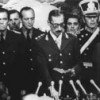
SOUTH AMERICA: Amnesties for Dictatorship Crimes Slowly Crumble
At very different paces, Argentina, Brazil, Chile and Uruguay advance down the path towards annulling or at least neutralising the laws that protected those responsible for human rights crimes committed under their dictatorships in the 1970s and 1980s.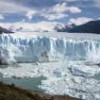
Fighting for Argentina's Glaciers as They Retreat
In two decades, Argentina's glaciers have lost an average of 10 to 15 percent of their area.« Previous Page — Next Page »





The Week with IPS

NEXT STOP - SDGs
Tracking global progress towards a sustainable world
Tracking global progress towards a sustainable world
