Languages
Tuesday, October 20, 2026



News and Views from the Global South
LATIN AMERICA: Poor, Overweight and Malnourished
Fruit? Maybe a banana now and then. Vegetables? Onions, if they are chopped up in a stew. Meat? No, because they choke on it, and will only eat wieners. Carina Ramírez thinks her children are "strange": they eat nothing but bread, pasta and sweets, "and that’s why they’re chunky," she says.Clear Waters Mercosur's Underground Treasure
The Guaraní Aquifer remains unpolluted and an essential reserve for an increasingly thirsty world, according to a detailed report from the four countries under which it lies.RIGHTS-ARGENTINA: Witnesses in Danger
The murder this week of Silvia Suppo, a victim of rape during the 1976-1983 military dictatorship in Argentina, has fuelled fears for the safety of key witnesses in human rights trials.ARGENTINA: Football Violence Flares Up Ahead of World Cup
"Your president is willing to confront the wildest hordes of opponents, but not a football fan, ever," Argentine President Cristina Fernández once joked.
ARGENTINA: Homemade Portraits of Life Behind Bars
"I wanted to take a self-portrait, and I thought about keeping a straight face, but it came out all weird, with these very long arms," says Liliana Cabrera about the photo she took with a camera she made herself, out of a condensed milk tin, at a workshop in an Argentine prison.
ENERGY-LATIN AMERICA: Moving Towards Renewables
Argentina is building its first solar energy park in the northwestern province of San Juan. The project calls for the manufacture of photovoltaic panels to supply the rest of the country and the other member countries of the Southern Common Market (Mercosur).
Latin America Builds Another Energy Capital
Generating electricity from the sun and from the wind is taking off with Latin American projects that include the region's own technology and manufacturing.
ENVIRONMENT: Wanted – An Effective Multilateral System
The echoes of failure still sounding from the Copenhagen summit on climate change in December are spurring efforts to reform the international legal framework. Civil society groups are demanding a new, more agile system that is both influential and effective.
WANTED: An Effective Multilateral System for the Environment
Governments and civil society groups are recognizing the urgent need to strengthen global institutions to confront the challenges of climate change.ENVIRONMENT: Window of Opportunity (Limited Time Only)
Two months after the Copenhagen conference on climate change, which was widely regarded as a fiasco, the international community is meeting on the Indonesian island of Bali to discuss biodiversity and ecosystems, promote the green economy and carry out institutional reforms.ARGENTINA-UK: Oil Plans Spark Tension Over Malvinas/Falklands
The imminent arrival of a British oil exploration rig in the South Atlantic ocean has recharged tensions between Argentina and Britain over the Malvinas/Falkland Islands.
ENERGY-ARGENTINA: Agrofuels Rev Their Engines
In a measure that was delayed by supply problems, this year Argentina is beginning to require that gasoline be mixed with ethanol and diesel fuel with biodiesel, at a proportion of five percent, to possibly reach 20 percent by 2015.
Argentina's Agrofuels Start Their Engines
With biodiesel from soybeans playing the leading role, Argentina is beginning to require plant-based fuel blends for all vehicles.
ARGENTINA: Slow Progress in Cutting Maternal Deaths
Some 300 women a year die in Argentina of complications during pregnancy, childbirth or the postpartum period, from largely preventable causes. Many of the deaths result from unsafe abortions.ECONOMY-ARGENTINA: The Worst Is Over
The year that has just ended was the worst for the Argentine economy since the 2002 and 2003 economic collapse. However, both government officials and economic analysts say the worst of the present crisis is over and that growth will return this year, in the light of improved internal and external conditions.ARGENTINA: First Same-Sex Marriage in Latin America
After a months-long legal battle, two gay men in Argentina became the first homosexuals to marry in Latin America, in a wedding that took place in the southernmost province, Tierra del Fuego, the only one governed by a woman.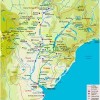
ENVIRONMENT: Rio de la Plata Fish and Fisherfolk Under Threat
A study by more than 30 experts from Argentina, Bolivia, Brazil and Paraguay warns of the threat menacing the survival of fish species and 50 riverside settlements in the Río de la Plata basin, which is the second largest river system in South America after the Amazon basin and contains a wealth of biodiversity.ARGENTINA: “Myth” of Egalitarian Society Fading Away for Young People
A study on young people and human development in South America's Mercosur trade bloc indicates that while in Brazil, the country's longstanding social inequality is the focus of at least somewhat successful efforts to combat it, in Argentina the vision of an equitable society is fading away.
ARGENTINA: Solar Villages Light Up the Andes
The residents of the Puna, the dry Andean highlands in northern Argentina, are cut off from everything - except the sun. Living on arid land thousands of metres above sea level, they are on their way to becoming "solar villages."
Solar Villages Light Up in the Andes
The light and heat of the sun are valuable natural resources that are abundant in Argentina's arid northern Puna, or high plains.MEDIA-ARGENTINA: Fighting Stereotypes of Slums ‘From the Inside’
A group of local residents from Villa 1-11-14, a slum on the outskirts of the Argentine capital, put out a magazine aimed at breaking down the stereotypes propagated by the mainstream media, which associate neighbourhoods like theirs only with drugs, crime and marginalisation.« Previous Page — Next Page »





The Week with IPS

NEXT STOP - SDGs
Tracking global progress towards a sustainable world
Tracking global progress towards a sustainable world
