Languages
Tuesday, September 8, 2026



News and Views from the Global South
LATIN AMERICA: Ad Agencies Slowly Turning Away from Sexist Commercials
Ordinary women and men who do not fit the stereotype of the beautiful thin, young, blond model are slowly making it into ads in Latin America.CORRUPTION-ARGENTINA: Menem the ‘Persecuted’ Ex-President
Surrounded by legal charges and as of Tuesday facing an international arrest warrant, former Argentine president Carlos Menem (1989-1999), now living in Chile, is taking refuge in the role of the politically persecuted, saying he has no guarantees of a fair trial in his country. Nothing new, say experts.ARGENTINA: Provincial Officials Lied About Polio Vaccination Coverage
Since Argentina's federal government directly took over the administration of the northern province of Santiago del Estero this month, an appalling scenario has been revealed: local officials regularly over-reported vaccination coverage, and less than 60 percent of children have been immunised against polio.ARGENTINA: Expulsions in AMIA Blast Case Revive Plaintiff Discord
A court decision to remove two prosecutors from the case of the 1994 bombing of a Jewish community centre, in which 86 people were killed, has once again highlighted the controversial nature of the 10-year investigation.ARGENTINA: Buenos Aires Police Face Major Overhaul
Juan Pagnotta, a young man under arrest for kidnapping and murder, is just one of many delinquents who apparently who have a cosy relationship with police in the eastern Argentine province of Buenos Aires, a phenomenon that the new provincial head of security has promised to eradicate./ARTS WEEKLY/ARGENTINA: Award-Winning Film Industry Seeks Audiences
Encouraged by an abundant harvest of international awards, the Argentine film industry will premiere twice as many titles in 2004 than in 1951, the most productive year until now.ARGENTINA-PARAGUAY: Environmentalists Sound Alarm on Dam Expansion
The governments of Argentina and Paraguay have resolved to complete the binational Yacyretá hydroelectric dam on the Paraná River by 2007, operating at 60 percent of originally planned capacity.ARGENTINA: Kidnap-Murder Revives Crime-Fighting Debate
The murder of a young man by his kidnappers has rekindled an old debate over how to fight crime, one whose passions politicians and the media are trying to capitalise on.ARGENTINA: ‘Feudal’ Regime Collapses in Northeastern Province
The crisis unleashed by the murders of two young women a little over a year ago in the northeastern Argentine province of Santiago del Estero led to intervention Thursday by the federal government, which will directly rule the province for the next six months.ENERGY-ARGENTINA: Focus on Exports Leaves Domestic Market Short
Argentina's production and export of natural gas have grown unremittingly since the privatisation of the energy sector in the 1990s. But the failures of government regulation in that process, which left investment promises unfulfilled, are among the main causes of the country's current energy shortfall, say experts.RIGHTS-ARGENTINA: ‘Death Flights’ Also Over the Parana River
Local residents of the Paraná river delta north of the Argentine capital said they saw people thrown into the river from military planes and helicopters during the 1976-1983 dictatorship.GLOBALISATION-ARGENTINA: The ‘Unemployables’
As the Argentine economy gradually pulls out of several years of recession and crisis, employers are complaining about a shortage of skilled labour, while millions of people find themselves stuck in the category of ''unemployable''.ARGENTINA: Gov’t Attempts to Ease Impact of Energy Crisis on Consumers
The Argentine government barely had time to celebrate last year's 8.7 percent rise in Gross Domestic Product (GDP) before it came up hard against an energy crisis that threatens to curb growth this year, and could even hurt President Néstor Kirchner's popularity./UPDATE/RIGHTS-ARGENTINA: President Hands Over Former Torture Centre
In a ceremony outside of the Navy School of Mechanics (ESMA) - the most notorious detention centre operated by Argentina's 1976-1983 dictatorship - President Néstor Kirchner apologised in the name of the state for the silence that has surrounded the atrocities committed by the de facto regime.RIGHTS-ARGENTINA: President Hands Over Former Torture Centre
In a ceremony outside of the Navy School of Mechanics (ESMA) - the most notorious detention centre operated by Argentina's 1976-1983 dictatorship - President Néstor Kirchner apologised in the name of the state for the silence that has surrounded the atrocities committed by the de facto regime.RIGHTS-ARGENTINA: President Hands Over Former Torture Centre
In a ceremony outside of the Navy School of Mechanics (ESMA) - the most notorious detention centre operated by Argentina's 1976-1983 dictatorship - President Néstor Kirchner apologised in the name of the state for the silence that has surrounded the atrocities committed by the de facto regime.ARGENTINA: Local Creditors to Test Voice in Talks on Defaulted Debt
The Argentines who hold a share of their country's public debt are a far cry from the so-called "vulture funds", which target foundering economies in order to purchase debt titles cheap, staking their bets on profits from quick trades or ultimately suing the state for full repayment.SUSTAINABILITY: ‘Conspiracy’ Looms Over South American Aquifer – NGOs
The placid waters of the Guaraní Aquifer, an enormous underground reservoir beneath 1.2 million square km of Argentina, Brazil, Paraguay and Uruguay, are at the centre of turbulent debate.RIGHTS-ARGENTINA: What to Do With the School of Horror
It is now up to a coalition of human rights groups in Argentina to decide what to do with ESMA, the most notorious torture centre operated by the 1976-1983 military dictatorship.RIGHTS-ARGENTINA: What to Do With the School of Horror
It is now up to a coalition of human rights groups in Argentina to decide what to do with ESMA, the most notorious torture centre operated by the 1976-1983 military dictatorship.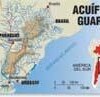
Specter of Water War Looms Over Guaraní Aquifer
NGOs denounce an alleged Washington conspiracy to take over South America's Guaraní Aquifer. Officials and experts alike say it is a crazy notion.« Previous Page — Next Page »


The Week with IPS

NEXT STOP - SDGs
Tracking global progress towards a sustainable world
Tracking global progress towards a sustainable world
