Languages
Saturday, October 10, 2026



News and Views from the Global South
ARGENTINA: Deep-Rooted Prejudice Against Immigrants
Although Argentina's immigration law is regarded as one of the most progressive in Latin America, xenophobia and discrimination persist, showing that progress is still more theoretical than practical.ARGENTINA: Mothers of Plaza de Mayo Scandal “Toxic” for President
Above and beyond the impact it might have on Argentina's Oct. 23 general elections, few doubt that the government of Cristina Fernández will feel the effects of the fraud scandal involving the alleged misuse of public funds by the former right-hand man of the head of the Mothers of the Plaza de Mayo Association.
Argentina and U.S. Launch Climate Observatory into Orbit
Argentina and the United States have launched a jointly developed satellite observatory that will provide real-time information critical to understanding two major components of the earth's climate system: the water cycle and ocean circulation.
Argentina and U.S. Launch Climate Observatory into Orbit
SAC-D/Aquarius is the fourth and most sophisticated satellite jointly developed and launched by the U.S. space agency NASA and the Argentine space agency CONAE.
Street Harassment, Not ‘Compliments’
Men say they are giving compliments, or even claim they are being poetic. But to many women, cheeky or lewd remarks from men on the street are a form of harassment which is offensive, insulting and even denigrating.
ARGENTINA: Avoidable Maternal Deaths on the Rise
Argentina is moving backwards in terms of maternal mortality, with a rate three times higher than those of its neighbours Chile and Uruguay. Maternal deaths, which are actually increasing, are often the result of unsafe abortions, in a country where the practice is illegal.ARGENTINA: Power Still Overwhelmingly in Men’s Hands
In Argentina the overwhelming majority of decision-making posts in the most diverse areas are occupied by men, with the exception of the presidency, held by Cristina Fernández.
Amnesty’s Tireless Vigil during South America’s Dark Night
In the 1970s, with no Internet or social networking sites to get information out, Amnesty International managed to become a thorn in the side of the dictatorships of the Southern Cone of South America, several people who benefited from its advocacy work recalled on the occasion of the rights watchdog's 50th anniversary.ARGENTINA-PARAGUAY: Giant Dams Touted as Development
The Yacyretá hydroelectric dam run by Argentina and Paraguay is fully operational, supplying the energy it was designed to provide when it was built 40 years ago. But critics complain about severe social and environmental impacts.G20: Hungry for Opportunities
Food shortages may be causing hunger in the developing world, but the large Latin American agricultural countries that belong to the Group of 20 (G20) see the situation as an opportunity to exploit.ARGENTINA: Small Loans, Big Solutions
Avoiding the costs of traditional microcredit models, remote communities in the La Puna high plateau region in northwest Argentina have launched a successful loan programme that enables them to meet extraordinary expenses such as weaving material, school supplies or medicine.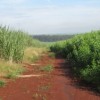
SOUTH AMERICA: Curbing Land Purchases by Foreign Investors
The governments of Argentina, Brazil and Uruguay are drafting laws to curb acquisition by foreigners of extensive tracts of their fertile agricultural land.ARGENTINA: Targeting Teens in Prevention of Gender Violence
"If I had only known that when I was young," or "if they had only told me" are just some of the statements made by many women who seek assistance at the centre for victims of gender violence set up by the local government in a town on the outskirts of the Argentine capital.
ENVIRONMENT: Endosulfan Ban Highlights Need for Alternatives
The upsurge in the use of the toxic pesticide endosulfan, targeted for prohibition by the international community, illustrates one of the dilemmas of intensive agriculture in Argentina and Latin America in general.
Q&A: Child Victims Have ‘Leading Role’ in Creating a Non-Violent Society
Appointed to the gigantic task of building international understanding of violence against children and adolescents, 58-year-old Portuguese lawyer Marta Santos Pais is based in New York and works with a small staff of only seven people.
Endosulfan Ban Highlights Need for Alternatives
Eliminating the use of the insecticide endosulfan raises the challenge of finding less toxic but effective substitutes.LATIN AMERICA: Violence in the Age of Innocence
The countries of Latin America are working slowly to overcome barriers in the fight against the often brutal violence suffered by children and adolescents in their homes, schools, workplaces or juvenile detention centres.ARGENTINA: Free Books in Public Places to Woo Readers
"This book has not been lost. It has no owner; it is part of the Argentine Free Book Movement, and it was left in this place so that you would find it."
LATIN AMERICA: Lack of Prevention, Timely Treatment Make Women Vulnerable to Cancer
In many cases, cancer is preventable, treatable and curable if detected on time. But the fate of millions of women with the disease varies enormously, depending on where they live.ARGENTINA: Banking on Women’s Experience
Argentina's president is a woman, Cristina Fernández, and the country has one of the highest percentages of women lawmakers in the world. But women also have other leadership roles, outside the political system.
ARGENTINA-BOLIVIA: Gas Pipeline to Boost Development, Revenues – But Not for Everyone
"The pipeline will carry gas to Bolivia and seven provinces in Argentina, but we who live in Campo Durán, where the pipeline starts, will not have gas," Julio Palavecino told IPS.« Previous Page — Next Page »





The Week with IPS

NEXT STOP - SDGs
Tracking global progress towards a sustainable world
Tracking global progress towards a sustainable world
