Languages
Monday, October 12, 2026



News and Views from the Global South
SCIENCE: Littering the Cosmos
Tonnes of space garbage is orbiting the Earth and posing serious threats to active satellites and manned space missions, and to astronauts when they conduct space walks outside of their ships.
Littering the Cosmos
European scientists are proposing the controlled removal of thousands of dangerous pieces of space debris in the Earth's orbit by sending up robotized missions.
CLIMATE CHANGE: Controversy Sails with the Polarstern
The prestigious German oceanography ship Polarstern is conducting a major experiment of seeding the oceans with iron in order to absorb carbon dioxide, the principal greenhouse-effect gas.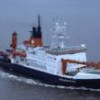
Wake of Controversy Sails with the Polarstern
Stimulating the growth of phytoplankton by adding iron to the sea could be another way to absorb excess carbon that causes climate change, say the scientists involved in a controversial study in the Atlantic Ocean.
ENERGY: Parasails Can Move Ships
They say that faith can move mountains. Now, faith in the wind has led to a new way to move ships. The technique, developed in Germany, is powerful enough to move today's deep-draught cargo vessels and can reduce fuel consumption by 50 percent.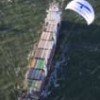
Parasails Can Move Ships
Wind propulsion returns to the seas as in times of yore, but don't look for the traditional mainsail.
When the Electricity Is in Your Feet
"To change the world doesn't mean you can't have fun," says the entrepreneur who sells dance floors that generate electricity from the movement of the dancers' feet.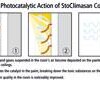
Paint that Purifies the Air
German scientists have developed an interior paint that, through a process that imitates photosynthesis, breaks down and eliminates toxic materials from the air.The Power of Informal Garbage Collectors
Buenos Aires is confident that by 2020 the "cartoneros" will ensure that not a single recyclable waste item ends up in landfills.





The Week with IPS

NEXT STOP - SDGs
Tracking global progress towards a sustainable world
Tracking global progress towards a sustainable world
