Languages
Tuesday, October 6, 2026



News and Views from the Global South
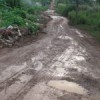
BRAZIL: Politicians Out of Sync with Public Sentiment on the Environment
The environmental movement continues to gain credibility and support as scientific findings confirm its warnings and natural disasters become increasingly frequent. Yet this growing awareness has yet to reach political decision makers in countries like Brazil, much to the frustration of environmentalists.INTERVIEW WITH CELSO AMORIM: "IBSA IS A BEACON FOR POLITICAL STRATEGISING AND SOUTH-SOUTH COOPERATION"
Celso Amorim, one of the fathers of the IBSA Forum (India, Brazil, and South Africa) says in this interview that for this alliance of three major emerging powers, "Helping the poorest countries is clearly one of its callings.This gives it both its uniqueness and its international legitimacy."
Politicians Out of Sync With Public Sentiment on the Environment
While the vast majority of Brazilians place priority on environmental conservation, their elected leaders continue to focus on economic interests and short-term gains.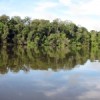
Hydropower Dams Hurt Amerindians in Brazil and Canada
Michael Lawrenchuk, a Cree political activist from Canada, was given a standing ovation at the International Hydropower Association congress held in this Brazilian border town, after depicting the suffering of his people since dams began to be built on rivers across their land.IMF Still Colonial
The International Monetary Fund will probably continue to be headed by a European after the resignation of France's Dominique Strauss-Kahn, but the debate over his replacement indicates this degree of Eurocentrism is unlikely to prevail the next time a successor is sought.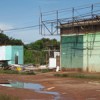
BRAZIL: Amazon Dams Mean Progress for Some, Lost Livelihoods for Others
The Amazonian town of Mutum-Paraná, in the northern Brazilian state of Rondônia, is disappearing. Its last remaining buildings must be dismantled before it is flooded by the construction of the Jirau hydroelectric dam on the Madeira River.
Amazon Dams Mean Progress for Some, Lost Livelihoods for Others
A way of life will disappear under water due to the dams being built in a corner of northwestern Brazil, bringing progress at the cost of life-altering changes.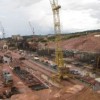
BRAZIL: Megaprojects Revive Class Struggle
The rage was proportional to the size of the crowd cornered between the jungle and the wall that will dam up the Madeira River in northwest Brazil. Over the space of three days, workers set fire to some 50 buses and other vehicles, work installations and even their own lodgings, which were built to house 16,000 people.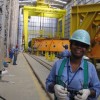
BRAZIL: Women Break Down Barriers in Heavy Construction
They represent just seven percent of the workers building the Santo Antonio hydroelectric dam on the Madeira River, which cuts across the Amazon jungle in northwest Brazil. But the women workers total 1,200, and many of them have had to break down barriers to jobs seen as the preserve of men.
BOLIVIA: Dam Spells Hope and Fear for Small Jungle Town
Arturo Sánchez, 72 years old and nearly blind, dreams of bringing ecotourism to Cachuela Esperanza, a Bolivian town of 1,336 people on the Beni river, and hopes the construction of a huge hydroelectric dam will give a boost to his dreams.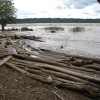
BOLIVIA: The Boomerang Effect for Morales
It wasn't easy to get to the Bolivian city of Riberalta from Brazil. The adventurous journey included potholes on the Brazilian highway, a rickety boat that ferried us across the Mamoré - the border river - and an unnerving ride on a motorcycle taxi. But the biggest complication was the roadblocks.
Emerging Powers Harnessing Neighbours’ Hydroelectricity
Emerging countries like Brazil and China are building numerous hydroelectric dams at home and abroad to help drive their economic growth. But while in Latin America the phenomenon is touted as an integration process, in Asia it has generated tension over the shared use of rivers.
BRAZIL: Sugar Cane Fertilises Its Own Soil
The mechanisation of sugar cane harvesting, originally aimed at curbing the pollution caused by the burning of cane fields, has resulted in an added bonus: it has helped to improve soil quality, according to growers and technical experts in the southern state of São Paulo, where most of Brazil’s sugar and ethanol is produced.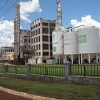
BRAZIL: Sugar Cane Fields Turned into Industry in Sertãozinho
"A disappointment" was his first impression of his new city. It was small, half the size of his hometown of Barretos, and had "weak lights," says Marcelo Pelegrini, remembering his family's move to this southern Brazilian city when he was nine years old, after his father got a job transfer.
Sugar Cane Fertilises Its Own Soil
Sugar cane growers and technical experts in southern Brazil highlight the environmental benefits of a crop that continues to draw harsh criticism from other quarters.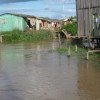
BRAZIL: Belo Monte Dam Faces Endless Hurdles and Controversies
The Xingu river flows around small isles and islands and across rapids and waterfalls in Brazil's Amazon jungle, and has a dramatically reduced flow during dry season. Navigating it presents constant hurdles and risks.BRAZIL: Science and Sugar Cane Produce Versatile Harvest
For nearly five hundred years, sugar cane was used almost exclusively for making sugar, with a handful of by-products like rum, alcohol and molasses. Now, in Brazil, it has become a source of multiple derivatives, and the focus of much scientific and technological research.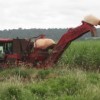
BRAZIL: Women Workers Determined to Ride the Wave of Mechanisation
"She's crazy" said most of the husbands and other family members of the 34 women who decided to become operators of sugarcane harvesters in the southern Brazilian state of São Paulo, attracted by the opportunity of better pay and encouraged by the growing mechanisation of the industry.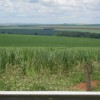
Sugar Cane and Ethanol Boom Drives Development in Southern Brazil
The roads are exceptionally good and numerous here, in contrast with other parts of Brazil, but the monotony of the landscape is not inviting to tourists. Sugar cane fields stretch to the horizon along a 400-km stretch of highway to the north of São Paulo.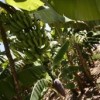
Brazilian Agriculture Can Help Combat Hunger and Inflation
The current rise in agricultural prices, which now overshadows the increase seen in 2008, highlights the contribution that Brazil could make towards curbing the growing hunger and inflation that are threatening the world once again.ECONOMY: Size Is Key Factor in Emerging Powers
Two decades ago, Japan was the main threat to U.S. global economic dominance, but this challenge waned before the advent of the 21st century. Now China and India are the new champions of growth, with the clear implication that population size is a decisive factor in their rise to power.« Previous Page — Next Page »





The Week with IPS

NEXT STOP - SDGs
Tracking global progress towards a sustainable world
Tracking global progress towards a sustainable world
