Languages
Tuesday, October 13, 2026



News and Views from the Global South
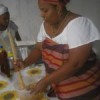
BRAZIL: Afro-Brazilian Religions Battle New Threats
Millions of Brazilians usher in the new year by wading into the sea, dressed in white, scattering flowers on the water as an offering to the Afro-Brazilian deity Iemanjá, in return for her blessings for the year to come. But few of them realise that this tradition is rooted in a religion fighting for survival in the face of prejudice, racism and intolerance.ECONOMY-BRAZIL: An Island in Stormy Waters
Brazil is not immune to the current global financial crisis, but there are many indications that it will remain largely safe from the recession shaking the world’s rich countries and that economic growth will stay at reasonable levels if the meltdown is neither deeper nor longer than expected.
COLOMBIA: New Meaning in Life for Young Shantytown Dwellers
After three of Viviana’s friends were killed, and one of them dismembered, she began to think things over, and decided to join the Legión del Afecto project in Colombia, leaving six years of gang life behind her.LATIN AMERICA: Summit Marks Distance from US
A motion calling for an end to the United States embargo against Cuba accentuated the anti-imperialist tone taken on by the summit of Latin American and Caribbean leaders that ended Wednesday in this tourist resort in the northeastern Brazilian state of Bahia.BRAZIL: Transformation Through Art and Music
They call it an orchestra, but this atypical all-percussion group is far from featuring the range of musicians found in a conventional ensemble. Which does not mean that the music they make is not rich and varied, as the young amateur musicians produce an amazing array of sounds.SOUTH AMERICA: Mercosur Shares Social Concerns, Diverges on Economy
Concern over the social impact of the global economic crisis dominated the discussions at the Mercosur Summit on Tuesday, but economic proposals by some presidents underscored their ideological differences.LATIN AMERICA: Summit Seeks Full Regional Integration
This week’s summit of Latin American and Caribbean leaders in Brazil aims to pull regional integration processes out of their current stagnation, reaffirm the region’s interest in integration that does not exclude any nation, and contribute to overcoming bilateral tensions, analysts say.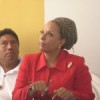
Q&A: “We Need a Popular Movement, to Win the Elections”
Wherever there are minorities or marginalised groups in Colombia, or the rights of women are violated, you will find Senator Piedad Córdoba.FILM-BRAZIL: “An Artist Only Bows His Head to Thank the Audience”
The first three times he saw the film he could not watch it through to the end; he was so overcome by emotion he burst into tears. The next five times he did manage to see the whole movie, but tears were constantly streaming down his cheeks. Brazilian Maestro Mozart Vieira was "extraordinarily" moved by seeing his own story on screen.RIGHTS-COLOMBIA: Where Homophobia Totes a Gun
Homosexuals can remain in the closet and not be noticed, but that is not an acceptable alternative for transgender people who suffer violence to a greater extent in Colombia, where armed combatants in the conflicts too often turn prejudice into murder.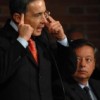
COLOMBIA: Financial Scandal a Hurdle to Uribe’s Re-election
Five thousand people chanting anti-government slogans in the Colombian capital’s central Bolívar Square reflected the sharp fall in popularity of right-wing President Álvaro Uribe, whose bid to reform the constitution to allow him to run for a third term in 2010 has suffered serious setbacks in Congress.MEDIA: Sustainable Development in a Doomed City
The sea encroaching on the streets of this Caribbean resort city in northern Colombia dramatically underlines the challenges that 60 journalists, winners of awards from the Latin American Avina foundation, discussed over the weekend.FINANCE-BRAZIL: Payback Time?
This is a good time for all those who resisted the "neoliberal" free market economic model of the past few decades, often as lone voices preaching in the wilderness. Politicians, experts and social activists want to take advantage of the current financial crisis to bury this model once and for all, together with all forms of speculation.EDUCATION-BRAZIL: Pockets of Illiteracy, Despite Strides
Staying illiterate even after going to school is the plight of thousands of boys and girls in Brazil and is proof of the shortfalls of the country’s educational system, in particular in poverty-ridden areas. But the tide is beginning to turn, as can be observed among the country’s youngest children.BRAZIL: Speculative Prices Block Land Reform
Rising land prices in Brazil, driven up by the boom in investment in rural property and the expansion of biofuels, are hindering agrarian reform, says João Pedro Stédile, an activist with the international peasant movement Via Campesina.ECONOMY: Emerging G20 Consensus on Solutions to Crisis
For now, a consensus seems to prevail in the Group of 20 (G20) major industrialised and emerging nations, whose finance ministers and central bank presidents ended their 10th annual meeting Sunday, which took on a high profile due to the global financial crisis.ECONOMY: G20 in New North-South Battle
Brazilian President Luiz Inacio Lula da Silva called for "a pact between governments to create a new global financial architecture," while stressing the need to open up the global financial bodies controlled by the industrialised world to emerging economies.ECONOMY: Another G20 Takes Centre Stage
The Group of 20 (G20) that will meet this Saturday and Sunday in Brazil could have a more defining role in shaping a new global order than any of the alliances forged in past international negotiations - like the other G20 formed by developing countries in the Doha Round of multilateral trade talks.ECONOMY-BRAZIL: Crisis Delays Threat of ‘Venezuelan Disease’
The global financial crisis has corrected the extreme overvaluation of Brazil's local currency, caused by the policies of its Central Bank, thus temporarily chasing away fears of "Dutch disease", which in the developing world could well be called "Venezuelan disease".ECONOMY-SOUTH AMERICA: Eyes Wide Open
The reaction by South America’s Mercosur trade bloc to the current global financial crisis is limited for the time being to observing "possible impacts" on stock markets, production and unemployment, and "maintaining fluid and agile communications" regarding any measures taken by each member country.DEVELOPMENT: Harmonious Cities – a Social and Environmental Solution
Sao Paulo emits only a tenth of the greenhouse gases that San Diego produces, even though this Brazilian metropolis is four times larger than that city in California, according to a report released today by the United Nations Human Settlements Programme (UN-Habitat).« Previous Page — Next Page »





The Week with IPS

NEXT STOP - SDGs
Tracking global progress towards a sustainable world
Tracking global progress towards a sustainable world
