Languages
Saturday, October 10, 2026



News and Views from the Global South
ASIA-PACIFIC: MDGs Progress Unknown for Lack of Data
In a moment of rare candour, officials from a regional United Nations body and the Asia Development Bank (AsDB) admitted that studies to gauge progress of the Millennium Development Goals (MDGs) are hampered by out-of-date information.BURMA: Fear Over the Country
Nights are no more the same for the 45-year-old Buddhist monk who lives in a monastery in the Myay Ni Gone area, close to the heart of this dilapidated city. Nor is sleep.
BURMA: UN Getting Nowhere With the Generals
Few foreigners are as qualified to talk about the mind and the manner of Burma’s dictatorship as Razali Ismail, a Malaysian diplomat who served five years as special United Nations envoy charged with facilitating political reform in that military-ruled country.
RIGHTS-BURMA: Whiteshirts – Junta's Storm Troopers
In much the same way that Italy’s Benito Mussolini and Germany’s Adolf Hitler unleashed their respective ‘blackshirts’ and ‘brownshirts’ to terrorise dissenters, Burma’s military regime has deployed its ‘whiteshirts’ against protesting Buddhist monks and civilians.
RIGHTS-BURMA: Soldiers Fire Into Crowds, Regain Rangoon Streets
After turning its guns on the country’s protesting Buddhist monks and at least three monasteries in this city, Burma’s heavily armed soldiers had no hesitation firing at a group of civilian protesters chanting angry slogans near a high school in the Tamwe Township.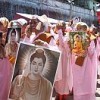
RIGHTS-BURMA: Protesting Monks Set Upon by Riot Police
In a desperate bid to cling on to power, Burma’s military junta stomped on the country’s rich Buddhist traditions on, of all days, a religious holiday, when people usually spend their time in prayer at the hundreds of pagodas that dot this country.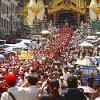
BURMA: Monks Lead Protests, Challenge Junta
Like they did for over a week, the monks who gathered at Burma’s most sacred site - the Shwedagon pagoda - performed a ritual on Tuesday under a blistering mid-day sun. They sat on the hallowed grounds of the majestic temple in Rangoon to pray for the people’s ‘victory'.POLITICS-BURMA: Buddhist Clergy on Collision Course With Junta
Burma’s Buddhist monks are threatening to turn an on-going protest against steep hikes in fuel prices into a religious and moral showdown with the country’s oppressive military regime.CAMBODIA: Pol Pot’s Lieutenant Nabbed
Finally, the law caught up with the most senior surviving leader of the genocidal Khmer Rouge regime. Nuon Chea, who was the second-in-command to Khmer Rouge leader Pol Pot, was arrested by the Cambodian police on Wednesday.SOUTH-EAST ASIA: Thai Air Disaster May Hit Budget Carriers
As investigations began to unearth the cause behind Sunday’s crash of a budget airliner in the Thai resort of Phuket, enthusiasm among South-east Asian budget tourists and travellers for low-cost carriers appears to have dampened.
BURMA: Poppy Farming Cuts – 'UN Praise Misplaced'
Praise from the United Nations for continued drop in poppy cultivation in military-ruled Burma paints a false picture of success, say members of the Shan ethnic community and human rights activists. What cannot be ignored, they add, is how profitable the narcotics trade remains for the local commanders of the junta.POLITICS: Thailand Not Invited to Democracy Bash
Thailand’s fall from grace as a promising democracy is expected to be confirmed at an international meeting in November in Bamako, the capital of Mali. Bangkok has not been invited to attend a gathering of the world’s democracies in the African nation, according to Freedom House, a Washington D.C.-based watchdog.RIGHTS-CAMBODIA: Will Sihanouk Appear at Khmer Rouge Trials?
Cambodia’s colourful former king Norodom Sihanouk has emerged as the central figure in the latest controversy to plague the special tribunal established to prosecute the surviving members of the genocidal Khmer Rouge regime.POLITICS-BURMA: Buddhist Monks Take on Military Regime
Political tension in military-ruled Burma has taken an ominous turn with soldiers clashing, this week, with sections of the country’s respected Buddhist clergy. The confrontation was the latest in an unfolding drama that has featured rare public protests at massive hikes in fuel prices in August.HEALTH: ‘Avian Flu Spread by Poultry, Not Wild Birds’
The search for answers to the spread of the deadly bird flu virus is calling into question a long-held practice in science where recognition is given to positive test results, say experts meeting in the Thai capital.MEDIA-THAILAND: Junta Tightens Computer Crime Laws
Thailand’s military-backed government lifted a ban on the popular video-sharing website ‘YouTube’ and passed an easier printing act this week, but newly tightened computer crime laws suggest that free expression is still being stifled.BURMA: Junta Exposed by Information Technology
As public protests in Burma enter a second week, Burmese journalists living in exile and other expatriates are finding new appreciation for the marvels of modern communication and information technology.POLITICS-THAILAND: Islamist Teachers Fuelling Insurgency – Report
The image of a leading private school in southern Thailand took a beating after a new report, released Tuesday, fingered its teachers and alumni as being instrumental in an increasingly brutal insurgency in the region that borders Malaysia.ECONOMY-BURMA: A People Running on Empty
For over a week, Burmese civilians in and around Rangoon have been forced to make a tough choice - stay at home and starve or go to work and labour on near-empty stomachs.HEALTH-SOUTH-EAST ASIA: Fortified Flour – Key Nutrition Strategy
When Indonesian women and children tuck into cups of ‘Indomie’, a popular brand of instant noodles, they are assured a tasty staple healthier than most other brands sold across South-east Asia.POLITICS-THAILAND: Rural Voters Diminish Junta’s Referendum Win
Thailand’s rural voters stood up to the country’s powerful military by refusing to march in step with the junta’s drum-beat for political change at the first-ever referendum for a new constitution held here.« Previous Page — Next Page »





The Week with IPS

NEXT STOP - SDGs
Tracking global progress towards a sustainable world
Tracking global progress towards a sustainable world
