Languages
Saturday, October 10, 2026



News and Views from the Global South
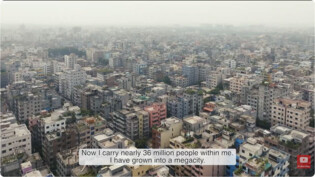
My Name is Dhaka
My Name is Dhaka is a one-minute experimental film portraying Dhaka as a living, breathing entity with a 400-year history. Through a reflective voice, the city recounts its transformations, crises, and resilience. It captures contrasts between pollution and celebration, hardship and hope, revealing a megacity shaped by climate change, migration, and human survival.
From Haor to Brickfields
 Nikli Upazila, located in the Kishoreganj district of Bangladesh, is part of the haor region, a vast wetland ecosystem characterized by bowl-shaped depressions. This unique geography subjects the area to significant climatic challenges, particularly recurrent flooding. The haor region, including Nikli, experiences a subtropical monsoon climate with distinct wet and dry seasons. During the monsoon season, heavy rainfall often leads to extensive flooding. Flash floods have become increasingly unpredictable and severe in recent years, causing substantial damage to agricultural lands and affecting the livelihoods of local communities. These people, trapped by water and driven by poverty, journey from the Haor to brickfields, where their lives become an endless cycle of hardship.

Salt: Bangladesh Communities On the Frontline of Climate Change
Global warming has far-reaching effects, and certain countries, particularly those with low lying coastal regions, are more vulnerable than others. Bangladesh, the largest delta in the world, is at the forefront of the global warming crisis. Its coastal areas are increasingly exposed to rising sea levels, natural disasters, and salinization, all of which have devastating effects on its population.
The Taste of Honey
A resilient tiger widow from Bangladesh's Sundarbans Mangrove Forest, Shorbanu Khatun, fights climate change's impacts. She struggles to support her children while preserving honey and Gol leaf traditions amidst worsening storms, rising salinity, and societal exclusion.

Bangladesh’s Battle Against Climate Change: A Nation at Risk
Bangladesh, a picturesque land of rivers, lush green landscapes, and a vibrant cultural heritage, faces one of its most significant challenges ever — climate change.
Wave
 Rising sea levels, extreme climate conditions such as severe storms faced by Bangladesh, one of the primary victims of anthropogenic climate change, the country is set to be the worst sufferer from climate change by 2025, far worse than any other country.
The Forbidden Love
Abandoned by family and friends, transgender people in Bangladesh are subject to extensive daily abuse. The existing and continuously growing transphobia and homophobia in society are obstacles in the lives of this group. The people featured here from the LGBTQ+ community share a wide variety of narratives.

Haunting Photos of Bangladesh’s COVID Pandemic
Documentary photographer and filmmaker Mohammad Rakibul Hasan has documented the health crisis in Bangladesh over the past several months. In these haunting images, Hasan brings to life the conditions in which many patients are being treated in poor conditions exacerbated by the COVID-19 pandemic.

Tales of the 21st Century: Rohingyas Without home
Mohammad Rakibul Hasan is a Bangladeshi documentary photographer, photojournalist, filmmaker and visual artist who has been visiting the camps in Cox’s Bazaar to document the Rohingya refugee crisis.

Amid Covid-19 Hunger Fear Mounts in Bangladesh
The world is at risk of widespread famines resulting from lockdowns to contain the spread of the coronavirus pandemic. The devastating economic impact of Covid-19 is seeing a huge rise in the number of hungry people.

Snapshot of Life under Lockdown in Bangladesh
The Coronavirus pandemic is changing how we live our daily lives. The scale of the COVID-19 and its impact on our lives is unprecedented. When humanity gets past this, the world will be a very different place than the one we have known.





The Week with IPS

NEXT STOP - SDGs
Tracking global progress towards a sustainable world
Tracking global progress towards a sustainable world
