Languages
Sunday, November 8, 2026



News and Views from the Global South
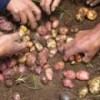
Saving the Potato in the Peruvian Highlands
A handful of Peruvian families are working to preserve 200 varieties of potato in the Andean highlands, where this crucial crop was domesticated eight thousand years ago.
Climate Danger Lurks for Cuban Wetland
Residents of the Cuban wetland Ciénaga de Zapata face the challenge of changing an apparent inevitability: the disappearance of the marsh as a result of global warming.
Indians Speak Out Against Carbon Markets
Indigenous leaders from around the world oppose profit mechanisms for fighting climate change.Ecobreves – BRAZIL: New Malaria Medication
Brazil has a new, more efficient medication against malaria, ASMQ, which will be available at cost (2.5 dollars per dose) for Latin American and Asian countries.Ecobreves – ARGENTINA: Recycled Plastic for Food Containers
Argentina's National Industrial Technology Institute (INTI) has approved a technique for manufacturing food containers from recycled plastic bottles.Ecobreves – MEXICO: Environmentalists Repudiate Electricity Project
Mexico's Federal Electricity Commission, CFE, has divided a fishing community with promises and food in the Cuyutlán lagoon, in the western state of Colima, to calm criticisms of a planned electricity plant, charge ecologists.Ecobreves – HONDURAS: March for the Forest – Again!
The third "March for Life", organized by the environmental movement led by Catholic priest Andrés Tamayo, is part of an effort to bring attention to environmental degradation in Honduras.BHUTANESE HAVE HIGH EXPECTATIONS OF THEIR NEW PARLIAMENT
Expectations are high among the people of Bhutan for the new government to deliver on its promises, especially once the new Constitution is adopted in early May when the parliament convenes, writes Francoise Pommaret, Bhutan\'s honourary consul in Paris and director of National Centre for Scientific Research (CNRS) in Paris and advisor to the Institute of Language and Culture Studies (ILCS), Royal University of Bhutan. Despite initial misgivings about their country\'s shift from absolute to constitutional monarchy, citizens are waiting to see if the new government will be able to safeguard Bhutan\'s stability and independence. Foremost among their concerns is for the government of Prime Minister Jigmi Y Thinley to assure them that corruption will not become as rampant as in other countries in the region. The prime minister\'s Bhutan Peace and Prosperity Party won 44 of 47 parliamentary seats in the March 24 elections. The issues facing Bhutan are to be addressed within the framework of the Gross National Happiness (GNH) concept, included in Bhutan\'s Five-Year Development Plan of 2008-2013 and based on the idea that economic and material development alone do not provide happiness to people. Rather, the GNH emphasises environmental preservation, good governance, preservation of religious and moral values, and sustainable development.JAPAN TAKES PROMINENT ROLE IN AFRICAN DEVELOPMENT ASSISTANCE
This year Japan will host two events that will be critical in helping to shape the African agenda: the Tokyo International Conference on African Development (TICAD), to be held 28-30 May, followed in July by the G8 summit in which the continent\'s issues will figure prominently, writes Sadako Ogata, President of the Japan International Cooperation Agency (JICA) and former United Nations High Commissioner for Refugees (1991-2001). African countries are not content just to grow cocoa or coffee; they want to move on and expand their sciences, information technology expertise, and industries. In today\'s world a country cannot improve its living standard by relying on farming alone but must also produce goods that create new sources of revenue. The May conference will be an opportunity to both review progress and address future challenges. Economically, Africa has enjoyed a robust 5 percent annual growth in recent years, and one of the major targets in 2008 will be to accelerate this expansion, in part by supporting large-scale infrastructure projects like enlarging national, regional, and intercontinental road networks, which will boost agricultural and industrial expansion.
No Place for Small Farmers at the Supermarkets
Efforts by small farmers in Mexico to avoid intermediaries and get their products on supermarket shelves have failed due to the chains' strict rules, say farmers groups.
“Doctor” Nature in Danger
Your health, and the health of your loved ones, is interlinked with that of a much larger family -- one we call "nature", says a new book about medicine and biodiversity.Ecobreves – BRAZIL: Lumber Auction to Finance Illegal Logging
The Environment Secretariat of Pará, the largest state of Brazil's eastern Amazon, announced an unprecedented auction for May 15 of 5,500 cubic meters of illegally extracted timber. The revenues from the sale will be used to fight environmental crimes.Ecobreves – CHILE: Nuts for Biodiesel
Sometime between May 15 and 30, the first plantations of physic nut (Jatropha curcas) will be ready in Chile as part of a project for distilling biodiesel in the northern part of the country.Ecobreves – VENEZUELA: Glaciers Disappear
The glaciers of Venezuela's Sierra Nevada mountains, more than 4,800 meters above sea level, lost 94 of their total 137 hectares in 30 years and will disappear by 2020, says Angel Viloria, of the governmental Venezuelan Institute of Scientific Research.Ecobreves – CUBA: Dragnets Threaten Manatees
Experts in the central Cuban province of Villa Clara hope that the discovery of three dead manatees (Trichechus manatus) will speed up the regulation of dragnet fishing in this area, where these large marine mammals are abundant.Ecobreves – HONDURAS: Local Governments Protect Environment
In Honduras, 102 of the country's 298 municipalities have joined an initiative for watershed preservation, reforestation and environmental education, say official sources.SOUTH-SOUTH COOPERATION: THE ASIAN EXPERIENCE
(IPS/South Center) Over the years South-South Cooperation (SSC) has evolved from merely sharing technical know-how to cooperation for a comprehensive socio-economic transformation, writes Biswajit Nag, Associate Professor at the Indian Institute of Foreign Trade, New Delhi, India. In this article, Nag writes that in the new millennium SSC seeks to harness the intellectual capital and technological advances accumulated by developing countries to find the southern solutions embedded in people, technology, alliances, and the forces of globalisation. Regional cooperation provides most developing countries with a platform to seek regional solutions for the challenges of globalisation. Though trade and investment are at the core of any regional cooperation, the environment, health, and education have also drawn attention. The Asian experience of regional cooperation is useful because most of the programmes attempt to convince national governments to include the regional agenda to benefit both the country and the region.NATURE IS NOT MUTE
The world is painting still lifes, forests are dying, the poles are melting, the air is becoming unbreatheable, and the water undrinkable and at the same time Ecuador is debating a new constitution that opens up the possibility for the first time ever of recognising the rights of nature, writes Eduardo Galeano, Uruguayan writer and journalist and author of The Open Veins of Latin America, Memories of Fire and Mirrors: An Almost Universal History. It sounds odd, doesn\'t it, that nature could have rights? Yet in 1886 the US Supreme Court extended human rights to private corporations. They were recognised as having the same rights as people, the right to life, free expression, privacy, and all the rest. But there is nothing odd or abnormal about the bill that would include the rights of nature in the new Constitution of Ecuador. This country has suffered repeated devastation over its history. To give just one example, for more than a quarter of a century, until 1992, the Texaco oil company vomited 18,000 gallons of poison into the rivers, land, and the people. Once this gesture of beneficence in the Ecuadorean Amazon was completed, the company, which was born in Texas, was married to Standard Oil. By then Rockefeller\'s Standard Oil had changed its name to Chevron and was being run by Condoleezza Rice.Eliminating Poverty at Low Cost
Monetary aid to the poorest of the poor, with certain conditions to be met, has born fruit in Latin America, and at relatively low cost to government.
“Transgenic Seed Companies Lie and Bribe”
Indigenous farmer Jesús León Santos hardly knew what to do 25 years ago when he decided to try to regenerate eroded land in southern Mexico. Now he is celebrating winning the Goldman Environmental Prize 2008.Ecobreves – ARGENTINA-URUGUAY: Threat to Block International Crossings
Residents of the northeastern Argentine city of Gualeguaychú threatened to completely block the three international bridges that connect their country to Uruguay in protest against a paper pulp mill on the shared border river.« Previous Page — Next Page »





The Week with IPS

NEXT STOP - SDGs
Tracking global progress towards a sustainable world
Tracking global progress towards a sustainable world
