Languages
Sunday, November 8, 2026



News and Views from the Global South
AND THE WORST PICTURE WINS
Compared with Scorsese\'s other films, The Departed was artistically tepid and lacking in the revelation of human motivations that he has such a great gift for, writes Leonardo Padura Fuentes, a Cuban writer and journalist whose novels have been translated into a ten languages. In this article, Padura writes that the image of the great director, smiling, with the golden figurine in his hand aroused in me one of the most disquieting emotions that exists: embarrassment for someone else. I cannot believe that Scorsese considers this latest movie to be a memorable work. To do so would be an insult to his intelligence. For this reason, his smiling and his wielding of the little statue struck me with a sense of corrosive embarrassment for a man required by circumstances to put on a big smile when he should know (or does know) that his prize is an offense to the intelligence of the others, to art, and to justice. It is no more than a commercial venture and a poor exercise in film making.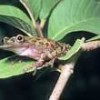
Frogs Fading Into Silence
The extinction of amphibians in Latin America has reached alarming proportions: 209 species in Colombia and 198 in Mexico alone are in danger of disappearing forever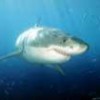
Dangerous Waters – Even for Sharks
In 15 years the shark population in European waters has plummeted 80 percent. Some 100 million of these fish die each year, victims of the lucrative global market for their fins.Ecobreves – MEXICO: Breaking the Car Habit
In 2008 the results will be ready from a study about the dependence of Mexicans in 50 urban areas on their cars. The unprecedented study will define indicators for tracking the issue and suggest strategies to reduce reliance on automobiles.Ecobreves – BRAZIL: Banana's Useful Fibers
Students from the State University of Rio de Janeiro (UERJ) are taking advantage of the banana stalk to develop BananaPlac, a colorful laminate that can be used for furniture, walls, car panels, among other things, replacing traditional formica.Ecobreves – ARGENTINA: Refrigerator Exchange
The Argentine government will grant credits and subsidies in 2007 to consumers to exchange -- over the next three years -- old refrigerators for new ones that are more energy efficient.
Mapuches Return to Benetton-Held Land
Six indigenous families are returning to live on a plot of land that the Italian clothing company Benetton owns in the Patagonia region. Benetton has not yet decided what, if any, legal action it will take.Ecobreves – BRAZIL: Zero-Carbon for Sao Paulo Carnival
Greenhouse gases produced by Sao Paulo's Carnival, Feb. 16-24, will be "compensated" by the planting of trees through an agreement with the environmental group SOS Mata Atlantica.Ecobreves – VENEZUELA: Alarm Sounded on Rat Migration
The Caracas city government forced hundreds of street vendors off the main avenues of Caracas in January, resulting in a mass migration of rats to neighboring residential areas. The rodents had fed on the tons of garbage generated daily by the informal vendors, said residents.Ecobreves – HONDURAS: Case of Murdered Ecologist Goes to Court
The February 1995 murder of environmentalist Janeth Kawas will be presented in May before the Inter-American Court on Human Rights, for impunity and delay of justice, human rights activist Bertha Oliva told Tierramérica.Ecobreves – CHILE: Heavy Rains Threaten Vegetable Crops
The intense and unexpected rainfall over central Chile in mid-February will affect the production of various fresh vegetables, mostly onions for export, the Chilean vegetable producers association, Hortach, announced.
Farmers and Scientists See Risks in Wind Energy
Mexico intends to erect as many as 3,000 wind turbines on the Isthmus of Tehuantepec by 2030. Peasant farmers have doubts about the project's benefits for the local community, and scientists warn about potential hazards to birds.Ecobreves – MEXICO: A Bio-Process for Purifying Wastewater
The Autonomous Metropolitan University of Mexico (UAM) has developed biological methods for treating wastewater that are more effective than the standard approaches, which use physical and chemical processes.Ecobreves – BRAZIL: Call for Bids on Controversial Project
Brazil's national integration minister, Pedro Brito, announced Feb.14 that after Carnival the government will take bids for projects to transfer water from the Sao Francisco River to supply the country's dry northeastern region.
Protests Mount Against Mining Giant
The Canadian mining giant Goldcorp, which runs the largest gold mine in Mexico, is racking up complaints about its environmental violations. In Honduras, officials are considering legal action.
Social Responsibility a Sure Bet for Business
"There is no contradiction between social responsibility and profitability," Oded Grajew, a leader of the Brazilian business world in favor of sustainable development, tells Tierramérica
When One Ocean Is Not Enough
Argentine scientists have proved that elephant seals require vast areas of ocean environment in order to survive. The finding could lead to improved conservation plans for these sea mammals.Ecobreves – ARGENTINA: Regional Cyber-Forum on Biodiversity
A network of groups, with the World Conservation Union - South America (UICN-Sur) at the fore, is convening an Internet debate in the region to set up actions aimed at preserving biodiversity.
Islands Could Fall Off the Map
Sylt in the North Sea, Tuvalu in Oceania, and St. Thomas in the Caribbean all face the same challenge: they may disappear as sea levels rise as a result of global warming.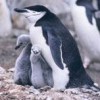
Argentina to Study Effects of Spill in Antarctica
Although it is a light fuel, diesel spilled by the Nordkapp cruise ship could hurt Antarctica's biodiversity, including its emblematic penguins. The Argentine National Directorate of the Antarctic is preparing a study.Ecobreves – CUBA: Demolishing Construction to Save Varadero
From 1996 to date, more than 80 buildings and three kilometers of walls and fences on the dunes in the resort of Varadero have been demolished as part of an integrated management program.« Previous Page — Next Page »





The Week with IPS

NEXT STOP - SDGs
Tracking global progress towards a sustainable world
Tracking global progress towards a sustainable world
