Languages
Tuesday, November 10, 2026



News and Views from the Global South
Ecobreves – ARGENTINA: A Boost for Renewable Energies
A push / boost / for renewable energy in Argentina...Ecobreves – COLOMBIA: Irrigation District On Its Way
Irrigation district on its way in Colombia...A CRUCIAL YEAR FOR THE EUROPEAN UNION
It may sound dramatic, but it may be now or never for the EU, writes Joaquin Roy, \'\'Jean Monnet\'\' professor and Director of the European Union Centre of the University of Miami. In this analysis Roy writes that this will be a decisive year for the organisation: it is now fifty years since it took its first daring step with the Rome Treaty of March 1957, which transformed the initial European Steel and Coal Community, formed in 1951, by incorporating the European Economic Community and the European Atomic Energy Community. It has now been five years since the adoption of the euro by 300 million citizens in the thirteen countries of the EU as well as a handful of mini-states that had used the currencies of member states. The euro was a success in all basic monetary operations. Although the dollar remains dominant in terms of the setting of prices and tallying debt, as an exchange currency the euro is on the verge of surpassing it. However, while these two ambitious moves proved highly successful, the warnings made simultaneously about the need for institutional reform of an organisation used to dealing with fifteen more-or-less collegial members have not been heeded. Unfortunately the Constitution was derailed halfway through the ratification process after rejection by Dutch and French voters. With the project on hold until more favourable conditions emerge, observers are now looking towards the German presidency of the EU in the current semester and the results of France\'s May elections. The energy of the former and the disposition of the new leadership in Paris will determine the future course of the EU.THE SHIFTING POWER EQUATION
We are in the midst of a revolution in which power is moving from the centre to the periphery and vertical command and control structures are eroding, writes Klaus Schwab, founder and Executive Chairman of the World Economic Forum, whose Annual Meeting in Davos will take place January 24-28. In this article, the author writes that today global trusteeship is needed more than ever since we have to confront so many global challenges simultaneously. The world has become a complex and dangerous place requiring urgent, effective mechanisms to address all the challenges in a proactive, comprehensive and systemic way. Recent events have highlighted the realities of global impotence. We are witnessing profound decay in the structures we have historically used to manage our world. We are witnessing the de-globalisation of a globalised world as the UN, the Bretton Woods organisations and many other multinational frameworks are struggling to keep up with changing global needs. This is made clear by our collective incapability to deal effectively with rogue states, with failed states, with terrorism and other events, from the collapse of the Doha trade talks to the crisis in Darfur. Existing global governance systems can no longer meet all the challenges of the 21st century in their present form, but reforms based just on prolonging the paradigms of the past will fail in our new flat world. What we need to do is connect, and reconnect, leaders from business, politics and civil society to form new coalitions to improve the state of our world and shape a new collective will.WTO COMPROMISE ON AGRICULTURE WILL UNLOCK MAJOR TRADE BENEFITS
Many proposals have already been presented at the Doha Round Negotiations, but clearly what is on the table today is not enough to lead us to success. All parties need to make a greater contribution, starting with agriculture, writes Pascal Lamy, Director-General of the World Trade Organisation . In this article, the author writes that the US has to accept cuts in its subsidies beyond its current offer, as do the EU and the G-10. India and the G-33 countries also have to show flexibility. Indeed, if we are to reach a result, all Members have to show flexibility. No one is being asked to undertake disproportionate commitments, and certainly there is the flexibility to address for specific needs and concerns. With an additional effort we can unlock agriculture which in turn will open the last stage of talks on the other topics. This Round offers the largest cuts ever on tariffs on the industrial sector, which represents a large part of developed countries exports and holds the promise of reformed antidumping procedures to enhance transparency and predictability. For the first time ever it tackles fishery subsidies which increase capacities and contribute to the depletion of our oceans. It also goes deeper in opening telecommunications and financial, environmental, and a broad range of business services.THE REFUGE OF REREADING
If reading a recently published book gives the taste of an encounter with the unknown, returning those one has read many times provides the slightly cowardly certainty of arriving at a safe harbour, writes Leonardo Padura Fuentes, a Cuban writer and journalist whose novels have been translated into a ten languages. In this article, the author writes that returning to these old acquaintances also cures us of the deceptions that, echoing through the market, catapult us occasionally into the embrace of books that make us lament the nights invested in their pages, when we know perfectly well the years of our lives are far too few to read everything good and essential written by our fellow humans. Perhaps the most disagreeable of these sensations occurred while I was reading the Da Vinci Code, convinced that to be able to at least criticise it I had to plough through all 600 or so pages: for years and years I have not read anything so miserably written, ill-conceived, and artistically false. The dumb provocation of the establishment devised by Brown was so innocuous and bogus that the publishing industry could swallow it happily and turn it into a sales behemoth sweeping many areas of the market while pushing to the margin, if not beyond it, that which should always be at the front: literature.DEATH PENALTY: TOWARDS A UNIVERSAL MORATORIUM
With passage of the United Nations Moratorium on Executions likely in the current General Assembly, we are on the verge of obtaining a major victory for humanity which the Non-violent and Transnational Radical Party and Hands Off Cain have been seeking for fourteen years, writes Elisabetta Zamparutti, curator of the annual report of Hands Off Cain, \'\'The Death Penalty in the World\", and a leader of the Radical Party. In this article, the author writes that after the execution of Hussein and through the moratorium campaign, Hands Off Cain and the Radical Party have succeeded in making everyone understand, even in the Arab world and beginning with the Cain of our time, the urgency of preventing a widening cycle of violence and war, in Iraq and elsewhere, which would have disastrous consequences. It was non-violent actions that were responsible for convincing the public of the urgency a measure like the UN moratorium and so accelerated the historic process of abolitionism. The startling drama and horror of the death penalty in the world today is to be found largely in the 98 percent of the world\'s 5000 years executions that are carried in totalitarian and repressive countries. It is because of the nameless and forgotten victims of the death penalty in these countries that a universal moratorium is so very important.//NOT FOR PUBLICATION IN AUSTRALIA, CANADA, NEW ZEALAND, CZECH EPUBLIC, IRELAND, POLAND, THE UNITED STATES, AND THE UNITED KINGDOM//: THE GREEN GOLD RUSH
The conundrum that has long obstructed progress on global warming and a broader transition from a petro-centric to a biocentric economy -- can environmental imperatives be addressed within a profit-driven economic system? -- may finally be giving way to a tidal wave of global green innovation, writes Mark Sommer, host of \'A World of Possibilities,\' an award-winning,internationally syndicated radio programme that can be heard at www.aworldofpossibilities.com. In this article, Sommer writes that November\'s flush of Democratic victories was less an endorsement of the party than a rejection of the oil-igarchy that has blocked effective action on a wide range of issues. In its wake, the pent-up demand for new products and services to serve a post-carbon economy may now begin to trigger a potent market-driven response from industry, academia, consumers, and after all others, policymakers. The greening of the global economy will likely be led not by the environmental activists whose persistence was so essential to raising initial public awareness but by some of the very corporate behemoths who were rightly criticised for their inaction and some of the very conservatives (though not of the Bush variety) who have long held that environmental goals and economic realities are innately incompatible.WHY ARE SO MANY INNOCENTS CONVICTED?
\'The forensic experts neither had nor used methods that could link the accused to the murder.\' So stated a solid cross-section of leading Norwegian scientists in a recent plea for the reversal of a murder conviction that has troubled the conscience of Norwegian society since 1958, writes Fredrik S. Heffermehl, President of the Norwegian Peace Alliance and Vice President of the International Association of Lawyers Against Nuclear Arms. In this article, the author writes that in response to several spectacular reversals of murder convictions, Norway established a new commission three years ago to review convictions, independent of the courts. Today scientists consider the evidence in the 1958 case absolutely worthless, and they reacted with disbelief and anger when the commission rejected the call for a retrial. The lack of specific, methodological training and disciplined thought in the courts is a problem, and not only in Norway. According to an article in the latest issue of Nature, courts in the Netherlands fail to understand elementary statistics. According to an international seminar on science and evidence organised by the University of Oslo last September, imprecise methods lead to a high risk of wrong sentences. When the courts, even in a rich, advanced, and democratic country like Norway, make so many mistakes, one must shudder at the situation in regimes where the rule of law and independence of the judiciary do not exist. These countries carry out 98 percent of the 5.000 executions that occur in the world every year -- an overwhelming reason why the UN General Assembly should approve the universal moratorium on capital punishment now under consideration.DEMOCRATIC DEFICIT CENTRAL CONCERN OF GLOBAL CIVIL SOCIETY
One fact of globalisation is that many decisions that affect virtually all human beings everywhere, for many generations, are increasingly taken by a few, writes Kumi Naidoo, Secretary General of CIVICUS World Alliance for Citizen Participation. In this article Naidoo writes that countering this ever-increasing democratic deficit at both the domestic and international level is a major concern of this World Social Forum. One of the current challenges is the trend of increasing threats to civil society\'s very existence. These are closely associated with the so-called \'war on terror\' discourse and practice and take the form of legislation passed by an ever-growing number of countries to restrict the rights and activities of civil society. As civil society has grown more powerful, at both the national and global level, there is also increased questioning by governments and critics of the legitimacy, transparency, and accountability of civil society. Many efforts are underway to address this challenge.WORLD SOCIAL FORUM: ANOTHER WORLD FOR AFRICA
From January 20-25, the 7th World Social Forum will take place in Africa. For the global civil society, the resistance of the Africans, who have been subjected to atrocious violence and human rights violations and the devastation of a world system that serves the major corporations and the imperialist powers, is a source of inspiration and strength to carry forward its mission of building \'\'other worlds\'\', writes Candido Grzybowski director of the Brazilian Institute of Social and Economic Analysis (IBASE) and a member of the International Council of the World Social Forum. In this article, the author writes that in the face of the severe inequality in the process of globalisation and the logic of terror and the war that feeds it, we continue to expand and create hope. Given that Africa is being neglected by the economic system and the reigning powers, holding the Forum there is a form of radical commitment to the insurgent global civil society that shows its character and the scope of its struggle. Now in Africa, we will dismantle the prevailing vision and rhetoric about a lost and hopeless continent. We will learn from Africa\'s vibrant culture. Holding the WSF in Africa means filling ourselves with the visions, images, analyses, critiques, demands, and proposals of the social movements and the entities of African civil society.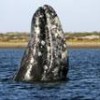
Hungry Whaling Ships Set Sail
Japanese hunters in the Southern Ocean, around Antarctica, will kill nearly a thousand whales, some in danger of extinction. Activists will try to stop the whaling ships, by sea and by air.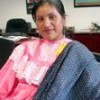
Mazahuas Choose Jail Over Going Without Water
Indigenous women are at the forefront of a protest in Mexico demanding water. "We won't give up until they give us water," says Beatriz Flores, one of the movement's leaders.Ecobreves – VENEZUELA: Birds Blamed for Arrival of West Nile Virus
The West Nile virus has been reported in Venezuela, north of the Orinoco River, likely carried into the country by migratory birds, researcher Juan Carlos Navarro, of Venezuela's Central University, told TierraméricaEcobreves – BRAZIL: Second Atlas of the Mata Atlantica
Less than seven percent of the Brazilian coastal forest ecosystem, the Mata Atlantica, remains intact, compared to its area in 1500, according to a study by the SOS Mata Atlantica Foundation and the National Institute of Space Research.Ecobreves – CHILE : Too Much Lead in Portezuelo
More than 3,200 milligrams of lead per kilogram of soil has been found in the area around the northern Chilean town of Portezuelo, 14 km southeast of Antofagasta, where there is a lead storage site.Ecobreves – CUBA: Farmers on Alert for El Niño
Cuban farmers are worried about excessive rains, blamed on the climate phenomenon known as El Niño-Southern Oscillation (ENSO), that continued to fall across this island nation in December.Ecobreves – ARGENTINA: A Study to Help Stop Rural Evictions
Students and professors from the National University of La Pampa, in central Argentina, are beginning a census this month of peasant farming families threatened with eviction in five departments of La Pampa province.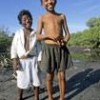
Garífunas Set Sights on Ecotourism
Communities of Afro-descendants along Central America's coasts condemn the privatization of beaches and demand inclusion in the benefits of the tourism industry.An Organic Recipe for Development
Crops grown without pesticides and other chemicals can mitigate the effects of climate change, along with alleviating world hunger, say experts.Ecobreves – MEXICO: Protest Against Toxic Dump on Border
Raúl Contreras, municipal president of the Mexican city of Sonoyta, on the U.S. border, told Tierramérica that he would not grant a construction permit for a controversial toxic waste dump.« Previous Page — Next Page »





The Week with IPS

NEXT STOP - SDGs
Tracking global progress towards a sustainable world
Tracking global progress towards a sustainable world
