Languages
Tuesday, November 10, 2026



News and Views from the Global South
Ecobreves – BRAZIL: Indians with Green Seal in Hand
A territory of the Kayapó Indians that covers 1.5 million hectares in the northern Brazilian state of Pará has become the world's largest area of certified tropical forest.Ecobreves – COLOMBIA: January Shrimp Ban
In January a ban begins on shrimp fishing in surface and deep waters of the Pacific Ocean off the Colombian coast.SOUTH KOREA USED VIOLENCE AND COERCION TO EXPAND US BASES
The government of South Korea is waging alarming levels of violence and repression against its people to help the US enlarge its military presence, writes Christine Ahn, policy analyst with the Korea Policy Institute, fellow with the Oakland Institute, and a member of KAWAN, Korean Americans Against War and Neoliberalism. In this article, Ahn writes that under the Pentagon\'s 2003 Global Posture Review, the US Forces in Korea are changing their historic role of defending South Korea to having more \'strategic flexibility\' to deal with conflicts in the region while handing back responsibility to South Korea to defend itself, while using the peninsula as a launching pad. Last September 22,000 riot police marched into Daechuri to bulldoze 68 homes and the village human rights centre. This was the second demolition after the one in May when 20,000 police brutally attacked several hundred villagers who used only their bodies to prevent them from destroying their rice paddies and homes. To many Koreans the struggle in Pyongtaek has become a part of its ongoing history of invasion and occupation by foreign forces and a symbol of Korea\'s division. Many South Koreans view the US\' amplified military presence in South Korea as fuelling tensions with North Korea and an obstacle to reunification.OUTLOOK 2006: FIVE THREATS TO GLOBAL PROSPERITY
Though the current state of the global economy is good, there are five areas of concern, writes Supachai Panitchpakdi, Secretary-General of UNCTAD (United Nations Conference on Trade and Development). In this article, the author writes that the first is the current impasse in the Doha Round talks, which hurts the world\'s poorest most acutely. The second concern is poverty. Globalisation and trade liberalisation have had a mixed impact. Some nations have been even further marginalised as a result, with poverty and income distribution in some cases worsening. The third area of concern is migration, which is sometimes perceived as a threat to jobs and to host societies ill equipped to absorb vast numbers of migrants. The fourth is energy security. The author calls for a well-structured, coordinated system of global economic governance that is beneficial to all countries and would help avoid potentially disastrous global imbalances and also avert distortions in international trade relations.THE MEANING OF THE YEAR OF ELECTIONS IN LATIN AMERICA
Hugo Chavez\' re-election on December 3 concludes a year of elections in Latin America in which nine countries chose candidates reportedly left of centre and three chose candidates reportedly right of centre, writes Jennifer McCoy, Professor of Political Science at Georgia State University and Director of the Americas Programme at The Carter Centre in Atlanta, Georgia. In this article, McCoy writes that the electoral debates essentially came down to two themes: how much of a priority to put on fighting poverty, and how to define a country\'s relationship with the US and the global economy. Extremely close elections in Costa Rica and Mexico, and run-offs in Brazil, Peru, and Ecuador demonstrated that there are seriously divided countries in the region. Much of Latin America also shares deepening nationalism and an abhorrence of US unilateralism. What the new leaders across the board face is the dilemma of meeting the high expectations of frustrated citizens while navigating the real constraints of economic globalisation and weak state capacity and institutions. These constraints can draw a country together under strong leadership and well-organised interests with a national vision, or they can destabilise a country that is factionalised and lacks a sense of shared national identity and purpose. The post-election year of 2007 will determine which direction each will go.ARGENTINA, BURMA, AND INTERNATIONAL SOLIDARITY
Because Argentina is currently a member of the UN Security Council and has experienced the trauma caused by a military dictatorship, there is hope that it will back an immediate and binding Security Council resolution on Burma, writes Kerry Kennedy, author of \"Speak Truth to Power\" and founder of the Robert F. Kennedy Memorial Centre for Human Rights. In this article, Kennedy writes that last year during a trip to the Navy Mechanics School in Buenos Aires, which was a prison and centre for torture during the military dictatorship, she heard government officials, survivors, and mothers of the disappeared testify how their capacity to survive often depended on their faith that they were not alone, that people on the outside cared. The author, daughter of Robert F. Kennedy, argues that just as current Argentinean leaders testified that international solidarity was crucial to their fight against the military regime, so the support of Argentina and the international community is crucial now to Aung San Suu Kyi and the people of Burma. For the first time the Security Council is considering a resolution to charge Burma\'s military dictatorship with grave human rights violations since it took power in 1990. The poem by Ariel Dorfman, renowned Chilean author and playwright who was born in Argentina, which follows this article, can be published together or separately.THE WEST AND ISLAM
The scourge of global terrorism is calling into question what remains of the world order, writes Mario Soares, ex-president and ex-prime minister of Portugal. In this article, Soares writes that because of its unpredictability, no one knows when or where it will strike next. The fight against terrorism is therefore a moral and ethical imperative of the first order and must not be neglected by responsible governments. The fight against terrorism must not be seen as a \'\'war\'\' --and certainly not a \'\'preventive war-- between the West and Islam. Because the simplification of the concepts of West and Islam is reductive, dangerous, and ultimately false to the extent that it fails to take into account the complexity of the values they represent, it induces us to commit gross errors (many have already occurred) and would gradually drag us unwittingly into a religious war, which would be a colossal setback for civilization and the worst possible outcome.GLOBAL FEAR
Never before in human history has fear been so concrete and endemic, affecting so many people in so many places at once, writes Leonardo Padura Fuentes, a Cuban journalist and writer whose novels have been translated into a dozen languages. In this article, the author writes that violence, as an expression of social, political, and even personal relations, has developed into the habitual response of not only individuals but also social groups and nations, with the result that fear extends into every level of society. There are types of fear that are stoked and manipulated by the powerful: fear of change, of difference, in people as well, like immigrants, fear of that which diverges from the interests or dominion of power. It is clear that not all violence is irrational and gratuitous but almost always has economic, social, or political roots related to marginalisation, poverty, or, at the other extreme, the arrogance of the powerful. Our lives today are fenced in by terrorism and antiterrorism, preventive wars, cold wars. There are no safe places left, there is no margin for innocent attitudes; almost no one can escape from fear, starting with the most powerful, who are in need of more and more bodyguards.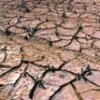
Rainwater Tanks a Weapon Against Drought
The construction of a million rainwater collection tanks in the Brazilian Northeast is underway. The region is considered one of the most vulnerable to the effects of global warming.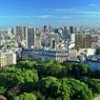
Buenos Aires Residents Rebel Against Apartment Towers
Residents fear that the Caballito neighborhood's utilities could collapse from the unregulated proliferation of apartment towers. By 2008 an estimated 40,000 more people will live in the district.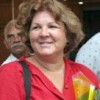
“Children Know How to Love”
Cuban pediatrician Aleida Guevara, daughter of the legendary "Che", is traveling the world promoting children's rights to health. Tierramérica spoke with her in Italy.Ecobreves – CHILE: Activists Want Ban on Lindane
Environmental groups and other civil society organizations, led by the Pesticide Action Network (RAP-Chile), launched a campaign calling for a ban on the use of lindane in the treatment of lice and scabies, due to its toxic effects on health and the environment.Ecobreves – GUATEMALA:: Return of the Harpy Eagle
A harpy eagle (Harpia harpyja), raised in captivity in Panama and released in Belize two years ago, was sighted early this month in the jungles of the northern Guatemalan department of El Petén.Ecobreves – VENEZUELA:: A Push for Energy-Saving Lightbulbs
In the coming months the government's "Mission Energy Revolution" will provide four million Venezuelan households with some 52 million energy-saving lightbulbs, made in China and purchased via Cuba.Ecobreves – BRAZIL: Three Forestry Victories
The government of the Brazilian Amazon state of Pará on Dec. 4 created seven conservation zones covering 15 million hectares. Together, they form a vast ecological corridor north of the Amazon River, from the Atlantic Ocean to the Colombian border.Ecobreves – CUBA: Fruitful Recycling Effort
An experimental project for recycling domestic waste, implemented this year in 810 households in Havana's San Isidro neighborhood, has produced organic material for use as fertilizer and income from the sale of solid waste materials.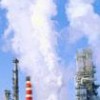
Kyoto Gets a Slap in the Face from Canada
The withdrawal from the Kyoto Protocol of one of the world's leaders in fighting climate change could weaken a new agreement far beyond the 2012 scope of the treaty.
Medical Use of Marijuana Divides Italy
Patients with incurable diseases defend the controversial initiative to use marijuana to alleviate pain. The Italian Parliament has the final word.Diseases Follow Environmental Degradation
The contamination of canals and other sources of water led to the outbreak of chikungunya in the Indian state of Kerala. The finger of blame is pointing at fish processors and coconut fiber factories.Ecobreves – ARGENTINA: A Boost for Water-Saving Toilets
The Foundation for the Defense of the Environment (FUNAM) has called for requiring new construction in Argentina to install double-discharge toilets and plumbing systems that make the most efficient use of water.Ecobreves – COLOMBIA:: Film Expedition to Benefit Wildlife
The Yaguarundí Expedition, made up of researchers and filmmakers, will travel through the Colombian Caribbean beginning in January 2007 to produce documentaries about endangered species and ecosystems.« Previous Page — Next Page »





The Week with IPS

NEXT STOP - SDGs
Tracking global progress towards a sustainable world
Tracking global progress towards a sustainable world
