Languages
Wednesday, November 11, 2026



News and Views from the Global South
UNITED STATES: AN ADMINISTRATION ADRIFT
Behind the recent personnel changes at the White House lies a single objective: protecting Bush from further investigation and scrutiny from Congress. In the end he is guilty of all the disasters that his successor will inherit, republican or democrat, writes Joaquin Roy, \'\'Jean Monnet\'\' Professor and Director of the European Union Centre of Miami University. In this article, Roy writes that Defence Secretary Rumsfeld is doing a magnificent job as lightning rod. Behind the recent criticism of him by a dozen retired generals lies the feeling that the war in Iraq is not being shouldered by the American people as a whole but rather by a poor minority, isolated and made to carry out dubious orders and play the role of occupier, torturer, and executioner. While it is unthinkable that the generals would rebel against civilian authorities in the middle of a war (it wouldn\'t occur to them), their outburst could nonetheless harm the country. Their indirect intervention in politics, cloaked in military expertise, is a risk that the US can hardly afford to take.Ecobreves – To the rescue of Venezuela's Lake Valencia
The Venezuelan government will compensate around 3,500 poor families who were affected by the expansion of Lake Valencia that occurred in 2005, but hundreds more complain about the lack of assistance.
A Satellite for Solving the Polar Ice Mysteries
Is it true that the ice is melting at the North Pole but expanding at the South Pole? The European space mission of Cryosat 2 promises to answer this and other questions, and deepen scientific knowledge about climate change.
Ecobreves – Combatting animal trafficking in Guatemala
El Salvador, Guatemala and Honduras will draft a transnational operations manual in the next four months for fighting the trafficking of animals in danger of extinction.WORLD TRADE: THE MOMENT OF TRUTH APPROACHES
The end of this year marks the deadline for negotiations of the Doha Round of the World Trade Organisation (WTO), writes Pascal Lamy, WTO Director-General. The date was not picked out of the air: it is the day the US Trade Promotion Authority Act expires, the author writes in this analysis. The Act gives the US president \'\'fast-track\'\' authority to enter into trade agreements which the US Congress must then submit to an up-or-down vote without amendment. If this deadline is missed, trade liberalisation on the scale envisaged by the Doha Round would become impossible to achieve in the near future. The main loser would be the developing world. The main aim of Doha is \"development\", in other words, redressing the existing imbalances in multilateral trade relations. We are now faced with a difficult situation. The Hong Kong Ministerial Declaration called on countries to complete the \"modalities\" for the agricultural and industrial goods negotiations by 30 April. In the services areas, the Declaration called for revised offers to be submitted by 31 July. For these deadlines to be met, all actors will need to move.
Indigenous Groups Denounce Exclusion from Biodiversity Talks
Indigenous groups had no voice in the negotiations in Curitiba, Brazil, about a binding global policy for the use of genetic resources. But they are already preparing to make sure they are heard in 2008.WATER: LIQUID CAPITAL OR HUMAN RIGHT ?
Yet again the economic and political forces that control the World Water Forum (WWF) have succeeded in blocking the principle of access to drinking water as a human right (universal, indivisible, indefeasible) from being recognised in the final ministerial declaration of the Fourth WWF held in Mexico City from 16-22 March, writes Riccardo Petrella, Secretary-General of the International Committee for the World Water Contract. In this article, Petrella writes that the rejection confirms that the World Water Council, organiser the tri-annual WWF, is but the emanation of a world water oligarchy at the beck and call of the French water lobby, which is comprised of the two largest water multinationals, the French government, and the World Bank. Now that the wind has begun to blow less uniquely in favour of the privatisation of water, the liberalisation of water services, and the privatisation of the common good, it is time that the principle of the right to life for all people as the foundation of social justice and of a true democracy become the rallying call of a new world water politics. It is time to take back from the market and finance the power to govern the destiny of human society.WALLS
The Berlin Wall made the news every day. From dawn to dusk we read about it, heard about it, and saw it: The Wall of Shame, the Wall of Infamy, the Iron Curtain, writes Eduardo Galeano, Uruguayan writer and journalist, is author of The Open Veins of Latin America and Memories of Fire. In this column, Galeano writes that eventually, this wall, which deserved to fall, fell. But other walls have sprung up, and continue to spring up, and though they are far larger than the Berlin Wall, little or nothing is said about them. Little is said about the wall the United States is erecting along its border with Mexico, or the double razor wire fences around Ceuta and Melilla, the Spanish enclaves on the Mediterranean coast of Morocco. And next to nothing was said about the West Bank Wall, which perpetuates the Israeli occupation of Palestinian lands and will soon be fifteen times longer than the Berlin Wall. And the Moroccan Wall, which for twenty years has perpetuated Morocco\'s occupation of Western Sahara, goes unmentioned altogether. This wall, continuously mined and surveilled by thousands of soldiers, is sixty times longer than the Berlin Wall. Why is it that some walls are so vocal and others are so mute? Would it be because of the walls of uncommunication that the major media erect each day?DEVASTATION AND MISERY IN BURMA
A recent visit by ASEAN parliamentarians to a refugee camp on the Thai-Burmese border provided a searing glimpse of a country devastated by violence and repression, writes Son Chhay, a member of the Parliament of Cambodia and an active member of the ASEAN (Association of Southeast Asian Nations) Inter-Parliamentary Myanmar Caucus and other pro-democracy networks in Asia. In this article, Chhay writes that military offensives, forced labour, forced relocation, extra-judicial killing, and torture by Burma\'s military government have driven many hundreds of thousands of Burmese into neighbouring countries as well as into the myriad refugee camps that line the country\'s borders. Forced labour and forced relocation have been perpetrated to allow military control over economic activity. Systematic sexual violence by military personnel targeting ethnic nationality women is rife and has been widely documented. Moreover, children as young as eleven are often forcibly taken from their homes for military duty in the Tatmadaw, the Burmese army.A MORE MODERN, AND MORE PRO-FAMILY ITALY
The House of Liberty alliance has led Italy through one of the most difficult periods of its history, writes Pierferdinando Casini, President of the House of Deputies and leader of the Union of the Democratic Centre, which is a member of the House of Liberty alliance. In this article, Casini writes that the Italy of today is not the same we inherited in 2001 from the centre-left. No one can pretend not to see the roots of a country that is more modern and advanced and that the House of Liberty planted in this legislature. Only by making the markets truly competitive can we provide a sufficient stimulus to business to improve efficiency and open industry to internationalism. But completing the process of liberalising the markets means above all cutting the cost of services: this is the goal we must measure ourselves by, and which has the greatest impact on the quality of life of the citizens. The core of our strategy for the country is family, first and foremost. The birthrate of Italy is the lowest in the European Union except for Germany. This figure reflects a profound discontent. Our goal is to introduce a system whereby the more children you have, the less taxes you pay.ITALY: THE RECORD OF THE RIGHT IS SHEER FAILURE
When Italy goes to the polls for the April 9 elections, one thing will be certain: the right has failed in its response to the demand for work, security, and well-being it took on in 2001 after riding to power on its promise of an Italy in which everyone would be better off, writes Massimo D\'Alema, ex-prime minister of Italy and president of the Democratic Party of the Left, which is a member of the Union, the centre-left coalition. D\'Alema writes in this article that the right failed because it was unable to renew the country and make it more modern and more competitive, and because it did not know how to mobilise its best qualities: its culture, creativity, labour, and solidarity. This failure produced what may be the most grave division of the country in its political history -- an Italy divided, consumed by conflict, and as a result weaker not only economically, but socially and internationally. The Berlusconi government has led Italy away from its traditional policy of peace. This policy, which has long made Italy a crossroads of dialogue in the Mediterranean, is not a leftist policy but an Italian policy, that was supported by the Christian Democrats, the Socialist Party, and the Communist Party, for decades. It is now up to the centre-left to address the large and daunting challenge of promoting social justice, innovation, and change, and restoring the dynamism of Italian society by forging an alliance of the forces of the business world, labour, and culture.ANARCHY IN A MONARCHY
Nepal these days feels like it is in a double time warp. A medieval king who wants to be an absolute monarch is battling it out with guerrillas inspired by Mao Zedong\'s 1960s China, writes Kunda Dixit, editor and publisher of the Nepali Times newspaper in Kathmandu. This week, an alliance of seven political parties has been leading a nationwide street agitation to pressure King Gyanendra to restore democracy and roll back his February 1, 2005 military-backed coup. Protesters have fought pitched battles with riot police for five straight days. Four people had been killed and dozens wounded. Hundreds of activists and journalists have been arrested all over the country. This week is critical in resolving Nepal\'s three-way power struggle between the king, the democratic parties and the Maoists. The king has a chance to offer an olive branch during his traditional Nepali new year address to the nation on Friday. If he doesn\'t, it will only be a question of time before Nepal becomes a republic.Ecobreves – ARGENTINA: Sustainable Development for Wetlands
An environmental organization in Argentina presented a project for the sustainable development of a wetland in the eastern region, considered a priority area for the conservation of biodiversity.Ecobreves – GUATEMALA: Water Fund Created
Environmental, business, government and local entities have launched the Water Fund to improve the quality and quantity of freshwater in Guatemala.Ecobreves – BRAZIL: Eco-Education Under Scrutiny
The southern Brazilian city of Joinville will host the 5th Ibero-American Congress on Environmental Education, Apr. 5-8. In Brazil, 96 percent of primary school students attend classes specializing in environmental education.Ecobreves – COLOMBIA: Promoting Natural Gas Vehicles
The private company Gas Natural S.A. announced investments of around 4.4 million dollars over three years to develop a conversion program so that vehicles in the Colombian capital and surrounding communities can run on natural gas.A Name as Means of Protection
An initiative to put together a global taxonomy index of species is under discussion at an international environmental meeting in the southern Brazilian city of Curitiba. The idea is a good one, say experts, but what is lacking is money.
Suez Packs Its Bags and Won't Be Back
Following the withdrawal of its contract in Argentina, the French water company expects a friendlier departure from Bolivia. For some time to come, Latin America will not be among its favorite destinations.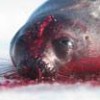
Annual Seal Hunt Begins in Canada
BSome 325,000 seals are in the sights of hunters in the Gulf of St. Lawrence. Canadian authorities and local residents say the bloody spectacle is justified.Ecobreves – BRAZIL: It's a Go for Space Mission
The Mar. 30 space flight of Marcos Pontes, Brazil's first astronaut, "will give visibility to our space program and will make citizens understand why it is necessary," Sergio Mauricio Brito Gaudenzi, president of the Brazilian Space Agency, told Tierramérica.INTERVIEW WITH JOSE RAMOS-HORTA: WHERE DID THE MILLIONS IN EAST TIMOR AID END UP?
His name is mentioned with increasing frequency in predictions of who will succeed Kofi Annan as Secretary-General of the United Nations, but Jose Ramos-Horta, foreign minister for East Timor, denies it, though not emphatically: \'\'I continue to say that I\'m not a candidate for Secretary-General, at least for now,\'\' he stated during a visit to Lisbon. Ramos-Horta is the chief diplomat of the youngest country in the world, born on May 22, 2002, after almost five centuries of Portuguese colonisation and twenty-two years of occupation by Indonesia, which ended with the genocide of a third of the territory\'s population, which was 660,000 in 1975. His indefatigable international activity against the occupation by Indonesia brought him the Nobel Peace Prize in 1996, together with the bishop of Timor, Jose Ximenes Belo.« Previous Page — Next Page »





The Week with IPS

NEXT STOP - SDGs
Tracking global progress towards a sustainable world
Tracking global progress towards a sustainable world
