Languages
Wednesday, November 11, 2026



News and Views from the Global South
Ecobreves – GUATEMALA: Inland Resort Threatened
The Guatemalan resort Semuc Champey, a hydric complex of ponds, waterfalls and the Cahabón River, is being hurt by deforestation, says the organization Trópico Verde.
When Science Inconveniences Bush
Scientists denounce what they see as obsessive attempts by the White House to muzzle them and to eliminate research that it doesn't like.
Proliferation of Motorcycles and Health Risks
In 2005, Brazil manufactured 1.2 million motorcycles. Many consumers prefer them because they are lightweight and fast, but the downside is that they pollute the air and cause thousands of injuries and deaths each year.
Via Crucis for Endangered Turtles
The demand for the eggs and meat from endangered turtle species hits a peak during Catholic Holy Week. Environmental officials in Colombia and Mexico have tried to quell consumption.
Sovereignty Claims Revived in the Arctic
An expedition is under way to help Canada and Denmark prove their sovereignty over certain areas of this frozen region, and its potential sources of petroleum and natural gas.The Feline Link in the Bird Flu Chain
Some scientists warn that we're underestimating the role of cats as vectors of virus H5N1. European countries are stepping up controls of feline pets as a means to stave off a bird flu epidemic.Ecobreves – BRAZIL: Astronaut Awakens Interest in Science
Brazil's first astronaut, Marcos Pontes, returned to Earth after one week at the International Space Station as a new national hero. And his space journey awakened a new vocation in students at the Sao José dos Campos school, who particpated in two of the eight experiments Pontes conducted during the mission.Ecobreves – VENEZUELA: The Triumphant Return of Sardines
The sardine returned to Venezuelan dinner tables at the beginning of Catholic Holy Week, when fish traditionally replaces meat, following the 21,000-ton catch along the northern coast.Ecobreves – CHILE: Skepticism Surrounds New Environment Ministry
Ecological groups have expressed skepticism about the creation of a Ministry of Environment by the new Chilean government of Michelle Bachelet, and doubt it represents a change in environmental policy.Ecobreves – CUBA: More Funds for Sabana-Camagüey Ecosystem
The Global Environment Facility (GEF) approved a budget of 4.1 billion dollars to continue a huge project to preserve the biodiversity of Cuba's north-central Sabana-Camagüey ecosystem, which stretches across five of the island nation's provinces.
Yes, Aspartame Is a Carcinogen”
The world's most widely consumed artificial sweetener could cause serious harm to human health, according to the latest study headed by Italian scientist Morando Soffritti. Tierramérica spoke with the renowned cancer researcher in Bologna.Norwegian Prize for Argentine Activist
Romina Picolotti, who recently won an international award for promoting the link between environment and human rights, sat down with Tierramérica for a Question-Answer session.Ecobreves – BRAZIL: Forestry Certification On the Rise
The proportion of environmentally certified forests in Brazil nearly doubled in the past two years, while worldwide it increased 70.25 percent, according to the Forest Stewardship Council (FSC)Ecobreves – ARGENTINA: Criticisms Raised Against Official Pro-Biotech Stance
The Rural Reflection Group (GRR) in Argentina has criticized its government for defending the dominant model for producing genetically modified soybeans and maintaining positions in line with the biotechnology corporations, during the biodiversity summit that ended Mar. 31 in the southern Brazilian city of Curitiba.Ecobreves – GUATEMALA: Eco-Corridor to Be Expanded
The Guatemalan capital's municipal government approved the "Metropolitan Ecological Corridor Conservation" project, to preserve the forests that surround the city.Ecobreves – HONDURAS: More African Palm Grown for Biodiesel
The Honduran government will promote the cultivation of 200,00 hectares of African palm over the next five years to produce the alternative fuel known as biodiesel.Ecobreves – BRAZIL: Satellites Reveal Misleading Data
Brazil is less urbanized than what official statistics indicate: the total urban area (with pavement, basic infrastructure services, telephone systems, homes and businesses) covers just 0.25 percent of the country, according to a study by the satellite monitoring center of the Brazilian agricultural research agency, Embrapa.
Indigenous Languages in Final Throes
Languages like Kiliwua in Mexico, Amanayé in Brazil, Záparo in Ecuador and Mashco Piro in Peru are on the verge of disappearing. Their extinction would be a tragedy for humanity, warn linguists.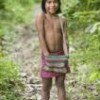
Indigenous Groups Denounce Exclusion from Biodiversity Talks
Indigenous groups had no voice in the negotiations in Curitiba, Brazil, about a binding global policy for the use of genetic resources. But they are already preparing to make sure they are heard in 2008.WORLD TRADE: THE MOMENT OF TRUTH APPROACHES
The end of this year marks the deadline for negotiations of the Doha Round of the World Trade Organisation (WTO), writes Pascal Lamy, WTO Director-General. The date was not picked out of the air: it is the day the US Trade Promotion Authority Act expires, the author writes in this analysis. The Act gives the US president \'\'fast-track\'\' authority to enter into trade agreements which the US Congress must then submit to an up-or-down vote without amendment. If this deadline is missed, trade liberalisation on the scale envisaged by the Doha Round would become impossible to achieve in the near future. The main loser would be the developing world. The main aim of Doha is \"development\", in other words, redressing the existing imbalances in multilateral trade relations. We are now faced with a difficult situation. The Hong Kong Ministerial Declaration called on countries to complete the \"modalities\" for the agricultural and industrial goods negotiations by 30 April. In the services areas, the Declaration called for revised offers to be submitted by 31 July. For these deadlines to be met, all actors will need to move.WATER: LIQUID CAPITAL OR HUMAN RIGHT ?
Yet again the economic and political forces that control the World Water Forum (WWF) have succeeded in blocking the principle of access to drinking water as a human right (universal, indivisible, indefeasible) from being recognised in the final ministerial declaration of the Fourth WWF held in Mexico City from 16-22 March, writes Riccardo Petrella, Secretary-General of the International Committee for the World Water Contract. In this article, Petrella writes that the rejection confirms that the World Water Council, organiser the tri-annual WWF, is but the emanation of a world water oligarchy at the beck and call of the French water lobby, which is comprised of the two largest water multinationals, the French government, and the World Bank. Now that the wind has begun to blow less uniquely in favour of the privatisation of water, the liberalisation of water services, and the privatisation of the common good, it is time that the principle of the right to life for all people as the foundation of social justice and of a true democracy become the rallying call of a new world water politics. It is time to take back from the market and finance the power to govern the destiny of human society.« Previous Page — Next Page »





The Week with IPS

NEXT STOP - SDGs
Tracking global progress towards a sustainable world
Tracking global progress towards a sustainable world
