Languages
Wednesday, November 11, 2026



News and Views from the Global South
Ecobreves – COLOMBIA: Bio-Gasoline Use Expands
More than 450 service stations in Colombia have sold bio-gasoline -- a mix of 90 percent gasoline with 10 percent carburant alcohol -- to more than 1.5 million drivers since Feb. 1.Ecobreves – GLOBAL: Eyes on Dangerous Chemicals
Delegates from more than 100 countries agreed to pass on to the United Nations Environment Program (UNEP) the formulation of a strategic management plan for the more than 70,000 chemical products existing in global markets.Ecobreves – BRAZIL: Expo for Amazonian Products
Dozens of products deeveloped by indigenous peoples of the Amazon will be presented at the eighth conference of parties to the Convention on Biological Diversity, Mar. 20-31 in the southern Brazilian city of Curitiba.Ecobreves – HONDURAS: Ecologists Demand Forest Law
Civil society organizations in the Coalition for Environmental Justice have asked the Honduran government of president-elect Manuel Zelaya Rosales to immediately pass a forest law, which has been frozen in the files of the National Congress for four yearsEcobreves – CHILE: Copper Cages for Salmon Farming
The Chilean government's copper agency, Codelco, has an agreement with the Salmon Institute of Technology to manufacture cages for raising these fish with a special copper alloy that is more resistant to contamination than traditional cages, made from synthetic fibers and galvanized steel.Ecobreves – VENEZUELA: Photos in the Subway
The photography exhibition "Mega-Diverse Venezuela" can be viewed on the walls of the central Caracas subway station Bellas Artes.Ecobreves – BRAZIL: Green Light for Water Management Plan
Brazil recently became the first Latin American country to approve its National Plan for Water Resources for the sustainable use, which will be presented at the 4th World Water Forum, in Mexico Mar. 16-22.Ecobreves – CUBA: Peasant Farmers Go Solar
- More than 40 farming families in Valle de Viñales, in the western Cuban province of Pinar del Río, have been illuminating their homes with solar panels since the end of January.The Difficult Rescue of La Macarena
Operation "Green Colombia" aims to destroy 4,600 hectares of illicit drug crops in one of the country's most important national parks. But NGOs doubt the effort will be able so save this nature reserve.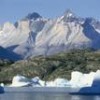
Cell Phone Tower Threatens Park
The construction of a 36-meter telephone tower would harm the majestic scenic beauty of Torres del Paine Park, in the extreme south of Chile, says Greenpeace.Few Takers for “Green” Homes
There are an estimated 1,500 ecological homes in Italy, a relatively low number in a new market, despite the fact that these "green" properties can represent savings of up to 43 percent annually in utilities.
Ecobreves – GUATEMALA: Promoting Artisanal Fishing
Some 15,000 small scale fisherfolk along Guatemala's Pacific and Atlantic coasts will benefit from a project "with incentives and aimed at supplying the national market," says Erick Villagrán, coordinator of the government fishing and fisheries agency, Unipesca.Ecobreves – ARGENTINA: Buenos Aires Bets on Recycling
"Buenos Aires Recylces" is a new environmental program designed by the capital's government to process a progressively greater amount of the waste its residents produce.THE RIGHT TO LIFE
At the conclusion of the World Summit in New York last September, all member states of the United Nations accepted the principle that national governments have the primary responsibility for preventing crimes against humanity, war crimes, genocide, and ethnic cleansing, writes Louise Arbour, United Nations High Commissioner for Human Rights. In this article, Arbour writes that the responsibility to protect focuses on preventing abuses as much as, if not more, than on intervening once those abuses are already underway. In today\'s world the greatest threat to the right to life is neither war nor arbitrary killing. Each year, about 530,000 women die in pregnancy or in childbirth, and more than 10 million children die before their fifth birthday. Worldwide, AIDS killed more than 3 million people last year alone. These deaths constitute human rights violations and are as much an affront and a threat to human security, as are arbitrary detention or torture. They represent an equally flagrant abuse of the right to life for those affected, threaten security and stifle human development. And they are equally demanding of an urgent response, at national, regional and international levels.
New Scuffles Over Water
Groups that favor and groups that oppose the privatisation of water will return to the ring in March, during the 4th World Water Forum, in Mexico.
An Astronaut Opens a Door to Space
Children at 39 municipal schools in Brazil will conduct science experiments in space, thanks to their country's first astronoaut, Marcos Pontes.The Power of Informal Garbage Collectors
Buenos Aires is confident that by 2020 the "cartoneros" will ensure that not a single recyclable waste item ends up in landfills.
Ecobreves – BRAZIL: Sights Set on Biodiversity
Brazil's Ministry of Environment is distributing a guide to promote participation in the eighth conference of parties to the Convention on Biological Diversity, Mar. 20-31 in the southern city of Curitiba.Ecobreves – COLOMBIA: UN Oversees Manual Eradication of Coca Crops
The United Nations will send 11 people to observe the manual eradication of 4,600 hectares of coca fields in La Macarena nature reserve, located in the central Colombian department of Meta.Ecobreves – GUATEMALA: The Year of the Jaguar
Guatemala's environmental officials have declared 2006 the Year of the Jaguar as part of a campaign to raise a million dollars to protect the big cat species from extinction.
Ecobreves – MEXICO: Peasants Step Up Opposition to Dam
Mexican peasant farmers who oppose construction of La Parota dam in the southwestern state of Guerrero pledge to step up actions to halt the million-dollar project, following a court ruling in their favor.« Previous Page — Next Page »





The Week with IPS

NEXT STOP - SDGs
Tracking global progress towards a sustainable world
Tracking global progress towards a sustainable world
