Languages
Wednesday, November 11, 2026



News and Views from the Global South
Ecobreves – CHILE: Are They Glaciers or Not?
The Sustainable Chile program charged on Oct. 31 that the Canadian company Barrick Gold is manipulating scientific reports so that the government will allow the removal of glaciers on the Chile-Argentina border, where the firm aims to establish the million-dollar gold mining project Pascua Lama.Ecobreves – VENEZUELA: No Palms, Blame the Butterfly
The caterpillar of the Brassolis sophorae butterfly are destroying the fronds of palm trees in Caracas, especially in the Botanical Garden, the 70-acre lungs of the city center that had aimed to establish Latin America's leading palm tree collection, says director Mariflor Burguillos.Ecobreves – CUBA: : Wilma Left a Lot of Water
The rains brought by Hurricane Wilma alleviated the drought that had plagued Cuba, with evident benefit for the island's agricultural areas, according to farmers consulted by Tierramérica.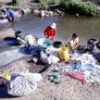
Big Commitment to Water
New commitments for clean water are being adopted by Latin America's environment ministers. Some 100 million people in the region don't have access to sanitation services.
Climate Change Not Completely to Blame
Scientists consulted by Tierramérica state their verdict on Wilma and other recent North Atlantic hurricanes: they cannot be attributed to global warming.
Writing the History of the Seas
New records show how the existing model for commercial fishing will exhaust fisheries in a decade or two.Ecobreves – REGIONAL: Environment in the Sights of Government Officials
Concerns and proposals put forward by civil society organizations and activists will be studied by the region's governments during the 15th Meeting of the Forum of Environment Ministers of Latin America and the Caribbean, taking place this week in Caracas, Venezuela.Ecobreves – COLOMBIA: New Environmental Seal
The Colombian government has announced the establishment of a new seal that will identify commercial products made with respect for the environment and biodiversity.Ecobreves – ARGENTINA: Gov't to Produce High-Power Wind Turbines
The Argentine government plans to produce high-power aerogenerators to supply wind power to the southern region of the country and export the surplus power generated.Ecobreves – BRAZIL: Universities for Sustainable Development
The second edition of the International Seminar on Science and Technology in Latin America, taking place Nov. 9-10 at the University of Campinas (Unicamp), 100 km from Sao Paulo, will reaffirm the leading role played by universities in promoting sustainable development.Ecobreves – HONDURAS: Eco-Stoves Reduce Environmental Impact
Environmentalists are promoting the use of "eco-stoves" as a more efficient means of cooking, and far less damaging to the environment and human health.Agriculture, a Minefield for Trade Talks
Farm exports from Mercosur -- Latin America's Southern Common Market -- to the European Union are growing at a snail's pace, but negotiations for a free trade agreement between the two blocs have been at a standstill for over a year, with no hope for progress in sight.Ecobreves – BRAZIL: Humble Cassava Regains Prestige
Cassava, a traditional crop pushed aside in recent years by the advent of large-scale agro-industry export crops, is recovering some of its former prestige in Brazil, as reflected by the resurrection of the Brazilian Cassava Congress.Ecobreves – CUBA: Electricity from Sugarcane
A project to generate electricity using sugarcane biomass at a sugar mill near Havana will contribute 143 gigawatt hours annually to the national electric power grid and help curb the emission of harmful greenhouse gases created by burning fossil fuels.Ecobreves – VENEZUELA: Cleaning Up a Garbage Dump
The local authorities in Valencia, 80 km west of Caracas, have launched a program to clean up La Guásima garbage dump. The 2.5 million dollar project will include the construction of a solid waste treatment plant, waste classification pits and leaching ponds, reported Mayor Argenis Loreto.Ecobreves – CHILE: Video on Dead Swans Censored
Environmental watchdog group Oceana is using the Internet to disseminate a video on the death of hundreds of swans at the Rio Cruces nature sanctuary in southern Chile after its public screening was censored.
Thirst in the World's Freshwater Paradise
The worst drought in the Amazon in 50 years has isolated entire villages, killed tons of fish and fuelled uncontrollable forest fires. The tragedy will be irreversible if deforestation continues, warn experts.Flu on the Wing of Migratory Birds
Activists are calling on the European Union to ban the hunting of migratory birds, the main vector for the spread of the deadly H5N1 strain of bird flu from Asia.FOOD AID OR FOOD SOVEREIGNTY?
International food aid, initiated in 1954, is the most publicised instrument put forward to fight hunger, especially in southern countries, where millions of tons of food are shipped each year. However, geared towards the dumping of cereal surpluses in developing countries, the aid system has promoted the trade and foreign policy interests of the donor countries at the expense of the hungry over the last fifty years, writes Anuradha Mittal, Executive Director of the Oakland Institute, a research and educational institute. The opening up of markets, along with food aid in kind, has deluged developing countries with agricultural commodities dumped by developed nations at below the cost of production. This has deepened the agrarian crisis in the developing countries, whose one billion-dollar food trade surplus of the 1970s became an 11 billion-dollar deficit by 2001, converting developing countries into major importers of food while destroying livelihoods of small family farmers. What the hungry really need is an enforcement mechanism that ensures the human right to food. This would require support for national policies that protect the livelihoods of small farmers and increase national food availability. Examples from hunger crises around the world clearly prove that policies that help countries develop their own agricultural sector and strengthen their small-scale farmers actually help feed more people in the long run.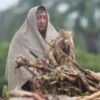
Indigenous Peoples Left Vulnerable to Disasters
Disaster prevention plans often fail to take into account the cultures and world views of indigenous communities. If the plans were more inclusive, say activists, there would be fewer tragedies resulting from climate phenomena like the recent Hurricane Stan.
A New Satellite for Measuring Polar Ice Melt
The European Space Agency hopes to launch the CryoSat II satellite within three years -- following the failure of the first mission on Oct. 8.« Previous Page — Next Page »





The Week with IPS

NEXT STOP - SDGs
Tracking global progress towards a sustainable world
Tracking global progress towards a sustainable world
