Languages
Wednesday, November 11, 2026



News and Views from the Global South
The 'Green' Promises of CAFTA
The environment chapter of the Central American-U.S. free trade agreement has environmental activists divided: for some it is merely ''symbolic'', for others it is a ''major victory''.Unacceptable' Work Conditions in Chile's Fields
Hundreds of thousands of people who work Chile's farmland are victims of abuse and mistreatment by employers and poisoning from pesticides, charge health, indigenous and union activists.Ecobreves – AMAZON: Fight Against Mercury
Mercury in the rivers of the Amazon region is threatening the environment and human health, says the Amazonian Cooperation Treaty Organization (OTCA), which is discussing action plans for curbing contamination from this heavy metal in the eight countries with Amazonian territory.Ecobreves – CHILE:: Cellulose Plant Remains Closed
The Chilean regional environmental commission, COREMA, resolved to maintain the closure of the Arauco Constitución cellulose plant in Valdivia, in southern Chile, until it complies with four requisites for preventing contamination of the Carlos Anwandter Nature Sanctuary.Ecobreves – CUBA: Kids Care for Havana Bay
A university environmental project implemented in several Havana schools aims to raise environmental awareness amongst children and adolescents for protecting the capital's bay, an ecosystem contaminated by the city's domestic and industrial waste.Ecobreves – VENEZUELA: Rescuing Nurse Sharks
Ten small nurse sharks (Ginglymostoma cirratum) whose mother was sold by fisherman were rescued off Venezuela's Margarita Island by scientists from the Shark Research Center.Ecobreves – GUATEMALA: New Traffic Route for Capital
National and city authorities are planning to build a second ''ring'' highway around the capital in a bid to ease traffic congestion.Ecobreves – HONDURAS: Promoting Vegetable Oil for Cars
A group of U.S. experts with the environmental group Sustainable Solutions Caravan proposed to government officials and civil society groups in Honduras the use of ''bio-fuel'' for cars as a means to reduce pollution.Ecobreves – PERU: Carrot and Stick for Polluters
The reform of Peru's Environmental Code will include economic incentives for compliance with environmental regulations, lawmaker Fabiola Morales told Tierramérica.Ecobreves – ARGENTINA: Entrepreneurs Dissuaded from Buying Preserve
Protests by residents and by environmental groups against the sale and logging of 25,000 hectares in Argentina's General Pizarro nature preserve, in the northern province of Salta, led businessman Manuel Santos Uribellarrea to withdraw from the project, Greenpeace representatives told Tierramérica.Ecobreves – COLOMBIA: Promoting Commercial Forestry
The forest industry is responsible for 38,000 direct jobs in Colombia, and if the area planted for commercial ends would expand from 150,000 to 3.0 million hectares in the next five years, the number of jobs would be 760,000, according to ''Outlook for investment in the Colombian forest industry''.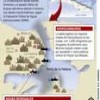
Fish Return to Havana Bay
Officials assure that marine life is recovering in Havana Bay, one of the most polluted bays in the world. Contamination from wastewater and from petroleum products has been reduced, according to a report to which Tierramérica had access.
Alarm Sounded on Panama-Colombia Electrical Project
Environmentalists fear that a project to connect the Colombian and Panamanian electrical systems will hurt Central America's largest protected area. The route of the power lines will be determined in six months.
''They want transgenics, good or bad''
Biologist Ignacio Chapela, who discovered that Mexican corn had been contaminated with genetically modified material, spoke recently with Tierramérica. He denounces a campaign by the big biotech transnationals to undermine his reputation.Ecobreves – HONDURAS: Pine Beetle Emergency
The Honduran government is working hard to prevent the spread of the southern pine beetle (Dendroctonus frontalis) plague in the northeastern department of Olancho, Roberto Cabrera, of the state-run forest development agency COHDEFOR, told Tierramérica.Ecobreves – GUATEMALA: No to Unregulated Fishing
Family fishing operations in Guatemala's Izabal Lake, the largest in the country, covering a thousand square kilometers, have denounced a rise in illegal fishing by smugglers, whose activities they say could push several species to extinction.DON QUIXOTE OF THE PARADOXES
It was in prison that this adventure in freedom was born. In the jail of Seville, \'\'where every discomfort has its place and every sad sound its home\'\', Don Quixote of La Mancha was engendered, writes Eduardo Galeano, Uruguayan writer and journalist, and author of \"The Open Veins of Latin America\" and \"Memories of Fire\". In this article, Galeano writes that every person contains other possible people, and each world contains its anti-world. This hidden promise, the world that we need, is no less real than the world we know and suffer. This truth is well-known, and fully lived, by the beaten down who still practice the madness of returning to the path, time and time again, because they continue to believe that the path is a challenge that awaits them, and because they continue to believe that righting wrongs is a worthy folly. The impossible helps the possible come to pass. To put it in terms of Don Quixote\'s pharmacy: the magic of this balm of Fierabras is so powerful that at times it saves us from the curse of fatalism and the plague of despair. Isn\'t this, in the end, the great paradox of the human voyage on this earth, that the navigator steers by the stars though he knows he will never reach them?THE U.N. SHOULD MOVE ITS HEADQUARTERS TO A FRIENDLY LOCATION
Worldwide there is an undercurrent of opinion that as part of UN reform and revitalization, its headquarters should be relocated from New York to another city and host country. This view needs to be argued and articulated in the multilateral arena. It needs to be brought to the attention of the world public opinion and policy makers, writes Roberto Savio, founder and president emeritus of IPS, and member of the WSF International Committee. In an international community composed of almost 200 states, striving for a genuine, democratic international system, the heart and brain of such a system embodied in the UN, should not be located in a country with hegemonic pretensions, which is systematically trying to make the UN into a docile instrument for the pursuit and attainment of its national goals, while neutralizing any of its roles, functions or actions that it deems contrary to its national interest. The UN cannot feel at ease or function normally in a setting where an important part of the political establishment and of public opinion is openly hostile to it, and in a micro-environment where its presence has become a daily irritant to many and where it is subjected to consistently negative media coverage.10 YEARS AFTER THE COPENHAGEN SOCIAL SUMMIT: TIME TO BRIDGE THE GAP BETWEEN WORDS AND DEEDS
Economic growth is essential for the world to meet the social agenda spelled out 10 years ago in Copenhagen and the objective of reducing global poverty by 50 percent by 2015, writes Steen Jorgensen, Director of Social Development at the World Bank. In this article, Jorgensen writes that growth needs to be socially balanced and therefore development efforts must generate institutions that promote an inclusive approach to economic development, sound governance structures by which authorities are accountable to regular citizens, and a decision-making process that favours consensus-building instead of division and exclusion, which lead to conflict and marginalisation. There is now empirical evidence that social progress is, in many cases, not only a key factor but even a precondition to sustained economic growth. Social investments during good times paid off during crisis and enabled communities to bounce back faster. Decades of development experience have shown that when societies are guided by the key principles of inclusion, cohesion, and accountability, development efforts are more successful and lasting.ECONOMISTS AS ADVOCATES
At last, the public debate over corporate social responsibility has been fully joined by the mainstream financial press. However, to properly context this debate, the enduring myth that economics is a science must be dispelled, writes Hazel Henderson, economist and author of Beyond Globalization and other books. In this article, Henderson writes that in truth, economics is a profession -- one with rather poor quality control. Economists are advocates, not scientists. In 1969 the Central Bank of Sweden, put up USD 1 million to create a prize to confer scientific status and legitimacy on the academic discipline and policy advocacy of the economics profession. Economists need not be embarrassed by this unmasking of their field as a profession rather than a science. Economists have always been advocates of various government policies, regulations or deregulation, and of the interests of their clients (most often bankers, financial firms and corporations in general). All that is necessary is clarity on the part of these professionals and all other advocates - so that the public is fully informed - and the issues are argued honestly.SILENCE IN NEPAL
Every time we in Nepal think things can\'t get any worse, they do, writes Kunda Dixit, editor of the weekly Nepali Times. Last week, King Gyanendra sacked his prime minister, declared a state of emergency, and suspended civil liberties. Nepal\'s 15-year experiment with democracy now seems over. With complete press censorship, one of the last remaining freedoms from the 1990 People\'s Movement is gone. King Gyanendra\'s move has been welcomed by many Nepalis disenchanted by the instability caused by fractious and corrupt parliamentary leaders and by an insurgency which has cost 12,000 lives in nine years. If this is what the king had to do to restore peace, they say, so be it. In the long run, however, the answer to Maoist totalitarianism is greater and more inclusive democracy, a vibrant free press, and civil liberties. Curtailing freedom polarises society between two radicalisms and wipes out the middle ground. And even as a strategy against the Maoists it could be counterproductive.« Previous Page — Next Page »





The Week with IPS

NEXT STOP - SDGs
Tracking global progress towards a sustainable world
Tracking global progress towards a sustainable world
