Languages
Wednesday, November 11, 2026



News and Views from the Global South
Ecobreves – CHILE: Cellulose Plant Construction Halted
The regional environmental commission, COREMA, of Biobío, in southern Chile, ordered a stop to the construction of the Itata cellulose plant, which was designed for a production volume greater than what was authorized, as environmental groups denounced two months ago.Ecobreves – CUBA: Bays Increasingly Contaminated
Contamination from organic waste in Cuba's bays increased 2.3 percent during 2004, in contrast to a decline of 3.6 percent of the waste burden received by the island's eight main basins.Ecobreves – VENEZUELA: Shrimp Granted a Visa for U.S.A.
The United States has lifted a ban that since the late 1990s prohibited entry of shrimp from Venezuela, saying the South American country now meets the international requirements for protecting sea turtles that accidentally get caught in the fishing nets.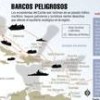
Ships Leave Tons of Waste in Caribbean Waters
Each of the thousands of cruise ships that sail through the Caribbean Sea generate up to 1,200 cubic meters of liquid waste daily, including wastewater from kitchens and showers. The region lacks effective system for handling organic and toxic waste generated by the shipping industry.
Coral Reefs the Silent Victims of Asian Tsunami
The gigantic waves of Dec. 26 caused large-scale destruction of the barrier reef of Andaman and Nicobar islands, the largest in South Asia and the source of sustenance for local communities, reports our special Tierramérica contributor from Thailand.
Maps Ignore Lakes and Lagoons
Around a thousand bodies of water do not appear in the cartography of Central America, according to the preliminary results of a new study to which Tierramérica had access.
River of National Integration Is Dividing Brazil
The Luiz Inácio Lula da Silva government in Brazil decided this year to divert water from the Sao Francisco River to the country's northeast. A broad range of groups oppose the project, saying it will benefit only large landowners and the business sector.Farming in Harmony with the Cosmos
With no chemical fertilizers and commanded by the stars above, biodynamic crops are flourishing in Italy. Some 400 small companies are dedicated to this type of farming, with annual revenues of 27 million dollars.The Asian Tsunami
After the tsunami that caused over 150,000 deaths in Asia, making it one of the largest natural disasters in modern history, world leaders will discuss the establishment of a tsunami early warning system in the Indian Ocean at a conference in Japan from Jan. 18 to 22.Ecobreves – MEXICO: Whales in Danger
Dozens of female gray whales that are pregnant, many of which are ready to give birth, began to arrive this month in the Sea of Cortez, off the Mexican state of Baja California, in keeping with a natural cycle that could come to an end if tourism development plans continue, say environmentalists.Ecobreves – COLOMBIA: Reforestation Means Jobs for Peasants
The Regional Corporation of Quindío in Colombia carried out activities aimed at re-establishing ecosystems and forests, generating employment for at least 90 families, as part of the 2004-2006 Action Plan.Ecobreves – PERU: Demands for Guarantees from Mining Companies
The concession-holders of mining contracts in Peru will have to put forth financial guarantees -- titles, shares or cash -- to pay for potential environmental damage from their operations if a bill presented by Congressman Jaime Velásquez is passed.Ecobreves – CHILE: Experts to Investigate Swan Die-Off
International experts will visit Chile in February or March to investigate the recent massive deaths of black-necked swans (Cygnus melancoryphus) in the Río Cruces nature sanctuary, 790 km south of the capital. Environmentalists claim it was caused by waste from a cellulose factoryEcobreves – CUBA: Coastline Plagued by Erosion
Around 90 percent of Cuba's coastline suffers some degree of erosion as a result of rising sea level, pollution and extraction of sand, warns an official report.Ecobreves – GUATEMALA-MEXICO: Protecting the Usumacinta Watershed
Environmental groups from Guatemala and Mexico will strengthen a strategic alliance in 2005 to protect the two countries' shared watershed of the Usumacinta River.Ecobreves – VENEZUELA: Environmentalists Worry Over Land Intervention
Venezuelan environmentalists expressed their concern about a decree in the central state of Cojedes that ordered ''intervention'' of all fallow lands that could be used in agriculture, including extensive cattle ranching accompanied by private forest and water reserves, that are now home to hundreds of species.Ecobreves – HONDURAS: Shrimper's Environmental Permit Cancelled
The Honduran Environmental Prosecutor revoked the environmental permit of El Faro, a shrimping operation that fishes in the Gulf of Fonseca, on the Pacific Ocean. The firm is accused of causing severe damage to wetlands and mangroves in the area, which is shared by Honduras, El Salvador and Nicaragua.THE MIRAGE OF DEVELOPMENT THROUGH TRADE
A new report from the UN Food and Agriculture Organisation (FAO) concludes that the last 40 years of international trade in agriculture have not benefited the developing countries, above all the Least Developed Countries (LDCs), write Frederic Mousseau, Senior Fellow at the Oakland Institute and internationally-renowned food security consultant, and Anuradha Mittal, the founder and director of the Oakland Institute. In this analysis, the authors write that according to the report, trade actually marginalises the poorest countries and their small farmers and mainly benefits large-scale producers and corporations from developed countries. In the last few decades, transnational corporations have increased control over production and trade in developing countries. While it denounces market distortions caused by developed countries, the report does not question the policies that harm agriculture in the developing countries and undermine the livelihoods of their farmers. Instead it recommends measures to make developing countries and their farmers more competitive in an open global economy, suggesting that the trade and market liberalisation are the only chances that poorest nations have to get out of poverty. The authors argue for the adoption of food sovereignty as a national policy for developing countries, including the right to protect their production and markets from an inequitable system.Ecobreves – BRAZIL: First Hydrogen Bus
Brazil will have its first electrical engine, hydrogen-fuelled bus in 2006, according to the graduate engineering program at the Federal University of Rio de Janeiro.French Plan Contradicts Europe's Anti-Nuclear Trend
France is to invest 150 billion dollars in nuclear reactors, a move that distances the country from the renewable energy goals of its neighbors.Reviving the Guaraní Route
Tourists soon will be able to follow the network of paths in Paraguay and Brazil that Guaraní Indians followed centuries ago in search of the ''Land Without Evil''.« Previous Page — Next Page »





The Week with IPS

NEXT STOP - SDGs
Tracking global progress towards a sustainable world
Tracking global progress towards a sustainable world
