Languages
Thursday, November 12, 2026



News and Views from the Global South
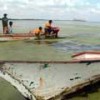
Water Lentils on the Offensive
A weed species is posing a major threat to Venezuela's Lake Maracaibo, the biggest lake in South America. With rakes and poles, fisherfolk are fighting to eliminate this "intruder" that is a danger to many types of fish.Ecobreves – ARGENTINA: No Sign of Environmental Report
The Argentine Environment and Natural Resources Foundation asked the government for the official environmental report for 2003, which should have been published in November but has yet to appear.Ecobreves – COLOMBIA: Proposals for Garbage Crisis
The Regional Autonomous Corporation, regional environmental authority for the Colombian department Atlántico, proposed construction of three landfills to remedy the crisis arising from poor management of solid waste.Ecobreves – GUATEMALA: Military Guards Nature Park
Sixty soldiers from the Guatemalan army will back 50 agents of the National Civil Police (PNC) in fighting vandals and drug traffickers who threaten the Laguna del Tigre National Park, located in the northern department of El Petén.Ecobreves – PERU: A Call to Ban Asbestos Use
Three civil society groups asked the Peruvian Congress on May 17 to ban the use of asbestos in industrial processes after a press conference in which they presented four former employees of an auto parts factory who suffer asbestosis.
Can Planting Trees Be Harmful?
Environmentalists warn that monoculture of tree plantations threatens the Uruguayan environment. But there are no studies available on the true impacts of commercial forestry, which now covers more than 600,000 hectares, or four percent of productive land in this South American country.A Victory for Free Speech'
Greenpeace celebrated a ruling by U.S. courts to absolve the international environmental watchdog of charges involving its protest activities. Nancy Hwa, spokeswoman for the group, dialogued with Tierramérica about the case.
Oil Spills in the Middle of New York
For decades oil leaks have been contaminating a creek that crosses two of New York's famed boroughs. Activists are taking legal action against Exxon Mobil and other oil companies.
Global Crusade Against Toxic Chemicals
The Stockholm Convention on Persistent Organic Pollutants (POPs), which entered into force on May 17, will put the brakes on the most toxic substances around the globe. But the best efforts are yet to come, writes the executive director of the United Nations Environment Program (UNEP) in an exclusive column for Tierramérica.The Caribbean Under Satellite's Eye
Central America has been monitoring its natural resources from outer space since the 1990s, through a project in conjunction with NASA. Now the aim is to incorporate 15 Caribbean countries into the initiative.Ecobreves – GLOBAL: Getting Ready for Youth Summit
Some 600 girls and boys from 100 countries will take part in an international environmental conference in July in the United States, where they will discuss global problems, present proposals and demand answers from the adult world.
The 'Other Face' of Colombia
Libia Grueso, winner of the Goldman environmental prize for her efforts benefiting Afro-Colombian communities, spoke with Tierramérica about the award and her work. Grueso was able to put the brakes on a multi-use pipeline that threatened the delicate ecosystems of mangroves and jungles in Colombia's Valle del Cauca department.Private Conservation at a Snail's Pace in Chile
The number and size of protected areas in private hands have grown, but they still lack official recognition and there are no incentives for them, say NGOs. There are more than 375 thousand hectares of privately run reserves in Chile -- a tiny area compared to the 14.1 million hectares under public protection.Ecobreves – CHILE: Electric Company Floods Indian Cemetery
Chilean minister of planning, Andrés Palma, said on May 11 that the Endesa electric company must pay damages to the indigenous Pehuenche community for flooding their cemetery when the reservoir of the Ralco dam was filled without authorization.Ecobreves – CUBA: Homemade Vegetable Soap
A community project under way in this eastern province of Cuba promotes the production of homemade soap using the physic or Barbados nut (Jatropha curcas), the cultivation of which also improves soils damaged by drought or salinity.Ecobreves – VENEZUELA: Water Lentils Cover Lake Maracaibo
A fine layer of water lentils (Lemnaceae family) has extended during the past few weeks over a quarter of Lake Maracaibo, in western Venezuela, underscoring the high level of water pollution that affects fish and lake navigation.Ecobreves – GUATEMALA: Dump Filling Up
An enormous garbage dump less than two km from the Guatemalan capital's historic center could reach its breaking point within three years and cause serious damage, warns Mario Dary, minister of environment and natural resources.
Indigenous Eco-Activists Await Medals, or Punishment
Two Mexican indigenous farmers who have fought logging operations could be sentenced to around a decade in prison. To the NGOs, they are prisoners of conscience. To government prosecutors, they are criminals.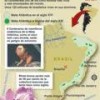
Big Landowners Come to the Aid of Atlantic Forests
Some 360 private reserves have been created to protect the forests in the rich Brazilian Atlantic biome, one of the five most endangered in the world. The Mata Atlantica has lost more than 90 percent of the area it covered when Europeans first came to the Americas.Ecobreves – PERU: Coca Growers Deforest the Amazon
Illegal coca plantations have caused environmental damage to the Peruvian Amazon of an estimated 1.5 billion dollars, due to clearing of forest and logging, says an official report from the Peruvian government.« Previous Page — Next Page »





The Week with IPS

NEXT STOP - SDGs
Tracking global progress towards a sustainable world
Tracking global progress towards a sustainable world
