Languages
Thursday, November 12, 2026



News and Views from the Global South

Indians Shake Up the Political Scene
Despite their exclusion from society, indigenous communities in Latin America are gaining ground in the political arena. They have brought down two governments and wield increasing influence at the local and parliamentary levels.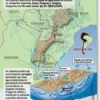
A Treasure Underfoot
Little is known about the huge Guaraní Aquifer, an underground reservoir of freshwater for the countries of Mercosur (Argentina, Brazil, Paraguay and Uruguay). Experts are preparing long-term plans to preserve it.
Mapuches Want to Shape Their Own Future
Chile's principal indigenous community -- some 700,000 people -- is seeking a system for self-determination, but without undermining the integrity of the state.International year of Rice
In an effort to attend to the problems of hunger and malnutrition, among others, the United Nations General Assembly on Oct. 31 declared 2004 the International Year of Rice. Sixty percent of the world's 1.3 billion poor live in Asia, and rice is their principal sustenance.Ecobreves – International Year of Rice
In an effort to attend to the problems of hunger and malnutrition, among others, the United Nations General Assembly on Oct. 31 declared 2004 the International Year of Rice. Sixty percent of the world's 1.3 billion poor live in Asia, and rice is their principal sustenance.Ecobreves – URUGUAY: Belated Sanitation Alert
The sanitation alarm sounded by Uruguayan authorities last week in the southern Ciudad de la Costa, the country's fastest growing urban center, came two years after residents, experts and activists warned of the problem.Ecobreves – PERU: On War Footing for Gold Mining Project
The Canadian mining company Manhattan, backed by Peru's Ministry of Energy and Mines, called off the Nov. 7 public hearing on its gold exploitation plan for the northern city of Tambogrande after the mayor announced a general strike to protest the project.Ecobreves – COSTA RICA: The Disappearing Amphibians
Populations of 23 species of frogs and toads in Costa Rica have decreased, and 11 could become extinct, according to the studies conducted by biologists Gerardo Chaves and Federico Bolaños, from Costa Rica's National University.Ecobreves – GUATEMALA: Monitoring Caribbean Reefs
Guatemala's Ministry of Environment and Natural Resources this month delivered aquatic research equipment for monitoring the Mesoamerican Reef System, which extends along the Caribbean coast from the Yucatán Peninsula in Mexico, to Guatemala, Belize and Honduras.Ecobreves – HONDURAS: Ecological Museum Promoted
Residents and officials in the northern Honduran region of Choloma are promoting the creation of an ecological museum near Ticamaya Lagoon in order to protect marine species and promote tourism.Ecobreves – SOUTH AMERICA
- The environmental watchdog Greenpeace alerted the governments of Argentina and Chile about a nuclear waste shipment that left Australia last week and could pass through Cape Horn, a threat to the territorial waters of both countries.THE LOOMING FIRST WORLD DEBT CRISIS
The first of the New Economics Foundation\'s annual reports on the global economy predicts that a giant credit bubble, created by central bankers and finance ministers who engineered decades of \'\'easy money\'\', has now reached a \'\'tipping point\'\', writes Ann Pettifor, director of Jubilee Research at the New Economics Foundation (NEF) and editor of Real World Economic Outlook. While globally there is a total of USD100 trillion of debt outstanding, there is only USD33 trillion of income with which to repay those debts. When this credit bubble bursts in the US and UK, it will be middle-class consumers that will first bear the brunt, the author argues in this article. This will be grossly unjust because while central bankers and finance ministers have clamped down on prices and wages, they have used the credit bubble (borrowing) to inflate asset values (stocks, bonds, and property) to extraordinary heights. On the whole it\'s the poor and the middle classes that rely on wages and salaries, while the rich derive their incomes from assets or wealth. The report calls on governments and central banks to take responsibility for their reckless de-regulation of finance, to re-regulate international capital by bringing back exchange controls, and to rein in reckless lending and borrowing.DEMOCRACY AND DEVELOPMENT: TWIN ENGINES OF PROGRESS
A key challenge of the 2003 Commonwealth Heads of Government Meeting in Abuja, Nigeria, from 5-8 December, is understanding how democratic values and practices can be harnessed to help communities achieve more growth, develop better health and education systems, and increase their living standards, writes Don McKinnon, Commonwealth Secretary-General since April 2000. In this article the author writes that one important way of achieving progress in both democracy and development is through consensus-building. The process of global dialogue on which the Commonwealth is based allows leaders to develop joint approaches to problems of common concern. We use the power of consensus in the area of trade and economic development. Because it embraces such a great diversity of states -- large and small, rich and poor, island and land-locked -- the Commonwealth is strategically placed to ensure that the voices of its smaller and developing members are not ignored. The greatest obstacle to effective consensus-building is often the lack of common ground. Here lies the Commonwealth advantage: our nations are not only united by self-interest; they also share common values, similar political, judicial and administrative structures, a common language and a similar business culture.TERRORISM: FIGHT THE ROOT CAUSES OR FIGHT FOREVER
Hopefully President Bush and Prime Minister Blair in their summit talks in London will realise the need to attack the root causes of terrorism, writes Kaare Willoch, former leader of the Conservative Party and Prime Minister of Norway from 1981 to 1986. In this article, the author cites former US president Bill Clinton who, during a recent visit to Oslo, asserted that \'\'in a world where it is impossible for us to occupy, capture, or conquer whoever aims to harm us, we need to work harder to achieve a world with more friends and fewer terrorists\'\'. And Ami Ayalon, former head of Israel\'s security service Shin Bet: \'\'Those who want \'victory\' against terror without addressing the underlying grievances want an unending war.\'\' One cannot expect non-Westerners to consider it more a more heroic act to bomb Palestinian homes from airplanes than to blow oneself up. US-financed missiles and shells are inflicting a much higher death toll on innocent civilians. It is only natural that many outside the West believe that we oppose only certain forms of violence and condone other far more lethal ones by ourselves and our allies.DEMOCRACY AND DEVELOPMENT MUST GO TOGETHER
At the heart of the international debate is the relation between development and democracy, writes Boutros Boutros-Ghali, Secretary General of the United Nations from 1992-1996. In this article the author writes that these two concepts are inherently intertwined but have all too often been treated as separate. The achievement of both is fundamental to the future of world peace. Development is essential to complement and reinforce democracy. It represents the set of economic, social, and cultural aspirations to which all societies aspire. The right to development is a human right. It should involve all aspects of human life. Inequality, poverty, exclusion, religious fanaticism, racism, xenophobia, and lack of dialogue are all impediments to development which ought to be overcome if we are to work towards the establishment of a more global democratic culture. The mere fact that these are still common traits of modern societies highlights the need for participation and involvement in the democratic process. It reveals that freedom of opinion and expression are not only rights that are to be taken for granted, but rights that must be put into practice.THE FUTURE OF THE COMMONWEALTH
As the date of its summit in Abuja, Nigeria, approaches (5-8 December), the Commonwealth finds itself polarised and apparently paralysed about what to do with Mugabe\'s Zimbabwe, writes Greg Nillas, National Director of the South African Institute of International Affairs (SAIIA) and the author of \'\'Poverty to Prosperity: Globalisation, Good Governance and African Recovery\'\'. As a result of Robert Mugabe\'s misrule from Harare, half of Zimbabwe\'s 13 million citizens face starvation, and many live under constant physical threat from his government. This situation stands in dire contrast to the values set forth in the Harare Declaration, Mills writes in this article. Human rights issues now threaten to divide the Commonwealth between North and South, between the developed and developing world, between the largely white and the largely black member-states. In spite of the labelling of the Abuja meeting as \'\'Development and Democracy: Partnership for Peace and Prosperity\'\', the agenda is likely to be dominated not only by Mugabe\'s Zimbabwe but also by the security situation in Iraq.THE MISGUIDED WAR ON TERRORISM
There is a connection between a lack of military power to confront injustice and the use of terror. Nuclear weapons are an element of one party\'s crushing superiority in the Middle East. The West - with good reason - seeks to prevent other countries from acquiring them. But the US refuses to hear criticism of Israel\'s nuclear arsenal, writes Kaare Willoch, former leader of the Conservative Party and Prime Minister of Norway from 1981 to 1986. In this article, the author writes that one cannot expect non-Westerners to consider it more a more heroic act to bomb Palestinian homes from airplanes than to blow oneself up. US-financed missiles and shells are inflicting a much higher death toll on innocent civilians. It is only natural that many outside the West believe that we oppose only certain forms of violence and condone other far more lethal ones by ourselves and our allies. Western leaders must turn their attention to the root causes of terrorism and take action to eliminate them.Ecobreves – CUBA: Protecting Wetlands and Aquatic Birds
An internationally backed project for the western Cuban province of Pinar del Río aims to protect the area's wetlands and waterfowl.Ecobreves – BRAZIL: Cyber-Indians
Several groups of Brazilian Indians are beginning to use the Internet, thanks to the Peoples of the Forest Network, a project of the non-governmental Committee for the Democratization of Information Technologies (CDI)Ecobreves – GUATEMALA: Battle Against Tree Trafficking
The environmental investigative office in Guatemala will launch a campaign at the end of October to fight the illegal trafficking in 'pinabete' branches, which Guatemalans traditionally use as Christmas decorations.Ecobreves – COSTA RICA: Botanical Info for the Public
Central Americans will have access to information on the region's plants, as well as their uses, thanks to an agreement between the Network of Central American Herbalists, the Costa Rican National Biodiversity Institute (INBio) and the Norwegian Agency for Development.« Previous Page — Next Page »


The Week with IPS

NEXT STOP - SDGs
Tracking global progress towards a sustainable world
Tracking global progress towards a sustainable world
