Languages
Sunday, October 4, 2026



News and Views from the Global South
Ecobreves – VENEZUELA: More Protection for Trees in Caracas Demanded
Local residents and environmentalists are angry that a dozen trees were cut down to clear the way for a new mausoleum on the north side of Caracas to house the remains of Venezuela’s independence leader and founding father, Simón Bolívar.Ecobreves – HONDURAS: Children Head Up Environmental Patrols
Girls and boys from ten schools in Tegucigalpa are collecting and recycling trash and using the proceeds to pay for their own school snacks, as well as taking part in patrols that educate the public and ensure that garbage is deposited in the proper place._050226_175217_1-100x100.jpg "A photographer dives near a great hammerhead shark. - Jim Abernethy - Courtesy of the Pew Environment Group")
Honduras Committed to Protecting its Marine Treasures
Given the abundance and variety of its corals, Honduras could serve as a gene bank for these species for the entire Mesoamerican region.Ecobreves – CHILE: Finalists Announced for Environmental “Anti-Prize”
The Chilean branch of international environmental watchdog Greenpeace is running its annual competition for the awarding of “anti-prizes” to the government authorities, politicians and businessmen who have been responsible for the worst environmental damages in the previous year.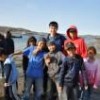
Activists Call for Creation of a High Commissioner for Future Generations at Rio+20
A High Commissioner for Future Generations would act to balance the short-term nature of government electoral cycles by advocating for the interests and needs of coming generations.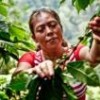
Fair Trade Is Alive and Well in Spain Despite Recession
Promoters of fair trade in Spain believe that the recession is helping to reawaken critical awareness among consumers.
The Environmental and Economic Crises Share the Same Cause
Paradoxically, if we fail to act decisively to combat climate change, the reduction in global greenhouse gas emissions could occur through the collapse of the world economy, warns Maurice Strong in this column.Ecobreves – ARGENTINA: Volcanic Ash Used to Make Bricks
Architects from Argentina have designed bricks for housing construction made from the huge amounts of ash that fell in the southern part of the country a year ago following the eruption of the Puyehue-Cordón Caulle volcano chain in Chile.Ecobreves – HONDURAS: Communities Planting Trees
The Honduran capital and the southern city of Choluteca are leading up an environmental awareness initiative based on the reforestation of watersheds and other deforested areas.Ecobreves – BRAZIL: Deforestation Continues in Mata Altȃntica
Between May 2010 and May 2011, another 133 sq km of forests were cleared in the already devastated Mata Altȃntica (Atlantic Forest) biome of Brazil, according to data from the SOS Mata Altȃntica Foundation and the National Institute for Aerospace Research.Ecobreves – MEXICO: Climate Dialogue Forum Created
Five civil society organizations have established a national indigenous-campesino (peasant farmer) roundtable for dialogue and decision making on climate change, deforestation and soil degradation.Ecobreves – CHILE: Pig Slaughterhouse Shut Down
The Chilean government declared a health alert in the town of Freirina, 800 km north of Santiago, in response to the pollution and foul odor emanating from the nearby Agrosuper pork processing plant.Ecobreves – VENEZUELA: Program to Protect Highly Endangered Bird
The Venezuelan Institute for Scientific Research and Bararida Zoo in the city of Barquisimeto are launching a program to protect the red siskin (Carduelis cucullata), a highly endangered bird that lives in the country’s northwest region.Ecobreves – BRAZIL : Mapping the Jaguar Genome
Deciphering the gene map of the jaguar (Panthera onca) is the goal of a new project being jointly undertaken by a number of Brazilian institutions.Ecobreves – HONDURAS: Satellite Monitoring of Natural Resources
A satellite monitoring system donated by the government of Taiwan will enable the creation of a database of natural resources in Honduras and the damages they could suffer as a result of disasters such as hurricanes or earthquakes.Ecobreves – LATIN AMERICA: Decline in Renewable Energy
The generation of energy from renewable sources in Latin America dropped from 25 percent of total output in 1990 to 23 percent in 2009, according to the Economic Commission for Latin America and the Caribbean (ECLAC).Ecobreves – BRAZIL: Greenhouse Effect of Amazon Hydro Dams Revealed
The planned construction of 22 hydroelectric power plants in the Amazon region over the next eight years will cause the emission of 153 million tons of carbon dioxide into the atmosphere, a new study reveals.Ecobreves – LATIN AMERICA: Mega Cities in Search of Climate Leadership
Representatives of civil society, political organizations and the private sector from Buenos Aires, Mexico City and São Paulo, the three most populous cities in Latin America, met in the Argentine capital to promote leadership around the climate change issue.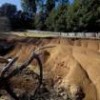
Action Needed Now to Prepare for Severe Drought Conditions in the Future
Numerous scientific studies predict severe and permanent drought conditions in large parts of Mexico, the United States and Central America.
Colombian River Basin Passes the Test of El Niño and La Niña
Risk prevention measures with active community participation have reduced the threat of flooding and water shortages in the Colombian city of Neiva.Ecobreves – BRAZIL: Increased Public Concern Over Climate Change
Climate change is considered a “very serious” problem by 65 percent of Brazilians interviewed in a survey conducted by the National Confederation of Industry (CNI) in December and released in the second week of May.« Previous Page — Next Page »


The Week with IPS

NEXT STOP - SDGs
Tracking global progress towards a sustainable world
Tracking global progress towards a sustainable world
