Languages
Saturday, November 7, 2026



News and Views from the Global South
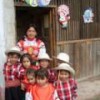
Peruvian Coffee Growers Cultivate Education
At the epicenter of Peru's coffee boom, small producers are fighting poverty and the lack of public schooling.
Climate Change Forcing Penguins North?
Climate change could be the cauBOSTONse of an unprecedented stranding of thousands of penguins on the coast of Brazil, say researchers.Ecobreves – ARGENTINA: Protests Against Rally Dakar
Environmental and citizen groups, academics and lawmakers in Argentina are protesting the Rally Dakar 2009, the race that will be held for the first time in South America, in January, passing through 10 of the country's provinces.Ecobreves – MEXICO: Unstoppable Logging in Monarch Butterfly Reserve
Logging has not stopped in the monarch butterfly sanctuaries in Mexico, report local residents. The butterflies make annual migrations between Mexico and the United States and Canada.Ecobreves – HONDURAS: Fisherfolk Protect Marine Resources
Fishing communities from the southern Honduran Gulf of Fonseca, on the Pacific coast, began construction in December of the first center for production and management of marine resources, in waters that Honduras shares with Nicaragua and El Salvador.Ecobreves – BRAZIL: Ranching Is the Leading Cause of Amazon Destruction
In Ulianópolis, one of the Brazilian Amazon's most deforested municipalities, 76 percent of the land that was forested is now pasture, according to data from the government's Amazon Protection System.
Arctic Peoples Claim Their Right to Cold Temperatures
The indigenous residents of the Arctic want to continue living in the glacial cold in which their culture was forged, and which is now threatened by climate change, says Canadian Inuit leader Mary Simon in this exclusive Tierramérica interview.Ecobreves – BRAZIL: An Engine Fuelled by Garbage
An engine that uses garbage, farm and ranch waste and derivatives of oil, coal and ethanol, is the latest invention of Embrapa, the Brazilian agricultural research agency, to bring low-cost energy to poor rural and isolated communities.Ecobreves – VENEZUELA: Treetop Walkway in National Park
The people of Caracas will soon be enjoying El Ávila National Park from among its tallest trees, some 30 meters above the ground, standing on a walkway of hanging bridges 120 meters long.Ecobreves – HONDURAS: EU Funds for Environmental Projects
The European Union has earmarked for the next five years some 53 million dollars to carry out environmental projects in Honduras's poorest areas.
Manganese Mines Harm Children's Mental Development
Decades of manganese mining in the Mexican state of Hidalgo have left an indelible mark on children, according to health studies.DIVERSITY IN CUBA
The image of a single, homogeneous Cuba is increasingly the stuff of dreams. The single-party, command-economy socialist island of the Caribbean with a monolithic society and politics is giving way to a Cuba of social diversity moving towards a plurality that would have been unimaginable twenty years ago, writes Leonardo Padura, a Cuban writer and journalist whose novels have been translated into a dozen languages. In this article, Padura writes that since the 1990s and the profound economic crisis that the Cuban government dubbed the \"special period in times of peace\", the protectionist ceiling that the state tried to extend over every inhabitant of the island shattered, and there was an emergence of a variety of ways of seeing reality, interpreting it, and living it. Since that period Cuba has turned into a country of many looks and many faces: in addition to the official Cuba of the television and press, there is an underground Cuba, beset by marginalisation of both areas and people; and then there is the mirage of tourism, exclusive beach resorts and clubs only for foreigners, among other Cubas.
Carbon Markets – What's In It for the Poor?
Paying the poor to conserve forests through a market scheme is the new star among initiatives in climate talks.
Paraguayan Indigenous Minister Asks for Patience
Margarita Mbyvângi faces the challenge of becoming the first woman and first indigenous person to head Paraguay's indigenous policy.
Costa Rica Promotes Greener Air Travel
Every air traveler to or from Costa Rica may be paying the government five dollars per ton of carbon dioxide produced by the flight. The funds will be earmarked for conserving and reforesting the country's jungles.Ecobreves – ARGENTINA: Complaints Against Draining of Paraná Delta
Residents of the town of Baradero, in the north of Buenos Aires province, have sounded the alarm about the construction of embankments intended to drain part of the Paraná River delta.Ecobreves – BRAZIL: A Non-Polluting Charcoal Oven?
The National Space Research Institute, based in the southern Brazilian city of São José dos Campos, has developed an oven that reduces the emissions of smoke and dangerous gases in the small-scale production of plant-based charcoal.Ecobreves – MEXICO: Extension for Overflowing Garbage Dump
For the fifth time in five years, the Mexico City government has won a postponement for closing down the Bordo Poniente, the capital's largest garbage dump, which is full beyond capacity.INDIA: PUSHING FOR CHANGE
The Five Year Plans (2007-2012) reflect the evolution of India as a nation; they capture the emergence from the under-development stigma to a country that has donned the mantle of a progressive developing economic power. Development that is not just sustainable but also humanistic. Development which reaches out to young girls working in dingy looms for paltry wages, to women rendered homeless due to unavailability of credit and land, to Dalit families abused and burnt by upper caste oppressors for demanding rights and young women killed and victimised in the name of honour, writes Syeda Hameed, member of India's Planning Commission and former member of the National Commission for Women. While India aims for double digit growth in the next Plan period, we are trying to ensure that economic growth encompasses women, especially poor and marginalised women. There is a growing concern that women's contribution to the economy is increasing but their share of the economic pie is only getting smaller and smaller. There is a compelling need to take steps to ensure a fair allocation of government budget resources to women otherwise we will only be providing lip service to women's empowerment. Removing gender inequity and influencing the budget making process go hand-in-hand.THE POSSIBLE AMAZON
The Amazon constitutes a strategic reserve of potential for a new kind of development for Brazil. The opportunities depend on a structural change in focus which has already been made by some sectors of society, government, and businesses, but at a scale that is still insufficient, writes Marina Silva, senator and former environment minister of Brazil. In this article, the author writes that the Amazon can only be treated and understood correctly if Brazil is too. The government should ensure that the levels of socio-environmental governance achieved in the Amazon are maintained. Land-use zoning should continue to advance. It is essential to continue reducing that frontier of vacant lands and, at the same time, continue increasing protected areas, structuring them so that they serve environmental, social and economic functions. Preserving the Amazon and promoting improvements in the lives of its population is a civilisational challenge for Brazil and the world. Our success will depend on the perseverance of local officials in continuing to expand environmental governance and on the political support of society to ensure that the process is not interrupted.
A Place for Eco-Coffee in the Dominican South
Fair trade, organic production, gender equality and education form part of the strategies of thousands of coffee-growers for escaping poverty in the south of the Dominican Republic.« Previous Page — Next Page »





The Week with IPS

NEXT STOP - SDGs
Tracking global progress towards a sustainable world
Tracking global progress towards a sustainable world
