Languages
Saturday, November 7, 2026



News and Views from the Global South
Ecobreves – CHILE: Anti-Pesticide Groups Take On the Government
The Alliance for a Better Quality of Life and the Latin American Anti-Pesticide Action Network (RAP-AL) of Chile staged a protest outside the government's Agriculture and Livestock Service (SAG) headquarters about the continuation of aerial fumigation.Ecobreves – BRAZIL: Affordable Eco-Housing
A low-cost home that can be built in five days from recycled material only and equipped to use solar energy and rainwater is a social and environmental solution that is gaining ground in Brazil.Ecobreves – CUBA: Energy Collaboration in the Caribbean
Eleven countries of the Caribbean Community (Caricom) are benefitting from a program promoted by Cuba for saving energy, the island nation's deputy foreign minister, Alejandro González, said ahead of the regional summit Monday.
A Place for Eco-Coffee in the Dominican South
Fair trade, organic production, gender equality and education form part of the strategies of thousands of coffee-growers for escaping poverty in the south of the Dominican Republic.
Urgent Seeds for Haiti
Haiti's food security requires the availability of seeds and improvements in harvests and irrigation, asserts IFAD vice-president Kanayo Nwanze in this Tierramérica interview.
Climate Change and Tomorrow's Losers
Global warming creates an opportunity to induce the necessary changes for a better world order, and for the poor, who -- with or without climate change -- are otherwise tomorrow's losers, says Chilean economist Marcel Claude in this column for Tierramérica.Ecobreves – GLOBAL: Climate Debate Cool in Poland
The United Nations conference on climate change, Dec. 1-12 in Poznan, Poland, faces the task of agreeing a plan of action for negotiations in 2009 for an obligatory pact for reducing greenhouse gas emissions.IT IS TIME TO RETURN TO THE UNIVERSAL DECLARATION OF HUMAN RIGHTS
Terrorists go on a rampage of senseless killing in Mumbai. Exhausted and terrified refugees pour into Uganda to escape the fighting in eastern Congo. Ten people are executed in Iran. Three hundred thousand civilians are displaced in northern Sri Lanka. Slowing rates of economic growth cast deep gloom around the world. Not a particularly auspicious moment to celebrate the 60th anniversary of the Universal Declaration of Human Rights, writes Irene Khan, Secretary General of Amnesty International. Anniversaries are a time for reflection and review. It is true that in many respects the human rights situation today is vastly improved from that in 1948. The equality of women, the rights of children, a free press and a fair judicial system are no longer disputed concepts but widely accepted standards that many countries have achieved and others are aspiring to. But it is equally true that injustice, impunity and inequality remain the hallmarks of our time. In 1948, in the face of the enormous challenges, world leaders turned to the Universal Declaration as the affirmation of their common humanity and the blue print for their collective security. Today\'s world leaders must do the same.EUROPE ADRIFT
There are remarkable differences between the effects of today\'s massive financial crisis on the US, the epicentre of the crisis, and on the European Union, writes Mario Soares, ex-President and ex-Primer Minister of Portugal. In this analysis, Soares writes that after the victory of Barack Obama and the Democratic party, the US has become \"the land where anything could happen\", while the Old Continent remains paralysed and seemingly adrift. It is worrying that many European leaders seem not to have even grasped the scale of the challenges the world currently faces and the necessity of working together and joining forces to meet them. It seems improbable that the Treaty of Lisbon will be ratified by the 27 member states, just as predicted months ago. This is a shame, because the strategy embodied by the treaty, approved in March 2000, sets out a social and environmental model and affirms, therefore, that it is possible to make harmonise progressive social policies, workers\' rights, and strict environmental regulation with economic competitiveness, financial rigour, and scientific and technological innovation.IN ECONOMIC CRISIS, THE POOR AND WEAK SUFFER MOST
In every economic crisis, it is the poor and weak who suffer most. Individuals without savings or a reliable source of income face the most difficulty in surviving sharp economic downturns. It is the same for countries. As the world braces for the worst economic recession since the 1930s, anxiety is on the rise, particularly in the developing world where poverty alleviation programmes hinge on securing open markets and development aid, writes Pascal Lamy, Director-General of the World Trade Organization (WTO) The World Bank\'s latest projection is that global economic growth for 2009 will be a mere 1%. Rich countries will see economic contraction of 0.1% while developing countries will continue to grow next year, albeit at an estimated reduced rate of 4%. The developing world constitutes about one-third of the world economy and as the sole source of growth in 2009 these countries will represent important markets for developed and developing country exporters alike. But the growth levels forecast for next year will not be achieved if countries close their markets and turn off the flow of development funds.
Personal Crusades for Nature
Environmental misfortune moved these four people so much that they embraced protection of the natural world as their own personal crusades. Tierramérica shares their stories.
Changes in Land Use, Changes in Climate
The International Commission on Land Use Change and Ecosystems, launched in Mexico, will propose radical changes in the way we place value on natural resources, say its promoters.Ecobreves – MEXICO: Christmas Trees and Plagues from the North
With Christmas trees imported from Canada and Mexico, pests are arriving in Mexico, but the authorities are doing little or nothing about it, complain Mexican forestry producers.Ecobreves – ARGENTINA: Jaguars Victims of Ranchers
One of the main causes of the decline of the jaguar population in Argentina is hunting -- reprisal for the big cats' attacks on livestock --, according to the report "Identification of Jaguar-Human Conflicts in Northern Salta, Argentina," published this month by the Red Yaguareté (Jaguar Network).Ecobreves – HONDURAS: Mining Companies Putting On the Pressure — Again
The mining industry in Honduras has once again demanded that the government approve a legal framework for the sector, citing financial losses and reduction of jobs resulting from a lack of investment.Ecobreves – BRAZIL: Irrigation Project Wins International Prize
The Pintadas Solar project, which foments farming on small family-owned plots, has won the Seed Award, granted by the United Nations and the World Conservation Union (IUCN).EUROPE: A GIANT CRIPPLE
In case president elect Barack Obama doesn\'t have enough files awaiting him on the desk of the Oval Office, the National Intelligence Council has prepared him some additional reading that may dim his characteristic smile. \"Global 2025: A World Transformed\" is the title of the futuristic document that is part alarming, part depressing, writes Joaquin Roy, Jean Monnet professor and director of the European Union Centre of the University of Miami. In this analysis, Roy writes that according to the report, by 2025 the European integration process will have suffered a period of growth too sluggish to be able to advance European interests. To bolster its coherence, the EU will have to resolve the \"democratic deficit that separates Brussels from the citizens\". The EU is capable of contributing to the \"stability and democratisation of the periphery of Europe\", particularly the Balkans and Turkey. But Brussels may fail to persuade the citizens of EU member states of the benefits of deeper integration and to convince them to meet the needs of an aging population \"by carrying out painful reforms\". As a consequence, the EU could turn into a \'\'gigantic cripple\", distracted by \"internal bickering and competing national agendas\". The result will be an EU incapable of \"translating its economic power into global influence\". This grim scenario is enough to take away Obama\'s smile. It is bad news not only for Europe but for the US as well. Optimists, however, feel that the predictions in the report are exaggerated, the product of shoddy speculation. The writing in many sections of the document resembles a first-year university essay. After all, a challenge -which is what the report outlines- is not the same thing as destiny.AFRICA AND THE EUROPEAN UNION: WHICH WAY FORWARD?
After African leaders nearly unanimously refused to sign Economic Partnership Agreements (EPAs) with the European Commission (EC) a year ago, EC resorted to the divide and conquer tactics and arm-twisting with individual countries to convince them to sign \"interim agreements\", writes Demba Moussa Dembele, director of the African Forum on Alternatives (Senegal). In this article, the author writes that the struggle against the EPAs in their current form must continue and even redouble. The ongoing food, energy, and financial crises are inextricably linked to the implementation of \"free trade\" policies and unregulated capital flows and offer a preview of what is in store for African countries if they enter into a \"free-trade\" agreement with the EU. Africa must avoid any free-trade agreement that would aggravate its domination and the plunder of its resources. On the contrary, Africa must reject the EPAs in their current form and move toward alternatives. This does not mean a rejection of any kind of cooperation with Europe. Africa wants a genuine form of cooperation with Europe free of neocolonial paternalism, domination, and exploitation, and based on mutual respect and the promotion of mutual interests.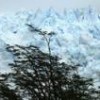
Frustration Over Veto to Protect Argentina's Glaciers
The Argentine government's total veto of a law aimed at protecting protect the country's glaciers has frustrated the scientists who helped draft the policy.Ecobreves – CUBA: Poor Waste Management Worsens Hurricane Impacts
An evaluation of the impact of hurricanes in Cuba has revealed that disaster risk increases because of factors like construction along the coastline, poor waste management and cutting down mangrove forests.Ecobreves – CHILE: Demands to Legalize Mapuche Health System
The Network of Mapuche Health Organizations, made up of nine entities from Chile's most numerous indigenous group, is drafting a proposal so that their health system will be recognized by Chilean law.« Previous Page — Next Page »





The Week with IPS

NEXT STOP - SDGs
Tracking global progress towards a sustainable world
Tracking global progress towards a sustainable world
