Languages
Tuesday, October 13, 2026



News and Views from the Global South
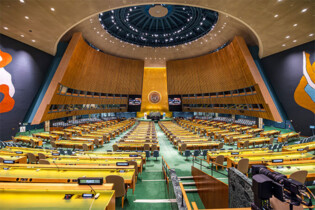
Strategic Blindness at UNGA 81: “Super Intelligence” and “Killer Robots” Take Center Stage as Women’s Rights Take a Back Seat
“Artificial intelligence (AI) must be shaped by humanity, with humanity, and for all humanity... Life-and-death decisions must never be surrendered to machines. Killer robots must have no place in our future.”
The Next UN Secretary-General Must Break Not Only the Glass Ceiling, but Also the Culture of Patronage
As the United Nations (UN) Security Council prepares for its first round of closed-door straw polls this month to select the tenth Secretary-General, the organization stands at a critical crossroads. Multilateralism is fracturing under geopolitical gridlock, and the UN is battling a severe budgetary deficit driven by funding cuts.
Beyond the United Nations — Reclaiming Integrity and Purpose in Global Governance
At the Annual General Meeting of the United Nations Asia Network for Diversity and Inclusion (www.UN-ANDI.org) on 21 May 2026, I was invited to share my reflections on both the pre and post separation phases of my UN journey. This provided me with a valuable opportunity to critically examine my decision to leave the UN service after many years at the ICSC.
International Women’s Day 2026 The Gender Architecture of Betrayal: Stop Elite Impunity
International Women’s Day 2026 (IWD 2026), which was commemorated March 8, under the theme, "Rights. Justice. Action. For ALL Women and Girls", calls for action to dismantle all barriers to equal justice: discriminatory laws, weak legal protections, and harmful practices and social norms that erode the rights of women and girls. It demands an end to systemic violence and misogyny, including calls for justice for Epstein survivors.
Empower Her, Empower Us: A Call to Empower UN Women Now
In her opening statement, Annalena Baerbock (Germany), President of the 80th UN General Assembly, only the fifth female to hold this position over 80 years, stated, “Our future as an institution will also be shaped by the selection of the next Secretary-General. And here we must pause and reflect. In nearly eighty years, this Organization has never chosen a woman for that role. One might wonder how out of four billion potential candidates, there could not be found a single one. … Like 80 years ago, we are standing at a crossroads.”
International Women’s Day, 2025
The Quest for a Female UN Secretary-General: Assessing the Probability
The United Nations has chosen “For ALL Women and Girls: Rights. Equality. Empowerment.” as the theme for International Women’s Day on March 8, 2025. This theme emphasizes the importance of equal rights, power, and opportunities for all women and girls, urging action to create a feminist future where no one is left behind.

Ensuring Violence-Free Homes for Sri Lankan Women
A woman’s right to live free from violence is upheld by international agreements like the 1979 Convention on the Elimination of All Forms of Discrimination against Women and the 1993 UN Declaration on the Elimination of Violence against Women.
Power of Acknowledging White Privilege in Addressing Racism Within United Nations
As we commemorate the 103rd anniversary of the Tulsa Race Massacre this month, organizations and communities should focus on white privilege as it is a critical but often overlooked component of effective racial justice change processes. White privilege, rooted in European-led colonization, provides unearned advantages to white individuals, often unnoticed due to their perception as universal experiences.
Breaking Down Barriers to Women’s Land Rights Starts in Our Homes
At the opening of the 68th session of the Commission on the Status of Women (CSW) on March 11, UN Secretary-General António Guterres said, “Your gathering this year is focused on how tackling poverty and strengthening institutions and financing with a gender perspective are critical to accelerate gender equality. The reason is simple: globally, poverty has a female face. Women have less access to land, natural resources and financial assets. They suffer the impacts of climate change more than men. And they are more likely to be food insecure. Many women and girls are also facing a war on their fundamental rights at home and in their communities.”
International Women’s Day, 2024
Stop Racially-Biased Attention when Dealing with Sexual Harassment of Women of Color
Recently “Days of Our Lives” star Arianne Zucker sued former co-executive producer Albert Alarr, accusing him of sexual harassment on the set of the long-running daytime show.

Time to End the Israeli-Palestinian Conflict with a Two State-One Nation Solution
Since October 9 2023, Israel’s war on Gaza has displaced over 1.8 million, according to UN estimates and killed almost 22,000 people in Gaza as of 2 January 2024, most of them women and children, according to the Hamas-run territory’s health ministry. Hamas' October 7 surprise attacks on Israel killed 1,200 people.
Will the UN Ever be Able to Eradicate Systemic Racism Within?
In the midst of the Israel-Hamas conflagration, a significant anniversary at the United Nations --October 24th was the 78th year since its founding--went unremarked by the larger world. But the work of--and significant problems with--the UN continues. Among the problems is embedded institutional racism. It's time that it be deeply addressed--not just by lip service.
UN Must Live Up to Its Promises of Gender Equality —and Support Women
In 2015, the UN’s 193 member states adopted 17 goals for the health of the world that together comprise the Sustainable Development Goals (SDGs) to be reached worldwide by 2030.
State of Asians in the UN: Need for Proactive, Inclusive & Collective Leadership
The United Nations system has an agreed leadership framework that is inclusive and respectful of all personnel and stakeholders, embracing diversity and rejecting discrimination in all its forms.
Making the UN Charter a Reality: Why is UN Day Important for Asians at the UN?
To commemorate the seventy-seventh UN Day, the United Nations Asia Network for Diversity & Inclusion (UN-ANDI) held a panel discussion on the topic “Making the UN Charter a reality”. The discussion took place virtually on 27 October, and the event was attended by diverse participants from around the world.





The Week with IPS

NEXT STOP - SDGs
Tracking global progress towards a sustainable world
Tracking global progress towards a sustainable world
