Languages
Thursday, October 22, 2026



News and Views from the Global South
Health
UN Special Rapporteur Urges the Protection of Children’s Rights Amid Deepening Conflict and Digital Threats
On July 7, the United Nations (UN) Secretary-General Antonio Guterres presented a report from the Special Rapporteur on the sale, sexual exploitation, and sexual abuse of children, Ai Kihara-Hunt, to the General Assembly, underscoring her goals and priorities for the implementation of protection measures for children worldwide.
Obstetric Violence: Syrian Women Speak Out
The abuse 30-year-old Nour Al-Badawi experienced in an Aleppo public hospital while giving birth resulted in her having two major follow-up operations and left her with depression and anxiety.
Resilience Is Not Enough: OCHA Sounds Alarm on Underfunded Humanitarian Crisis in Afghanistan
“Mainly, people tell me they're exhausted. They're exhausted from being poor, from being hungry, from repeated climate shocks, mounting debt, and the daily struggle to provide for their families,” Olga Cherevko, Spokesperson for the UN Office for the Coordination of Humanitarian Affairs (OCHA) in Afghanistan, told UN reporters on August 4.
Living Longer at Age 80
Upon reaching the age of 80, men and women are living longer than ever before. These gains in longevity among octogenarians represent a remarkable demographic achievement. The additional years of life provide new opportunities for older adults and their families while also presenting important social, economic, and healthcare challenges for societies.
The World’s Aid Workers Must Be Protected
This summer, an ambush on a marked humanitarian convoy in Duk County, South Sudan, left 17 dead and five injured. While the UN called for an immediate investigation, history suggests the victims’ families will wait indefinitely for answers.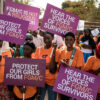
Female Genital Mutilation: Winning the Argument, Losing the Funding
Last August, a one-month-old girl in The Gambia bled to death after being subjected to female genital mutilation (FGM), a practice that had been illegal in the country since 2015. FGM is a human rights violation, whatever the appeals to faith or tradition made in its defence, but now the Gambian Supreme Court is being asked to strike the country’s ban down. This is the second attempt in two years to make FGM legal again.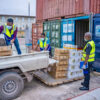
Dual Crises in Eastern DRC as Ebola Surges and Hunger Deepens
The Democratic Republic of Congo (DRC) is battling the fastest-growing Ebola outbreak on record, with United Nations officials warning that hunger is actively undermining efforts to contain the spread.
The Americas have the Tools to Eliminate HIV, but Gaps in Access & Coverage remain, says PAHO
The Region of the Americas has more tools than ever before to prevent, diagnose, and treat HIV, yet many of them are still not reaching everyone who needs them, Pan American Health Organization (PAHO) Director Jarbas Barbosa said during the opening session of the International AIDS Conference (AIDS 2026).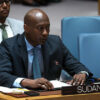
Sudan’s War Economy: Funded by Gum Arabic and Gold
In the three years since the outbreak of the Sudanese Civil War, the humanitarian crisis has deteriorated significantly, with the United Nations underscoring a blatant disregard for international humanitarian law among warring parties. This includes the deliberate targeting of civilians in residential areas, widespread sexual violence, and attacks on critical infrastructure that have hindered aid efforts and pushed communities to the brink of collapse. To manage rising military expenses, the warring parties have increasingly relied on the exploitation of trade routes and territories, prompting humanitarian experts to express concern about a persistent, self-sustaining “war economy.”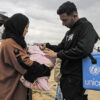
Ongoing Need for Humanitarian Assistance in the Occupied Palestinian Territory
On Monday July 20, a team from the United Nations Office for the Coordination of Humanitarian Affairs (OCHA) visited two displacement sites in Gaza where they found two family tents decimated by domestic fires. This incident is indicative of the increasing frequency of domestic fires in Gaza.
Children in Conflict Zones and Remote Areas Bear the Brunt of Global Immunization Gaps
Despite growing up and working in vastly different geographic regions and environments — one shaped by decades of armed conflict and political instability, and the other by remote, hard-to-reach areas — both Sagal and Johao encounter children daily who have never been vaccinated. Sagal and Johao are members of UNICEF’s Global Youth Health Advisory Group, where they advance children’s health by shaping UNICEF’s strategies, policies, and campaigns, while working directly in their own countries to connect community realities to global conversations about children's health.
Africa’s Health Defenses Have Improved But Its Funding Has Not
In September 2024, an outbreak of Marburg virus disease in South Ethiopia was confirmed, contained, and declared over within three months.
ALBANIA: ‘The Public Only Learns about These Development Megaprojects Once Construction Machinery Arrives’
CIVICUS discusses land grabs and environmental damage linked to a luxury coastal resort project with Eva Kushova, Director of Destination Management Organisation Albania, a civil society organisation that supports sustainable tourism in Albanian destinations, seeking to preserve culture and nature while maximising benefits for communities.
Global AI Governance Cannot Wait As the Digital Divide Widens
Throughout July 2026, various United Nations (UN) bodies and global experts have underscored the need for increased comprehensive artificial intelligence (AI) governance. Although AI yields significant potential gains for global development, persistent structural barriers continue to impede equitable access and deepen the digital divide.
Changing Age Distributions of Populations
In many countries, older adults (aged 65 and above) now outnumber younger individuals (under the age of 18), reflecting a significant demographic transformation known as demographic ageing.
As Gold Prices Soar, Communities Pay the Price in Poisoned Rivers, Vanishing Forests and Organized Crime
The sweltering heat inside a London conference hall did not deter Indigenous leader Jackeline Mendoza Díaz from condemning the sheer destruction of the Peruvian Amazon. Her voice occasionally trembled with emotion but delivered a strong message — painting a picture far removed from the glittering gold bars traded in the world’s financial capitals.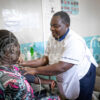
WHO: Urgent Action Needed for the Future of Cancer Care
One in five people will be diagnosed with cancer in their lifetime, and when the emotional and physical toll on close family members is factored in, an estimated 92 percent of people globally will be affected by cancer at least once in their lifetime. This staggering statistic is the centerpiece of the World Health Organization (WHO)’s latest global report on cancer.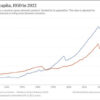
The Tale of Two Countries: Elite Stake and Development
Philippines was the most advanced Southeast Asian country with the highest per capita GDP until about the early 1960s. Its per capita GDP in purchasing power parity terms were about the same as South Korea’s and above that of Thailand in the early 1970s.The Nobel Laureate economist, Gunnar Myrdal, did not have much hope for “disease infested” Indonesia when in 1968 he published his famous Asian Drama: An Enquiry Into the Poverty of Nations. But Indonesia surged ahead since the late 1960s with growth acceleration exceeding that of Philippines; thus, eventually overtaking Philippines in GDP per capita in the mid-1980s. What factors separated Indonesia from Philippines?
UN Raises Alarm Over A Sharp Rise in Human Rights Abuses and Cholera-Related Deaths in Sudan
Throughout 2026, the humanitarian crisis in Sudan has deteriorated significantly, prompting the United Nations (UN) to raise alarm over the escalation of human rights violations. Persistent clashes between the Sudanese Armed Forces (SAF) and the Rapid Support Forces (RSF) continue to cause mass civilian casualties, drive widespread displacement, and obstruct the delivery of life-saving aid. As a result, war-torn communities are being pushed further into catastrophe, struggling with severe shortages of essential basic services and the rapid spread of infectious disease.
Women Peacebuilders: The Missing Voices at the Negotiating Table
 For most individuals, the process of peace starts with the signing of a ceasefire or an agreement among politicians. However, those who live in regions experiencing violence understand that peace is made long before politicians meet at the negotiating table. Peace is created among communities by people who work everyday to ensure that no violence takes place, and that disputes are sorted out.
MEXICO: ‘Our Call for Justice for Our Missing Loved Ones Must Reach the World Just as World Cup Goals Do’
CIVICUS speaks about efforts to use the 2026 FIFA World Cup to highlight Mexico’s enforced disappearance crisis with Ana Enamorado, a Honduran national who continues to search for her missing son in Mexico, and founder of the Regional Network of Migrant Families.
« Previous Page — Next Page »





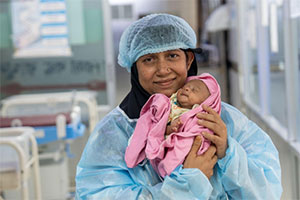 Bangladesh: Sarid, born one month early, receives specialized newborn care and grows stronger every day. Credit: UNICEF/UNI944397/Mojumder
Since the onset of the 2000s, global life expectancy has seen an overall rise, attributed to significant technological and scientific innovations in healthcare. Due to an increased understanding of different conditions as well as a rise in cooperation among healthcare experts around the world, there have been major strides made in ensuring that as few people die from chronic illnesses as possible. Despite the belief that healthcare is a fundamental human right, people from low- or middle-class backgrounds, marginalized groups, and underdeveloped countries have far more limited access to basic healthcare services.
The COVID-19 pandemic showed how marginalized communities are disproportionately affected by health crises, proving that we have much work to do in ensuring that no one dies of terminal conditions. While the global response to the coronavirus saw significant strides in immunization and vaccine development, the global outbreak of mpox in 2022 and its upsurge in parts of Africa in 2024 must remind us to remain vigilant.
Other major disease outbreaks in recent years have been linked to the destruction of infrastructure during warfare. Notably, in 2024, the Gaza Strip witnessed a return of the poliovirus since its eradication in the region 25 years ago. Israel’s blockade on Gaza has resulted in the collapse of the region’s sewage plants and desalination plants, and also destroyed healthcare capacities. The UN stated that this lack of clean water and sanitation would lead to an outbreak of cholera and other deadly infectious diseases. The 2026 OCHA Humanitarian Situation Report confirmed that the over two years of conflict in Gaza has produced a catastrophic health emergency, with millions remaining dependent on relief aid amid tight restrictions and no functioning public health system.
IPS is committed to providing full and comprehensive coverage on healthcare challenges around the world. IPS seeks to address the multifaceted causes of such challenges, including unprecedented pandemics, conflict-driven disease outbreaks, as well as socioeconomic barriers to equal healthcare access. IPS is also dedicated to reporting on innovations in the healthcare industry.

The Week with IPS

NEXT STOP - SDGs
Tracking global progress towards a sustainable world
Tracking global progress towards a sustainable world
