Languages
Thursday, October 22, 2026



News and Views from the Global South
Humanitarian Emergencies

Fiscal Reform Needs More Than Strong Finance Ministries
In the human body, connective tissue rarely gets the attention given to the heart, lungs or brain. But without it, even the strongest organs cannot function as a system. It binds, supports and connects a healthy body. Fiscal systems work in a similar way.
UNICEF: Overlapping Climate Hazards Threaten Children’s Quality of Life
A new report from the United Nations Children’s Fund (UNICEF) highlights the vast, overlapping climate threats affecting children worldwide, which is leaving them increasingly vulnerable to escalating risks across health, security, and education.
This Is Not Just Ukraine: The Global Danger of Normalising Russia’s Occupation Crimes
People often discuss Russia’s aggressive war against Ukraine in terms of drones, missiles, shifting front lines, and territorial borders. But this war has another dimension — the human one.
The Last Bottle of Halothane: Why Africa Cannot Wait
Global health has a habit of mobilizing around the visible and the dramatic. Ebola, malaria, and Mpox have all dominated headlines related to Africa in recent years, and understandably so. But nobody is talking about one of the most consequential regional health crises waiting to happen.
Nuclear Nonproliferation Outcomes Stall in Backdrop of Geopolitical Strife
On principle, the nonproliferation of nuclear weapons is an issue that unites the international community. But for a select few states, these principles came with conditions and a refusal to compromise on their security strategy.
The End of the Gulf Model?
The German government, along with a number of other countries, are currently organising flights to evacuate travellers and influencers stranded in the Gulf states. For many citizens of other nationalities, however, there is no such assistance. They remain stuck in precarious situations, marked by exploitation and insecurity.
BOTSWANA: ‘Court Rulings Matter, but It’s Sustained Civic Action That Turns Them into Real Protection’
CIVICUS discusses Botswana’s decriminalisation of same-sex relations with Faith Gunda, a Botswana-based law student and human rights defender, a member of the CIVICUS Protest Lab and co-founder of Sisterhood Chain International, a solidarity initiative that supports grassroots groups and amplifies young women’s voices.
UN Urgently Calls for Increased Aid in Yemen Following IPC Warnings of Food Insecurity
In Yemen, increasing funding constraints on humanitarian operations have put millions of civilians in dire need of life-saving assistance amid overlapping crises. Acute food insecurity is a persistent issue, as recent reports from the Integrated Food Security Phase Classification (IPC) give a stark warning of conditions without urgent intervention.
Violence, Climate Shocks, and Hunger Push The Sahel To The Brink of Collapse
Over the past few years, the humanitarian crisis in Africa’s Sahel region has expanded considerably, largely driven by a surge of violence—particularly in the Central Sahel. Although the crisis has been described by the United Nations (UN) as having “largely faded from the headlines” since its wake in 2012, millions of people across the region are in dire need of humanitarian assistance as civilian displacement, climate shocks, and widespread hunger rapidly spill across borders.
South Africa: Activists Call for Greater Access to Newly-Launched HIV Prevention Drug
As South Africa officially launches the rollout of a groundbreaking HIV prevention drug, civic groups in the country have slammed the plan, saying it will not reach anywhere near enough people.
GAZA: ‘If Civilians Can Get This Close to Establishing a Humanitarian Corridor, Then Governments Can Do It’
CIVICUS discusses the interception of the Global Sumud Flotilla on its mission to bring humanitarian aid to Palestinians in Gaza with Musa Roshdy, a humanitarian activist who took part in the flotilla.
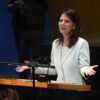
Downfall of a Superstar
This is the downfall of a diplomatic superstar. Germany’s defeat in the election to the UN Security Council is the consequence of a foreign policy that has proven disastrous in recent times, failing to uphold either the values or the interests of the Federal Republic.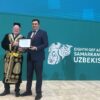
Make Last Sprint Towards 2030 a ‘Turning Point’ for Nature Finance, Eighth GEF Assembly Told
"While pressures on public budgets are growing and geopolitical tensions rising, it can be tempting to see environmental finance as optional. It is not,” GEF Interim CEO and Chair Claude Gascon told the closing plenary of the Eighth GEF Assembly in Samarkand, Uzbekistan, today.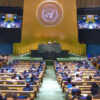
UN Climate Resolution: Time to Protect Activists
Ahead of World Environment Day, the UN General Assembly made a vital commitment to protect people from climate impacts, adopting a resolution on the climate change obligations of states. The resolution follows up on the International Court of Justice (ICJ) advisory opinion issued last year, which found that states have a legal duty to prevent activities that cause environmental harm. Most states voted for the resolution despite a concerted campaign by the Trump administration to block it.
From War Zones to Global Environment Talks, Communities Seek Faster Green Finance
For three decades, Iffat Rachid Edriss walked Lebanon's coastline with a clear purpose: protecting the sea she loves.
Governments Falling 90 percent Short of Climate Adaptation Finance Needs
Governments are falling 90 percent short of adaptation finance targets and leaving people in climate-vulnerable communities drastically under-equipped to cope with the devastating impacts of climate change, Oxfam warns ahead of Bonn climate talks (8-18 June).
Filipino Indigenous Leader Takes Ancient Wisdom to the Global Stage
Every year, when dark clouds gather above the dense forests of the Philippines, 56-year-old Mini Baeyens, of the Aplay Kankanaey tribe, vigilantly watches the sky.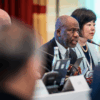
GEF Approves Adaptation Funds Strengthening Resilience in Vulnerable Countries
Bangladesh, the Democratic Republic of Congo, Guinea-Bissau, Niue, Senegal, Solomon Islands, Sudan, and Togo will receive over USD 67 million in new funding to help strengthen resilience.
Bhutan’s WTO Path: Learning from the Global South
Bhutan’s decision to restart its accession to the World Trade Organization (WTO) comes at an important junction. Since graduating from Least Developed Country (LDC) status in 2023, the country is entering a new phase of development, which requires stronger competitiveness, deeper global engagement and greater economic resilience.
When UN Elections Were Once Tainted by Trade-Offs, Cheque Book Diplomacy & Luxury Cruises…
The year 2026 seems to be an eventful year at the United Nations --a new President of the General Assembly (PGA), who will officially preside over the 81st session in mid-September, plus the election and appointment of a new Secretary-General (SG) who will takeover in January 2027 after the conclusion of a 10-year tenure by the outgoing SG Antonio Guterres.
Ebola Outbreak in the DRC Raises Global Health Concerns Amid Conflict and Displacement
Since May 16, there has been a significant increase in the number of laboratory-confirmed and suspected Ebola cases reported across the Democratic Republic of the Congo (DRC), primarily in Ituri Province, with additional unrelated cases identified in Kampala, Uganda. Although the outbreak has remained largely confined to that region, it has been heavily linked to areas affected by insecurity, civilian displacement, and mining-related migration, raising concerns among global health experts that the outbreak could spread without effective monitoring and response efforts.« Previous Page — Next Page »





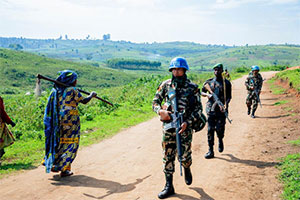 MONUSCO Peacekeepers and FARDC Soldiers Patrol Fataki Area. Credit: UN Photo/Jorkim Jotham Pituwa
Conflict, human rights violations, natural disasters, and famine have been at the forefront of concerns for humanitarian organizations. The escalation of humanitarian crises has led to over 239 million people in need of humanitarian assistance at the start of 2026, as estimated by OCHA’s Global Humanitarian Overview. The 2025 humanitarian appeal received only $12 billion, the lowest funding in over a decade, which has left 24 million fewer people reached in comparison to 2024. Conflict has remained the primary driver of crisis.
Humanitarian emergencies massively impact progress towards the Sustainable Development Goals (SDGs), adversely affecting economic development, inequality, education, planetary well-being, and poverty. Millions of people are faced with reduced access to essential services, including shelter, food, healthcare, and access to clean drinking water. UN Organizations such as UNHCR and the United Nations Children’s Fund (UNICEF) are committed to providing direct relief to affected communities when state governments cannot.
The United Nations 2024 Summit of the Future discussed measures that will be taken to reduce global inequality and promote peacekeeping efforts around the world. The recent UN Climate Change Conference (COP30) in Belém, Brazil, agreed to mobilize $1.3 trillion annually for climate action by 2035, operationalize the loss and damage fund, and triple adaptation finance. However, a fossil fuel transition commitment was not secured, despite climate change and the greenhouse effect being major contributors to humanitarian crises worldwide.
Countries across the world have also rallied to end humanitarian crises, as witnessed in conflicts such as Palestine and Ukraine. IPS is committed to providing relevant and in-depth reports of humanitarian emergencies around the world and their implications.

The Week with IPS

NEXT STOP - SDGs
Tracking global progress towards a sustainable world
Tracking global progress towards a sustainable world