Languages
Wednesday, November 11, 2026



News and Views from the Global South
Water & Sanitation
DEVELOPMENT-MALAWI: Water Utility Over-Stretched and Under-Maintained
Long known as a peaceful and quiet city, especially at night, Blantyre is steadily losing its reputation for tranquility. Residents now find themselves waking up to the hustle and bustle of women carrying metal and plastic buckets as they move around the city most nights and early mornings in search of water.BURKINA FASO: Ensuring That the Origin of Life Isn’t Also the End of It
"Water is the origin of life...I come from Central Africa where we have a lot of water, but it was when I came here that I really understood the meaning of this expression," says Antoinette Dinga Dzongo, the African Development Bank's representative in Burkina Faso, in reference to the need for improved water provision in this West African country.DEVELOPMENT- ANGOLA: Research Initiative Nets Interesting Discoveries
More than 50 species of fish have been recorded in the initial phase of a two-year joint research project on the Kwanza River in Angola.WORLD WATER DAY-SOUTH AFRICA: Celebrations in the Midst of Crisis?
South Africa is currently celebrating Water Week (Mar. 17-23) to coincide with World Water Day on Mar. 22. The week also coincides with a national crisis in confidence about the ability of government to provide citizens with safe drinking water.DEVELOPMENT: Climate Change Deepening World Water Crisis
When U.N. Secretary-General Ban Ki-moon addressed the World Economic Forum in Davos, Switzerland last January, his primary focus was not on the impending global economic recession but on the world's growing water crisis.DEVELOPMENT-SWAZILAND: To Relocate or Not To Relocate?
Climate change appears to have permanently altered certain areas of east and southern Swaziland, where good harvests have not been achieved for over a decade. Agriculture officials and non-governmental organisations (NGOs) now question whether these areas can still support communities.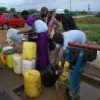
DEVELOPMENT-ZIMBABWE: Full Dams Do Not Translate Into Water Supplies
Heavy rains in Zimbabwe and in the catchment areas of its major rivers in December and January have filled most of the country’s dams to capacity. Yet, many urban households do not have water.
Q&A: "Simply Not Enough People Committed to Proper Water Management"
Following several incidents that have raised questions about water quality and distribution in South Africa, Water Affairs and Forestry Minister Lindiwe Hendricks has tried to allay fears about her department's ability to provide potable water to all South Africans.
HEALTH-SOUTH AFRICA: Too Few Trained Personnel. Too Much Aluminium?
The precarious state of water distribution in Grahamstown, a city in the south-east of South Africa, was highlighted again this month when taps ran dry for almost two days (Feb. 8 and 9) in a large section of the city. Grahamstown's reticulation system has failed residents several times over the last fourteen months in terms of water quality and reliability of supplies.RIGHTS-NAMIBIA: Gov’t Considering Water Subsidies For Poor
The Namibian government, frequently accused of making water unaffordable to the poor, is finally taking steps to address this countrywide problem that threatens to hamper the country’s efforts to meet the eight Millennium Development Goals (MDGs) set by world leaders at a special United Nations General Assembly meeting in 2000.DEVELOPMENT: South Asia Exports Sanitation Successes
Practical solutions to the global sanitation crisis will require greater knowledge-sharing among developing nations, and also even more support for those efforts by multilateral institutions like the World Bank and United Nations, experts say.DEVELOPMENT: Unexpected Benefits of Lesotho Highlands Water Project
The Lesotho Highlands Water Project (LHWP) was conceived and built primarily to supplement the water supply of the industrial hub of South Africa. The additional water has however, provided an important benefit beyond the original aims of the project - it is reducing the salinity of the Vaal Dam reservoir.SWAZILAND: Greatest Threat to Reform Is a Short Memory
Did Swaziland learn nothing from last year’s devastating drought? Some relief agencies and agricultural officials are shaking their heads in dismay that 2007’s devastating crop failures did not spark reform in the way land is utilised in this small country of less than one million people.Q&A: ‘Water Meters Are Good for the Environment and Good for Wallets’
Water shortage is not uncommon in Cape Town, South Africa. For the past years the warm summer months - of November until February - saw water restrictions imposed by the city authorities. The restrictions prohibited residents from using potable water for the irrigation of lawns and gardens as well as using hosepipes to wash motor vehicles, pavements, and any movable or immovable structure.CLIMATE-MOZAMBIQUE: Once Again Flooding Brings Risk of Disease
Once again Mozambicans are assessing the damage left in the wake of devastating rains and burst river banks along the floodplains of the Zambezi, Búzi, Púnguè and Save Rivers. Nobody is sure how many people have perished in the most recent floods, but the final death toll could be well over one hundred.
MIDEAST: Faeces Change the Face of Gaza
A stream of dark and putrid sludge snakes through Gaza’s streets. It is a noxious mix of human and animal waste. The stench is overwhelming. The occasional passer-by vomits.DEVELOPMENT-SOUTH AFRICA: Using Culture to Save Wetlands
Wetland conservation projects in South Africa have to take into consideration the culture, traditions and needs of local communities, according to Donovan Kotze of the University of KwaZulu Natal. He believes that the key to proper wetland management lies within communities living in and around these wetlands.GHANA: Rapid ‘Development’ Leaves Poor Without Toilets
There are many things that confirm the rich-poor divide in the Ghanaian capital.HEALTH-US: A Million Attractions, but Nowhere to Go
When New York City banned cigarette smoking in bars and restaurants several years ago, the sardonic television host Jon Stewart pointed out that forcing smokers into the streets outside would also help mask the city's ubiquitous urine smell.SOUTH AFRICA: Government Set To Reach Sanitation Target. Is it Enough?
The South African Department of Water Affairs and Forestry has narrowly missed one of its most important targets, aimed at improving sanitation for the country's poorest people - but plans to make up the remaining ground soon.
DEVELOPMENT-BURKINA FASO: “Sanitation Costs a Lot, But It’s Not a Luxury”
For some in Burkina Faso's capital, Ouagadougou, rainy seasons have spelt trouble - at least from the point of view of sanitation.« Previous Page — Next Page »





The Week with IPS

NEXT STOP - SDGs
Tracking global progress towards a sustainable world
Tracking global progress towards a sustainable world
