Languages
Wednesday, November 25, 2026



News and Views from the Global South
Africa
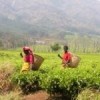
TRADE-MALAWI: Tea Growers Devising Plans to Overcome Low Prices
Low prices continue to haunt Malawian tea on the auction floors, a bitter irony for some producers as the country is regarded as the pioneer of tea-growing in Africa.
CULTURE-US: 'Black Art' Draws New Collectors, Better Prices
Landscapes are the images that come to mind in the work of artist Richard Mayhew. The New York-born expressionist credits that to his part African American, part Native American roots.TRADE: EU Aims to Rope in African States Resisting EPAs
The European Union is determined to get those African countries on board which have so far kicked against the economic partnership agreements (EPAs). At the end of 2007, only 35 out of 78 African, Caribbean and Pacific (ACP) countries had initialled EPAs.TRADE-AFRICA: EU Still Pushing Offensive Interests in EPA Talks
The European Union (EU) has an ambitious agenda for the economic partnership agreement (EPA) negotiations. It is pushing for the conclusion of full agreements in the next one to three years, covering everything from services to ‘‘trade-related’’ issues such as investment, competition and government procurement.
TRADE: EPAs Born of EU’s Concern with China in Africa
The European Union (EU) is concerned about competing with China for access to resources and markets in Africa, which partly explains its drive to hook African states into the trade deals called economic partnership agreements (EPAs).
Q&A: "Simply Not Enough People Committed to Proper Water Management"
Following several incidents that have raised questions about water quality and distribution in South Africa, Water Affairs and Forestry Minister Lindiwe Hendricks has tried to allay fears about her department's ability to provide potable water to all South Africans.
Q&A: "Before We Single Out the Media… What About Politicians?"
The messenger may not have been killed, exactly, but (s)he has had a rough time of it over the past few days in Kenya.TRADE-AFRICA: ''EPAs Are Not About Partnership''
The economic partnership agreements (EPAs) currently being negotiated between Europe and its former colonies in the African, Caribbean and Pacific (ACP) regions are not about equal partnerships but about enabling ‘‘big giant Europe to gain better access to African markets’’.TRADE-AFRICA: International Call for Action Against EPAs
African and international civil society organisations have adopted a call for action, urging the rest of the world to redouble its efforts to stop the European Union's drive to institute economic partnership agreements (EPAs).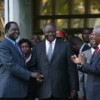
POLITICS-KENYA: What a Prime Minister Might – and Might Not – Do
A fifth week of talks to end Kenya's violent election dispute is scheduled to begin Monday, with the extent of power to be exercised by a new prime minister one of the key items on the agenda.
HEALTH-SOUTH AFRICA: Too Few Trained Personnel. Too Much Aluminium?
The precarious state of water distribution in Grahamstown, a city in the south-east of South Africa, was highlighted again this month when taps ran dry for almost two days (Feb. 8 and 9) in a large section of the city. Grahamstown's reticulation system has failed residents several times over the last fourteen months in terms of water quality and reliability of supplies.RWANDA: Cutting Edge HIV/AIDS Prevention Presents Challenges
Certain medical workers in Rwanda have expressed concern about the country's campaign to promote male circumcision as a means of curbing the spread of HIV. They fear that in a country with low levels of knowledge about sexual health, people could mistakenly believe the procedure offers complete protection against the virus.TRADE-UGANDA: Privatisation of Seeds Moving Apace
The Ugandan parliament will soon have a hearing on the draft Plant Variety Protection Bill, approved by the cabinet early last year. If passed unmodified, the bill is likely to entrench the rights of breeders and companies while curtailing the rights of small farmers to exchange, save and breed new varieties using hybrid seeds.TRADE-UGANDA: Exposing ''The African Green Revolution''
Uganda’s major trade partners are not only looking for food markets but also for seed markets. This has happened in a push that has been packaged as ‘‘the new green revolution’’ by corporations involved in biotechnology and chemicals. They have been supported by philanthropic organizations, notably the Rockefeller Foundation and the Bill and Melinda Gates Foundation.Q&A: "I Fear That Chad Will One Day Lose Its Sovereignty"
In the wake of a failed rebel attack three weeks ago, the Chadian capital of N'Djamena is feeling the effects of a clampdown on opposition leaders, activists and reporters - this as authorities scour the city for any remaining rebels.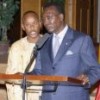
CAMEROON: Shelter, Medical Attention for Chadian Refugees
The situation of thousands of Chadian refugees who have fled to the north Cameroonian town of Kousseri continues to be a source of concern to aid workers, although the picture is not uniformly dismal.POLITICS: Security Council Deadlocked Over Kosovo
When the United States and some of the members of the European Union (EU) expressed admiration for Kosovo’s "patience" in its longstanding quest for a new nation state in the Balkans, Russian Ambassador Vitaly Churkin dismissed their "naivety" with a degree of political sarcasm.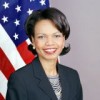
POLITICS-KENYA: Rice Lobbies for Power-Sharing Government
U.S Secretary of State Condoleezza Rice has told feuding political leaders in Kenya that power-sharing is central to pulling the country out of its post-election crisis.RIGHTS-AUSTRALIA: Citizenship Test Discriminatory – Migrant Advocates
Refugee and multicultural advocates say that Australia’s controversial citizenship test, introduced late last year by the previous government, discriminates against applicants from marginalised, non-English speaking backgrounds.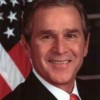
POLITICS-TANZANIA: No Spending on Those Who Steal, Says Bush
U.S. President George W. Bush, on a five-nation tour of Africa, has showered praise on the anti-corruption efforts of Tanzania's president, Jakaya Kikwete - whose government is receiving substantial aid from Washington.POLITICS: Bush Bids Farewell to Africa
In an attempt to polish his image and advance U.S. interests in the twilight of his presidency, George W. Bush is visiting Africa.« Previous Page — Next Page » *#*

The Week with IPS

NEXT STOP - SDGs
Tracking global progress towards a sustainable world
