Languages
Wednesday, November 25, 2026



News and Views from the Global South
Africa
TRADE: EPAs Signed ‘‘Under Duress’’, Says South Africa
African governments have signed economic partnership agreements with the European Union ‘‘under duress’’, according to Dr Rob Davies, South Africa’s deputy trade and industry minister.CHALLENGES 2007-2008: Peacekeepers for Darfur an Ongoing Source of Conflict
The hope for a lasting peace in Darfur is pinned on the deployment of 26,000 peacekeeping troops to the troubled region. However, squabbling between the many rebel factions, the Sudanese government and the international community still threatens to derail the process.Q&A: ‘‘The EU Is a Bandit in Trade Negotiations’’
A lively debate has been taking place in Ghana for some time now over the likely effects that an economic partnership agreement (EPA) with the European Union would have on the country. This has been thanks in no small part to the work of Tetteh Hormeku, one of Africa’s most vocal campaigners on trade issues.CHALLENGES 2007-2008: Regional Integration in Tatters Due to EPAs
The spectre of regional fragmentation is haunting the negotiations on the finalisation of interim economic partnership agreements (EPAs) between the European Union (EU) and the African, Caribbean and Pacific countries. This is despite one of the stated goals of the EPAs being ‘‘regional integration’’.CHALLENGES 2007-2008: Different Kind of Battle for Sierra Leone
Sierra Leone’s economy has, over the years, relied heavily on the mining sector in general and diamonds in particular. However, between 1991 and 2000 the country was comprehensively destroyed in a brutal civil war that engulfed the West African state.
ENVIRONMENT-KENYA: Turning Trash Into Cash
From carrier bags, to takeaway cutlery, to containers lining the aisles of grocery stores, plastic is found virtually everywhere in Kenya's capital, Nairobi: for better and for worse. The widget that is useful in the first instance is likely to become a polluting eyesore after it gets tossed away, as the city struggles to come to grips with recycling its plastic.
MALAWI: ”Foreign Traders Are Taking Our Jobs”
Foreigners working illegally as small-scale traders are increasingly being regarded as a threat to their local counterparts in Malawi. The outsiders are setting up businesses which, local Malawians believe, are displacing them.TRADE-GHANA: Cocoa Industry’s Future Looking Sweet
After almost a decade of poor cocoa production during the 1980s, the Ghanaian government is upbeat about the subsequent growth in output of the product which is the country’s main export, providing more than 60 percent of foreign earnings.POLITICS-SOUTH AFRICA: Mbeki – 1,505 Votes. Zuma – 2,329 Votes
It was, metaphorically speaking, dirty and very bloody. But the campaign leading up to the national conference of the ruling African National Congress (ANC) in Polekwane, north-east South Africa - where Jacob Zuma was elected president of the party, Tuesday - was democracy in its rawest form.ENERGY-SOUTH AFRICA: Food Security Hobbles Biofuel Strategy
Worried that it may be seen as insensitive to the food needs of Africa, the South African government, which is facing a general election in 2009, has chosen food security in framing a biofuel policy.EUROPE: French Position Delays Troops to Chad
The deployment of a European Union peacekeeping force in Eastern Chad has fallen behind schedule amid fears that its French-dominated troops could come under attack after setting foot in the troubled African state.
TRANSPORT-SOUTH AFRICA: Culture Puts the Brakes on Women's Mobility
The bicycle has been hailed as having done "more than anything else in the world...to emancipate women" - the words of 19th century American feminist Susan B. Anthony. But for many women in South Africa, culture and tradition make it difficult to take advantage of the increased mobility and access to social and economic opportunities, not to mention the reduced carbon footprint, offered by bicycles.
Q&A: "Slash the Salaries of the President, Ministers and Members of Parliament"
The sole female presidential candidate in Kenya's Dec. 27 general elections will launch her party's manifesto on Sunday. Nazlin Umar, one of nine contenders, is running on the ticket of the Workers Congress Party under the slogan "President wa mtaa" ("Street President", in Swahili), as part of a campaign to convince voters that she is able to address everyday concerns.TRADE-AFRICA: EU is Using ''Bully Tactics'' to Push Through EPAs
‘‘We succumbed,’’ lamented a diplomat from Namibia. ‘‘We signed on the 12th of December. The pressure was too much. The private sector felt that they would be disproportionately affected. In terms of markets, they would be losing access for beef, grapes, fish and fish products.’’CLIMATE CHANGE: At Least Something For Africa To Take Home
If senior government ministers and officials are returning home this weekend with something substantial from the Bali conference, it is not because the two-week climate change talks have been adequately responsive to their concerns.TRADE-GHANA: ‘‘How Would Mandelson Know What’s Good For Us?’’
There is only one freezer in Ken’s Frozen Foods. Agnes Modenu, the manager of this tiny shop, lifts its lid and takes out transparent bags of frozen chicken parts. All of the meat has been delivered to a nearby harbour after being imported into Ghana, she says.COTE D’IVOIRE: A Call for Solidarity in Resolving Fate of Missing Reporter
Early one afternoon nearly four years ago, journalist Guy-André Kieffer was thrust into a waiting car by several armed men in a supermarket parking lot in Abidjan. He has not been seen since.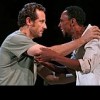
THEATRE-US: Play Shows West’s Moral Failures in Rwanda
As the 1994 genocide in Rwanda slips into the dark hole of history, the U.S. playwright J.T. Rogers's "The Overwhelming" reminds one how it happened and how both the "moral", the complicit and the cynical in the West were present in the killing fields.FINANCE: US Senate Targets Asian, European Firms in Sudan
The U.S. Senate has rebuffed the White House and embraced a proposal allowing investors to protest the carnage in Darfur by boycotting firms that do business in Sudan.ZIMBABWE: Investment Dwindles in the Face of A Defiant Government
Recent international reports show Zimbabwe’s economic decline hastened by continued capital flight, with the troubled country cited as one of the worst investment destinations in the world.
POLITICS-SIERRA LEONE: Whose Quota, Exactly?
A campaign to bring about greater gender balance in Sierra Leone's government has sparked debate on issues of class, with some fearing that a proposed quota for women could be monopolised by candidates who are unrepresentative of Sierra Leonean women overall.« Previous Page — Next Page » *#*

The Week with IPS

NEXT STOP - SDGs
Tracking global progress towards a sustainable world
